The right hood and exhaust system is essential for safe, compliant, and comfortable cooking environments. This guide highlights five reliable options that suit different kitchen sizes and configurations—from compact food trucks to larger concession setups. Each product is presented with clear pros, intended users, and practical trade-offs to help buyers choose confidently.
Buyer summary table:
| Product | Brand | Best For | Key Advantage |
|---|---|---|---|
| Food Truck Low Profile Hood System (6 ft) | FICBXRA | Large food trucks, multi-stove layouts | Wide 6-foot smoke capture; solid stainless steel |
| Food Truck Low Profile Hood System (4 ft) | HYITCL | Smaller kitchens, tighter trucks | 4-foot capture area; NSF-certified |
| Stainless Steel Commercial Exhaust Only Hood System | VENTILATION DIRECT | Flexible, scalable rooftop setups | 430 stainless steel build; high-capacity fan |
| HOODMART 6′ Integrated Hood System | HOODMART | Food trailers needing quick install | Patent-pending low box design; integrated blower |
| VEVOR 6FT Commercial Exhaust Hood | VEVOR | Multiple cooktops, easy maintenance | Large smoke capture area; detachable filters |
Food Truck Low Profile Hood System (6 ft) by FICBXRA

Best for: larger food trucks and concession setups with multiple burners. The system uses durable stainless steel construction for long-term use and corrosion resistance, which is critical in busy commercial kitchens.
Why chosen: Its six-foot-wide exhaust hood provides expansive smoke capture, helping to contain grease and cooking odors across several stoves. The high-speed direct-drive centrifugal upblast fan supports heavy-duty ventilation needs. Note: Ductwork and roof curb are sold separately, so plan for additional installation components.
Limitations: This kit does not include ductwork or a roof curb, which means integration costs and planning are required for proper venting. Best practice is to pair with appropriately rated ductwork and a compatible roof curb.
Food Truck Low Profile Hood System (4 ft) by HYITCL

Best for: compact kitchens or smaller food trucks where space is at a premium. The 4-foot smoke capture area is ideal for single or dual-cooktop configurations.
Why chosen: The NSF-certified stainless steel construction emphasizes durability and food-safety standards, while the direct-drive centrifugal upblast fan delivers robust ventilation for grease-heavy environments. A potential limitation is the smaller capture area, which may require careful placement relative to the cooking surface.
Caution: Ensure the ductwork and roof curb compatibility with your vehicle’s structure, since those accessories are not included in this kit.
Stainless Steel Commercial Exhaust Hood System by VENTILATION DIRECT
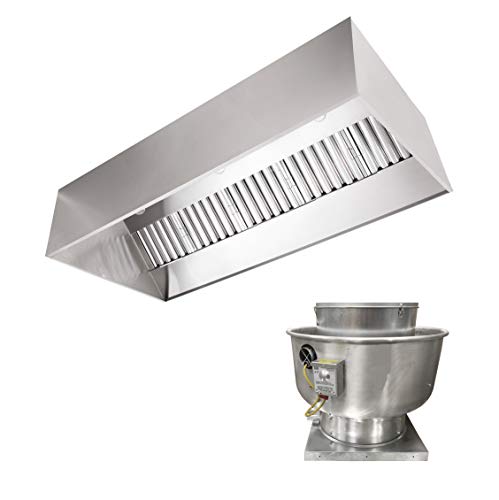
Best for: flexible rooftop installations or medium-to-heavy cooking loads where you need a dedicated exhaust path with a strong fan.
Why chosen: This system uses 430 stainless steel with a hood rated for high temperatures and heavy use. It includes a high-speed centrifugal upblast exhaust fan with a relatively standard 11-3/4 inch wheel and a 0.333 HP motor, which supports steady air movement and effective grease removal. Limitations: It requires compatible roof curb and ductwork, which are not included in the kit. This option suits installations where a larger, airy hood is desirable.
HOODMART 6′ Integrated Hood System

Best for: food trucks or concession trailers that want a streamlined, all-in-one solution with straightforward installation.
Why chosen: The patent-pending low box design integrates the blower and motor, reducing install time and avoiding roof-mounted fans. The 6′ x 40″ hood includes a built-in air gap and side curtains, which helps with airflow management and adds protection against contamination. Caution: The system includes an integrated vent but may require professional confirmation for your trailer’s electrical and venting compatibility.
VEVOR 6FT Commercial Hood With Wide Capture

Best for: kitchens with two or more cooking stations seeking a high-capacity hood that’s easy to maintain.
Why chosen: This hood emphasizes a large smoke capture area and includes three detachable U-shaped grid oil filter meshes for easier cleaning and maintenance. The stainless steel construction supports durability in demanding environments. Limitation: Filter maintenance and occasional deeper cleaning are required to preserve performance and airflow efficiency over time.
Buying Guide: How to Choose the Right Hood And Exhaust System
What size hood do I need?
Measure your cooking equipment width and arrange a hood that provides at least 6-12 inches of overhang beyond the cooking surface. Larger systems cover more area, but require adequate space and venting capacity.
What material matters?
Stainless steel (302 or 304 grade) is standard for durability, corrosion resistance, and easy cleaning. Higher-end, heavier systems are better for busy environments with frequent grease buildup.
Do I need a roof curb or ductwork?
Most systems in this guide require separate ductwork and a roof curb. Verify compatibility with your building or vehicle structure and plan for professional installation if needed.
How important is fan power?
Fan horsepower and CFM ratings determine air movement and grease capture. For multi-station kitchens, opt for higher CFM and robust drive systems to prevent grease buildup and ensure consistent exhaust performance.
What maintenance should I expect?
Regular cleaning of filters, baffles, and grease trays extends hood life. Detachable grids and accessible grease cups simplify routine maintenance and help sustain airflow efficiency.
Are integrated systems better than separate components?
Integrated designs can speed up installation and reduce clutter, but may limit customization. Separate hood and fan kits provide flexibility for matching to existing ductwork and roof curbs, at the cost of more complex installation.
Frequently Asked Questions
- What is a “low profile” hood and when should I choose it?
Answer: A low profile hood is shallower in height, optimizing headroom in tight spaces like food trucks. Choose it when vertical space is limited without sacrificing capture efficiency. - Do all these hoods require separate ductwork?
Answer: Yes. Most kits assume you will purchase compatible ducting and a roof curb separately. Confirm duct diameter and exhaust routing before purchase. - What is the advantage of a 6-foot hood?
Answer: A 6-foot hood provides wider smoke capture, enabling better containment across multiple burners and larger cooking areas, reducing grease spread and odors. - How often should I replace or clean hood filters?
Answer: Filters should be inspected regularly and cleaned or replaced as needed based on usage. In heavy-use kitchens, more frequent maintenance is recommended to ensure optimal airflow. - Can I install these hoods on a trailer or vehicle myself?
Answer: Some kits are designed for easier installation, but many require professional HVAC or ventilation contractor involvement to ensure proper venting, electrical connections, and code compliance. - Is NSF certification important for a food truck hood?
Answer: NSF certification indicates adherence to food safety standards in materials and construction, which is beneficial for busy commercial kitchens and food trucks.