Answer: An 11 pin (7-way) trailer plug replacement and splice-in kit is ideal for reliably powering taillights, brake lights, turn signals, and auxiliary power on both RVs and standard trailers. This guide highlights five dependable options chosen for durability, waterproof sealing, and straightforward installation. Best for DIY installers who want a solid balance of rugged design and easy wiring, these picks suit boat trailers, RVs, and utility trailers alike. Below, you’ll find quick comparisons, best-use scenarios, and a practical buying guide to help you choose.
| Product | Best For | Key Benefit | Notes |
|---|---|---|---|
| WOFTD 7 Pin Trailer Plug | Rugged trailers needing waterproof, reliable splices | Detachable design with brass terminals for good conductivity | Includes side grip hooks for easier plugging |
| Pollak 11-720 7-Way Connector | Heavy-duty towing environments | Zinc die-cast with moisture-resistant socket | Floating pins aid alignment |
| Oyviny RV 7 Pin Plug | Water-prone environments; perfect for outdoor trailers | IP68 waterproof seal and 3/4″ NPT inlet | Detachable nut and grommet provide moisture protection |
| Orpomea 7 Pin Trailer Plug | Budget-friendly, durable trailer wiring | Reinforced nylon housing with waterproof back spacer | Clear, blade-style design for secure splicing |
| MECMO 7 Pin Trailer Plug | Durable, reliable splices for frequent use | Glass-filled nylon body with waterproof spacer | Similar robust design to Orpomea |
Below is a quick guide to help you pick the right 7-pin/11-pin trailer plug for your setup, followed by detailed product sections and a practical buying guide.
WOFTD 7 Pin Trailer Plug With Waterproof Seal

Best for: DIY installers needing a durable, water-resistant splice-in plug. This WOFTD model features a detachable design and high-strength plastic housing, designed for long-lasting use in outdoor trailers. The 7/8 inch wire inlet and brass terminals ensure solid conductivity, while side handle hooks improve grip for quicker connections. This option is ideal when you want a reliable, corrosion-resistant connector that easy to integrate with existing trailer wiring. Caution: Ensure proper sealing at all splices to maintain waterproof integrity.
Pollak 11-720 7-Way Connector

Best for: Trailers and towing setups that demand robust, moisture-resistant components. The Pollak 7-Way Connector uses zinc die-cast construction and a built-in moisture-rid housing, with floating pins for easy alignment. It’s a strong choice for frequent road use, especially in humid or wet climates. Limitation: The heavier metal build may be overkill for light-duty applications where a plastic housing would suffice.
Oyviny RV 7 Pin Trailer Plug

Best for: Trailers exposed to water or dust; ideal for outdoor vehicles. Oyviny offers an IP68-rated waterproof seal with a detachable compression nut and rubber grommet on the end to protect terminals. The 3/4″ NPT inlet size helps ensure a snug fit on many trailer harnesses. Caution: Ensure correct wiring order to prevent lighting misfunctions, especially in damp conditions.
Orpomea RV 7 Pin Trailer Plug
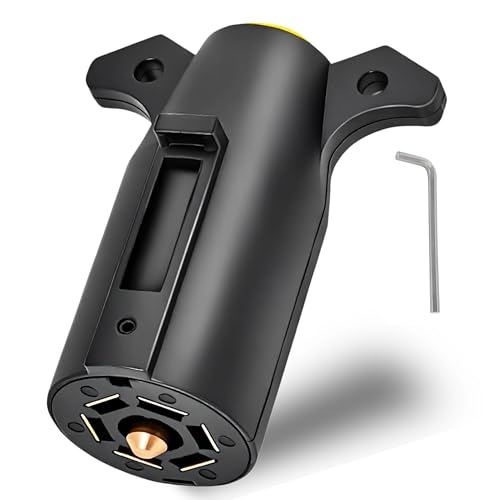
Best for: Budget-conscious buyers who still want a rugged splice-in design. Orpomea provides a heavy-duty 7-prong blade-style connector with reinforced glass-filled nylon and a waterproof back spacer to guard connections. The design supports reliable power for taillights, brake lights, and auxiliary circuits. Limitation: Blade-style connectors require careful alignment during installation to avoid miswiring.
MECMO RV 7 Pin Trailer Plug

Best for: Frequent-use trailer owners needing solid, durable splices. MECMO uses reinforced glass-filled nylon and a waterproof rear spacer for protection against moisture and dirt, ensuring a stable connection for taillights, brake lights, and other circuits. Caution: Like other self-splice products, verify wire colors and tighten splices to prevent pull-out on rough terrain.
Buying Guide: Key Considerations For 7-Pin Trailer Plugs
How to choose the right plug depends on several practical factors. Here are questions to guide your decision:
- What environment will the trailer operate in? If water, dust, or salt spray are common, prioritize IP-rated or waterproof seals.
- What is the preferred mounting style? Detachable designs ease replacement and maintenance, while solid housings may offer longer service life in harsh conditions.
- Is ease of wiring important? Look for color-coded harnesses and clear splices to minimize installation errors.
- Do you need a compact inlet? Check wire inlet sizes (for example, 3/4″ or 7/8″) to ensure compatibility with your trailer wiring.
- What about grip and plugging effort? Handles or ergonomic grip features help, especially in cold or muddy conditions.
Practical Installation Tips
- Follow the wiring diagram included with the plug and confirm each function (tail lights, brake lights, turn signals, etc.).
- Use appropriate sealing compounds or gaskets to maintain waterproof integrity at connections.
- Securely fasten strain relief clamps to prevent wire pulling and disconnects on rough roads.
- Test the system with a trailer light tester before hitting the road.
FAQ
- What is the difference between a blade-style and round-pin 7-pin plug? Blade-style connectors are common for trailer side connections, while round-pin designs emphasize rugged durability in many towing setups.
- Are 7-pin and 11-pin plugs interchangeable? Not exactly; they serve different wiring standards. Verify your vehicle’s and trailer’s required plug type before purchasing.
- Can these plugs handle outdoor use? Most models feature waterproof seals and rugged housings designed for outdoor conditions.
- Do these require professional installation? Many are DIY-friendly with color-coded wiring, but complex vehicle-to-trailer systems may benefit from professional help.
- How do I know if a plug is compatible with my trailer? Check the inlet size, wiring color codes, and the number of circuits supported to match your trailer’s lighting and power needs.