Finding the right oil pressure gauge with an alarm helps prevent engine damage by providing real-time readings and early warnings. This guide compares five top options, highlighting who they’re best for and what to watch out for. Ideal buyers include performance enthusiasts, long-haul drivers, and anyone maintaining older or high-mileage engines who want proactive alerts and easy-to-read displays.
Summary of chosen products
| Product | Best For | Why It Stands Out | Key Limitation |
|---|---|---|---|
| JJCOCO 150PSI Oil Pressure Gauge Kit | Daily drivers; beginners | Bright LED readout; programmable low-pressure alarm | Limited to 0-150 PSI range |
| ZHSYMX Universal Oil Pressure Gauge Kit | All 12V/24V vehicles; DIYers | Smart interface; peak/recall and thresholds | Smaller feature set compared to multi-gauge kits |
| GlowShift Tinted 7 Color 100 PSI Kit | Custom interior styling | Seven color modes; dimmer compatibility | Lower pressure max at 100 PSI |
| JJCOCO 232PSI Oil Pressure Gauge Kit | Performance or modified engines | Higher PSI range; accurate real-time alerts | Potentially more advanced setup |
| WATERWICH Oil Pressure Gauge 0-150 PSI | Night driving; simple install | Blue lighting; simple installation | Alarming not as configurable as some differentials |
JJCOCO 150PSI Oil Pressure Gauge Kit

- LED Display for Instant Readability: Digital 0-150 PSI readout with a sweeping needle for quick trends.
- Engine-Saving Low-Pressure Alarm: Programmable alarms flash, beep, and pulse red when pressure drops below a set value.
- Peak Pressure Recall: Tap PEAK to view maximum oil pressure during hard acceleration or towing.
- Best For: Drivers who want a simple, reliable alarm system and easy diagnostics for everyday driving or moderate performance use.
- Limitations: The 150 PSI range may be insufficient for some high-performance engines that run higher pressures under certain conditions.
ZHSYMX Universal Oil Pressure Gauge Kit

- 0-150 PSI with 1/8″ NPT sensor; 12V/24V DC power.
- Smart Interface: Peak/recall, standard or metric center LED readout, and threshold warnings.
- Best For: DIY installers who want programmable alarms and clear digital readouts without extra tools.
- Limitations: May require careful wire routing to optimize threshold alerts in complex dashboards.
GlowShift Tinted 7 Color 100 PSI Kit

- 0-100 PSI Range with 2-1/16″ 52mm gauge and 7 color modes plus color cycle.
- Tinted lens, red illuminated needle, and aluminum housing for a premium look.
- Best For: Vehicle interiors where aesthetic matching is important; easy to coordinate with factory lighting.
- Limitations: Lower maximum PSI may not suit high-demand engines consistently.
JJCOCO 232PSI Oil Pressure Gauge Kit
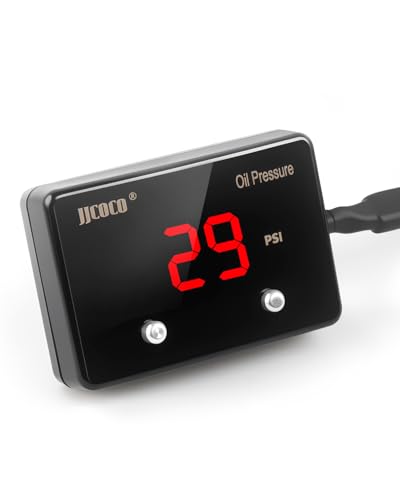
- High-precision 0-232 PSI readings for real-time engine health.
- 12V compatibility with low power draw (max 0.3A).
- Best For: Modified or high-performance engines where higher pressure monitoring is needed.
- Limitations: USB-free installation may require more careful wiring for a clean install in tight spaces.
MH Triple Gauge Set (Oil, Water Temp, Volt)

- 3-in-1 monitoring: Oil pressure (0-145 PSI), water temp, and voltmeter in a single cluster.
- 2″ 52mm gauges with IP67 waterproof and dustproof protection; thermal-resistant display.
- Best For: Boats, trucks, and off-road setups needing multiple readings from a compact unit.
- Limitations: The 145 PSI max is slightly lower than some high-performance needs.
WATERWICH Oil Pressure Gauge

- Blue night-vision display and 0-150 PSI range for standard engines.
- LED alert when pressure is low; straightforward installation.
- Best For: Night driving and drivers who want clear, dimmable night readings.
- Limitations: The alarm sensitivity may be less configurable than some digital kits.
Buying Guide
What should you consider when buying an oil pressure gauge with an alarm?
- Pressure range: Most engines run 0-150 PSI; make sure the range covers your vehicle and any tuned configurations.
- Display type: LED digital readouts are easier to read at a glance; consider whether a sweeping needle helps or hinders readability in your cabin lighting.
- Alarm configurability: Look for programmable thresholds, audible alerts, and visual warnings to suit idle vs. high-RPM conditions.
- Power and wiring: Most kits are 12V, some support 24V systems. Check if the kit includes pre-installed sensors and harnesses for DIY installation.
- Installation space: Gauge size and sensor placement matter. All-in-one clusters save space, but ensure clearance behind panels.
- Durability: Waterproof and vibration-resistant housings help in harsh engine bays and marine environments.
Installation and compatibility considerations
Most gauge kits use standard 1/8″ NPT sensors that thread into engine oil ports. Confirm your vehicle’s ports and choose the right sensor length and wiring harness. For 24V systems, verify that the gauge supports 24V operation or that a powered converter is not required.
Maintenance and troubleshooting tips
- Periodically check sensor seals and wiring for wear or leaks.
- Test alarms by simulating low oil pressure in a safe environment and ensure audible and visual alerts activate.
- If readings seem inconsistent, verify sensor thread engagement and ground connections; poor grounding can create erroneous readings.
What makes a gauge with an alarm worth choosing?
A gauge with an alarm provides proactive engine health management by warning you before immediate damage can occur. This is especially valuable for high-mileage engines, performance builds, and vehicles used in extreme conditions where oil pressure can fluctuate rapidly.
Frequently Asked Questions
- How do I know what alarm threshold to set?—Base it on your engine’s idle pressure and manufacturer recommendations. A typical idle threshold ranges from 10–20 PSI for many engines, but follow your vehicle’s guidance.
- Can I install these myself?—Yes, most kits are designed for DIY installation with common tools and standard thread sizes (1/8 NPT).
- Do these gauges work with both 12V and 24V systems?—Many kits support both; verify in the product specs and wiring requirements.
- Are higher PSI gauges always better?—Not necessarily. Choose a range appropriate for your engine and driving conditions; excessively high ranges can reduce resolution at the lower end where warnings matter.
- Will an alarm drain my battery?—Most gauges draw minimal current (often under 0.3A). If you’re concerned, compare the current draw and ensure proper fuse sizing.
- Do digital gauges provide more accurate readings than analog?—Digital displays often offer clearer numeric readings, while analog needles can help detect trends quickly. Both can be accurate when properly calibrated.