Finding the right pre-cat O2 sensor is essential for maintaining optimal engine performance and fuel efficiency. This guide highlights five straightforward options that match common pre-cat needs across popular makes and models. It targets buyers seeking reliable OEM-equivalent sensors, clear fitment guidance, and practical buying notes. Best for DIYers, weekend mechanics, and those who want a clear path to proper replacement without guesswork.
Overview of top picks
| Product | Brand | Best For | Key Reason |
|---|---|---|---|
| STZJAYE 4Pcs Oxygen O2 Sensor | STZJAYE | Multiple Ford models and year range | Broad upstream/downstream compatibility with common Ford fitments |
| AM Autoparts Upstream Front Pre-Cat O2 Sensor | AM Autoparts | Front sensors for Ford pickups and Taurus | Long warranty and broad part-number coverage |
| EXPEDE 234-4668 Kit | EXPEDE | Chevy/GMC family 5.3L engines | OEM-number-backed compatibility notes |
| STZJAYE 2Pcs 234-5029/234-4238 | STZJAYE | Hyundai/Kia 2.0L engines | Upstream and downstream coverage for 2.0L engines |
| STZJAYE 234-5430/234-4404 | STZJAYE | Hyundai Elantra and Kia Spectra/Spectra5 | Match for 2.0L Hyundai/Kia models |
STZJAYE 4Pcs Oxygen O2 Sensor 234-5038 234-4490
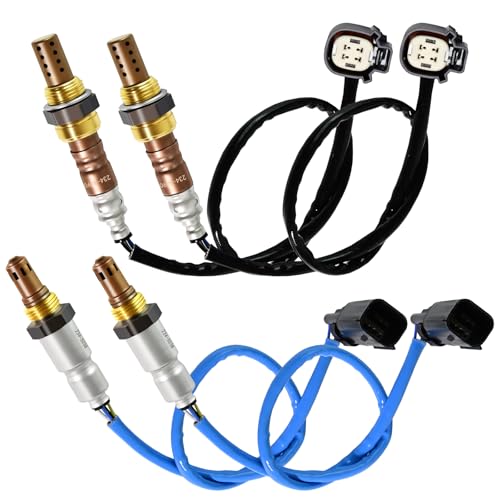
This set targets Ford family vehicles, including Explorer, F-Series, Edge, Escape, and more from model years around 2010–2016. It covers both upstream and downstream sensors: upstream 234-5038/2345038 and downstream 234-4490/2344490. Best for owners performing multi-sensor replacements or upgrading a full bank of O2 sensors in Ford platforms.
Who it’s best for: DIYers replacing multiple sensors at once on Ford trucks and SUVs. Why selected: Broad fitment references and acomplete upstream/downstream scope help ensure a correct match. Caution: Vehicle confirmation is essential—verify year, make, and model in the listing instructions before purchase.
AM Autoparts Upstream Front Pre-Cat O2 Sensor

This upstream sensor is designed for Ford pickups, Taurus, and similar models. It’s highlighted by a 10-year warranty and a reference list of compatible numbers (11042, 13953, 2131232, 2343007, 2343076, 25023007, and more). Best for: buyers wanting durable coverage and clear OEM-number alignments. Better for: those who value an extended warranty as part of the purchase. Limitation: Always confirm exact fitment using Year/Make/Model options before buying.
EXPEDE 234-4668 Upstream/Downstream Kit

Compatible with 2003–2005 Chevy Silverado 1500 family, including Avalanche, Suburban, Escalade, Tahoe, and GMC Sierra 1500 with 5.3L engines. This kit includes both upstream and downstream sensors, and lists multiple OEM and interchange numbers (234-4668 family, 12569x, 12573x series). Best for: Chevy/GMC owners needing a complete sensor pair for pre-cat and post-cat positions. Caution: Verify that your vehicle uses the 5.3L V8 2003–2005 configuration before purchasing.
STZJAYE 2Pcs 234-5029/234-4238 Sensor Pair

For Hyundai and Kia 2.0L engines, this pair provides one upstream and one downstream sensor. It references upstream 234-5029/2345029 and downstream 234-4238/2344238, with additional cross-reference numbers. Best for: those upgrading a single bank on Hyundai, Sonata, Tucson, Sportage, Optima, Sorento, or Forte. Choose this if you’re replacing two sensors and want matched parts. Limitation: Confirm exact fitment with Year/Make/Model to avoid mismatch on specific trims.
STZJAYE 234-5430/234-4404 Sensor Pair

This pair targets Hyundai Elantra 2.0L and Kia Spectra/Spectra5 engines from 2004–2009. It includes upstream 234-5430 and downstream 234-4404 numbers, with cross-references to common OEM equivalents. Best for: Hyundai/Kia owners needing a two-sensor replacement with clear cross-references. Caution: Verify that the engine displacement and year align with the listed compatibility to prevent incorrect fitment.
Buying Guide: Key Purchase Considerations
- Identify your exact engine and bank configuration. Upstream (Bank 1 Sensor 1) and downstream (Bank 1 Sensor 2) positions determine which sensor you need.
- Check cross-reference numbers. OEM and replacement part numbers ensure compatibility with your vehicle’s original sensors.
- Consider the number of sensors required. Some vehicles use front and rear sensors in both banks; others require a single upstream or downstream replacement.
- Warranty and return policies matter. A longer warranty can indicate durable construction and reliable support if issues arise.
- Confirm fitment using the Year/Make/Model tool on the product page. This helps avoid incorrect orders due to regional or trim differences.
- Budget versus scope. If replacing multiple sensors, a kit or multi-pack can simplify installation and reduce total cost.
- Installation notes. Many O2 sensors are straightforward DIY replacements, but some might require anti-seize compounds or specialized tools. Always follow manufacturer guidance.
Frequently Asked Questions
- What is a pre-cat O2 sensor and why does it matter?
– It monitors the exhaust before the catalytic converter to help control engine efficiency and emissions. - How do I know which sensor to replace on my vehicle?
– Identify the sensor position (upstream or downstream) and bank (1 or 2) and match with your engine’s configuration. - Can I replace just one sensor or should I replace both in a bank?
– If symptoms indicate a failing sensor, replacing the affected one is common, but replacing both on a bank can prevent future failures if both are aging. - What should I check before buying an O2 sensor?
– Confirm the Year/Make/Model and engine type, verify cross-reference numbers, and examine the mounting type and thread size described in the listing. - Are aftermarket sensors as reliable as OEM?
– Reputable aftermarket sensors often match OEM specifications, but always review compatibility notes and warranty terms to assess reliability. - Is professional installation required?
– Most vehicles allow DIY replacement, but some installations may benefit from professional services to ensure proper sealing and connection.