Answering the question: which oil pressure booster additive should I choose? This guide highlights top options that help reduce wear, quiet noisy engines, and improve lubrication. It focuses on products that suit different engine ages and driving styles, from high-mileage vehicles to new engines seeking extra protection. The following selections are best for: owners wanting proven stabilizers for older engines, drivers seeking low-noise operation, and enthusiasts aiming to extend engine life without major mechanical work. The quick reference table below helps compare the five highlighted products at a glance.
| Product | Brand | Best For | Notes |
|---|---|---|---|
| Lucas Oil 10001 Heavy Duty Oil Stabilizer | Lucas Oil | New engines, heavy-duty use | Classic stabilizer for lubrication boost |
| Lucas Oil 10118 High Mileage Oil Stabilizer | Lucas Oil | High-mileage engines | Addresses wear and noise in aging motors |
| Liqui Moly MoS2 Anti-Friction Engine Treatment | Liqui Moly | High-performance modern engines | MoS2 film for heavy friction surfaces |
| Prolube Oil Treatment | Prolube | Everyday driving; both gas & diesel | Balances wear reduction and fuel economy |
| STP High Mileage Oil Treatment + Stop Leak | STP | High-mileage vehicles with leaks | Stops leaks and protects seals |
Lucas Oil 10001 Heavy Duty Oil Stabilizer

The Lucas Oil 10001 Heavy Duty Oil Stabilizer is designed for stronger lubrication in demanding conditions. It claims to be the world’s #1 oil additive and is formulated with 100% petroleum. It is best for engines in need of a reliable, simple stabilizer that reduces internal wear. This product is suitable for newer engines and for riders or drivers who want a straightforward oil treatment with proven track records.
Who it’s best for: Drivers of newer vehicles seeking an easy, dependable additive to support lubrication and reduce wear during normal operation. It’s also a fit for users who prefer a petroleum-based solution without synthetic complex components.
Why selected: It has a broad recognition as an essential stabilization aid and is marketed as a core oil additive for everyday use. The suitability for new engines provides reassurance for owners seeking consistent performance.
Caution / limitation: Claims focus on stabilization; results may vary if engine wear is already extensive or if the vehicle requires higher-grade synthetic protection. Not necessarily targeting extreme high-mileage wear symptoms alone.
Lucas Oil 10118 High Mileage Oil Stabilizer

This Lucas Oil product targets high-mileage engines, focusing on lubricating internal parts to minimize wear. It explicitly mentions reducing noise and addressing emissions and oil consumption related to worn engines. The formulation is designed to help aging engines perform more smoothly under typical driving conditions.
Who it’s best for: Owners of older vehicles that show minor oil consumption, noise, or increased wear signs, especially where a simple stabilizer could restore smoother operation.
Why selected: It emphasizes wear reduction and noise improvement in high-mileage engines, making it a natural pick for customers prioritizing longevity in aging motors.
Caution / limitation: As a stabilizer, it addresses symptoms of wear, but it is not a substitute for fundamental engine repairs if major sealing or mechanical issues exist.
Liqui Moly MoS2 Anti-Friction Engine Treatment

Liqui Moly MoS2 Anti-Friction Engine Treatment uses molybdenum disulfide (MoS2) to form a high-load friction film on all rubbing surfaces. The product is positioned as universal, offering smoother engine operation, especially at high RPM. The MoS2 chemistry aims to reduce friction and improve engine noise control under demanding conditions.
Who it’s best for: High-performance engines or vehicles running at higher RPM, where a robust anti-friction layer can meaningfully reduce wear and heat buildup.
Why selected: The MoS2 approach provides a different mechanism than standard oil additives—better for engines under heavy friction loads or spirited driving.
Caution / limitation: Some users in certain vehicles report mixed results depending on oil type and engine design; verify compatibility with your oil grade before use.
Prolube Oil Treatment
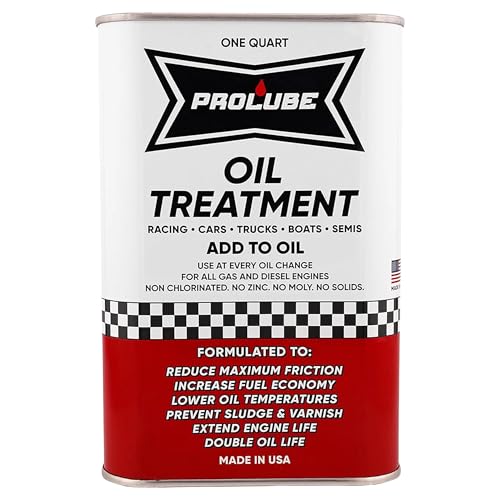
Prolube Oil Treatment is marketed to power up engines, reduce noise, and improve overall performance across gas and diesel engines. It claims to lower friction, reduce vibrations, and enhance fuel economy by promoting smoother engine operation. It also mentions applicability to transmissions and differentials, broadening its use beyond just the engine oil.
Who it’s best for: Drivers seeking a versatile additive that supports both engine performance and efficiency, especially in daily driving or mixed-use scenarios.
Why selected: The combination of horsepower enhancement, quieter operation, and potential fuel savings makes it a well-rounded option for multi-vehicle households or those seeking a single product for multiple lubrication points.
Caution / limitation: The broad claims about horsepower gains may differ by vehicle; consult your owner’s manual and use as directed for best results.
STP High Mileage Oil Treatment + Stop Leak

STP High Mileage Oil Treatment + Stop Leak combines a high-viscosity treatment with a stop-leak formula. It targets engines with over 75,000 miles, delivering an anti-wear protection layer and an additive to rejuvenate seals and gaskets. The aim is to reduce leaks, noise, and smoking while improving performance during normal maintenance intervals.
Who it’s best for: Vehicles with significant mileage and a tendency to leak or burn more oil, where stopping leaks and improving lubrication is a priority.
Why selected: It addresses common high-mileage issues—seal leaks and wear—within a single product, which can simplify maintenance for aging engines.
Caution / limitation: Stop-leak formulations can vary in compatibility; excessive use or use in engines without leaks could yield mixed results.
LIQUI MOLY Valve Clean

Liqui Moly Valve Clean is a petrol additive designed to improve engine performance while reducing emissions and fuel consumption. It’s presented as a universal fit, aligning with drivers seeking cleaner operation and better efficiency through valve cleaning action and reduced pollutant output.
Who it’s best for: Vehicles where valve deposits may affect performance or emissions, especially in engines with older fuel system deposits.
Why selected: It focuses on engine efficiency and emissions, appealing to drivers who want cleaner combustion and refined performance.
Caution / limitation: It’s a preventive maintenance product; it may not reverse already severe valve or deposit issues without mechanical intervention.
Rislone 4447 High Mileage Compression Repair

Rislone 4447 High Mileage Compression Repair with Ring Seal focuses on higher-mileage engines showing reduced compression. It claims to renew worn engines by sealing and filling scratches to stabilize compression across cylinders, which helps restore power and smooth operation.
Who it’s best for: Vehicles with signs of reduced compression or uneven cylinder performance, especially in engines with long service histories.
Why selected: It targets a common high-mileage problem—compression loss—by addressing piston ring sealing and cylinder walls, contributing to more consistent power output.
Caution / limitation: Results depend on the underlying mechanical condition; severe wear may require professional servicing beyond additive treatment.
Lucas Oil 10026 Octane Booster

Lucas Oil 10026 Octane Booster is designed to boost fuel octane, supporting cleaner combustion and improved engine efficiency. While not a direct oil stabilization product, it complements lubrication by promoting efficient combustion in both fuel-injected and carbureted engines.
Who it’s best for: Drivers seeking an octane-boosting additive to optimize fuel combustion and reduce knock in appropriate engines.
Why selected: It broadens the scope of additives considered, showing options that pair fuel efficiency with engine protection strategies.
Caution / limitation: Octane boosters affect combustion properties; verify compatibility with your engine and fuel system before use. Not a direct substitute for oil-based lubrication additives.
Buying Guide
What should you look for when choosing an oil pressure booster additive?
- : High-mileage engines often benefit from stabilizers addressing wear and leaks, while newer engines may prefer additives focused on friction reduction and efficiency.
- : Some products form protective films (MoS2, other compounds) while others stabilize existing oil chemistry. Choose based on your driving style and noise concerns.
- : Check your oil viscosity, engine type (gas or diesel), and whether the product is universal or model-specific. Some additives claim broad compatibility but perform differently across engines.
- : Stop-leak variants can help seals but may mask underlying issues. Use only as directed and monitor for new leaks.
- : If noise reduction is priority, focus on wear protection and film formation. If fuel economy is key, consider friction reducers and efficiency-enhancing formulas.
Frequently Asked Questions
- Do oil stabilizers actually extend engine life? They help by reducing wear and stabilizing lubrication, but they are not a substitute for proper maintenance or repair of existing engine issues.
- Can I mix different brands of additives? Mixing can lead to unpredictable reactions. Follow the manufacturer’s guidelines and avoid mixing incompatible formulations.
- Should I use an additive if my engine is new? For most new engines, using a proven stabilizer or friction reducer can provide extra protection, especially in heavy-duty or high-stress conditions.
- Will stop-leak products repair seals? Stop-leak formulations can slow or reduce leaks, but chronic or large leaks typically require mechanical repair.
- Is one additive enough for multiple vehicles? A versatile product can cover multiple vehicles, but verify each vehicle’s requirements and oil type before use.
- How often should I add an oil conditioner? Follow the product’s guidance and consider adding with each regular oil change for consistent protection.