Answering the need for fast, reliable engine fault code reading and live data, these top car engine scan tools are ideal for DIYers, weekend mechanics, and professional troubleshooters alike. Each option supports common OBD-II protocols and varies in depth of data, ease of use, and compatibility. The best pick depends on your budget, desired features, and how deeply you want to diagnose vehicle systems beyond the engine. Below is a quick table of five solid choices to compare at a glance.
| Product | Best For | Key Benefit |
|---|---|---|
| ANCEL AD310 | Beginners and budget-focused users | Simple code reading and clearing with broad compatibility |
| MOTOPOWER MP69033 | All-around basic scanning | Easy-to-use interface with universal OBD-II support |
| FOXWELL NT301 | Mechanics needing live data | Live data and more intuitive fault code details |
| TOPDON Topscan Master | Advanced diagnosis and mobile use | Bidirectional control and broad system coverage |
| ANCEL AD410 | Users who need detailed diagnostics | Comprehensive OBD-II diagnostics with extended DTC lookup |
Whether you own a sedan, SUV, or light truck, a car engine scan tool helps you identify why a check engine light is on, monitor live engine parameters, and decide whether a visit to the shop is necessary. The following sections detail five top options, including who they’re best for and practical considerations to help you choose confidently.
ANCEL AD310 Classic Enhanced OBD II Scanner

The AD310 focuses on essential fault code reading and clearing for a wide range of 1996-and-newer OBD2 vehicles. It is best for beginners or daily drivers who want a straightforward tool to identify engine codes and reset the MIL light. It supports common diagnostics without overwhelming features. A limitation is that it may lack advanced live data depth compared with higher-end models, so use it for basic TROUBLESHOOTING and code clearing.
MOTOPOWER MP69033 Car OBD2 Scanner
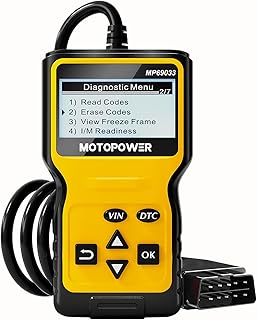
The MP69033 is a balanced option for users who want a simple interface with broad OBD-II coverage. It is well suited for everyday drivers who need to read and clear codes and view basic live data. Its straightforward operation makes it a practical choice for quick diagnostics. A caveat is that more advanced functions or deep live data analytics may require a higher-end tool.
FOXWELL NT301 OBD2 Scanner

The NT301 stands out for mechanics who want live data alongside fault codes. It provides more detailed information about engine sensors, RPM, coolant temperature, and oxygen sensor readings, helping diagnose patterns beyond a simple MIL assertion. Choose this if you need better visibility into real-time engine behavior; it may be less beginner-friendly than simpler models.
TOPDON Topscan Master OBD2 Scanner

The Topscan Master is designed for more serious diagnostics with bidirectional scanning and system-wide coverage. It supports iOS/Android use and can assist with complex fault detection across multiple vehicle systems. It is best for professional-grade diagnostics or enthusiasts who want AI-assisted insight and broader capabilities. A potential limitation is its higher price and learning curve compared with entry-level readers.
ANCEL AD410 Enhanced OBD2 Scanner

The AD410 is a more capable option with extensive DTC lookups and a broader feature set, including live data, freeze frame, I/M readiness, O2 sensor tests, and EVAP tests. It is best for drivers who want deeper diagnostics and clearer code definitions for DIY repairs or when communicating with mechanics. A limitation is that its depth may be beyond basic use and can require time to master.
Buying Guide: How to Choose the Right Car Engine Scan Tool
What level of diagnostics do you need? For simple code reading and light repairs, an entry-level scanner like the AD310 or MP69033 is often sufficient. If you need live data in detail, NT301 or AD410 provides better parameter visibility. For comprehensive system checks and bidirectional control, TOPDON Topscan Master is a strong choice.
Key considerations
- Compatibility: Ensure the tool supports your vehicle’s make, model year, and OBD-II protocol.
- Live data: If diagnosing sensor performance and abnormalities, prioritize real-time data streams and graphing.
- Diagnostics depth: Look for DTC lookup databases and freeze frame data to understand fault conditions.
- Bidirectional control: Needed for advanced troubleshooting and certain maintenance tasks; typically found in higher-end models.
- Ease of use: Simple interfaces benefit beginners; professional tools offer more features but may require training.
- Updateability: Some tools receive firmware and software updates; confirm how updates are delivered and priced.
Practical buying tips
- Assess your typical vehicles: If you own multiple vehicles, a tool with broad system coverage is advantageous.
- Plan for future needs: Consider if you want AI assistance, mobile app integration, or support for newer protocols like CAN-FD.
- Keep expectations aligned with price: More features usually mean a higher cost; pick a model that closely matches your most frequent tasks.
FAQ
- What is an OBD-II scanner?
An OBD-II scanner reads diagnostic trouble codes from a vehicle’s on-board computer to help identify engine or emissions-related issues.
- Do I need live data or just codes?
Live data helps diagnose intermittent problems and sensor performance, while codes indicate fault conditions. For reliable repairs, both are beneficial.
- Can these tools work with any vehicle?
Most modern cars sold in the U.S. since 1996 use OBD-II. Always check compatibility with your specific make and model.
- Are bidirectional scanners necessary?
Bidirectional scanning allows activating certain systems for testing, which is useful for professional diagnostics but not essential for basic use.
- How often should I update the tool’s software?
Update schedules vary by model; check the manufacturer’s recommendations to access new features and DTC definitions.
- Is a higher-priced tool worth it for a casual user?
For occasional repairs, an entry-level model often suffices. Upgrading pays off if you diagnose many vehicles or need advanced features.