If you’re searching for a roof-mounted bike carrier for a sedan, you want a solution that is secure, easy to install, and gentle on your vehicle. This guide highlights five roof rack options that fit on most sedans, explaining who each is best for and why. It covers single-bike and two-bike setups, different mounting styles, and practical pros and cons to help you choose the right rack for your routine rides and road trips.
Product overview table
| Product | Best For | Notes |
|---|---|---|
| Swagman Upright Rooftop Carrier | Lightweight, simple one-bike transport | Compact, easy to install; works with up to 54” wheelbase |
| Allen Sports Deluxe 2-Bike Roof | Two bikes on a budget, quick setup | Low-profile, lightweight arms; depends on crossbars |
| GATHERSKY Upright Dual-Arm | Sturdy one-bike mounting with 3.1″ tires | Two-arm design for stability |
| TOOENJOY 2-Bike Roof Rack | Two bikes with secure wheel grip | Durable build, ratchet system |
| ROCKBROS Suction Cup Rack | Temporary or rental cars, or cars without roof rails | Tool-free suction install, best on flat roofs |
Swagman Upright Roof Mount Bike Rack

The upright design provides a compact one-bike transport option, best for riders with light loads and standard crossbars. It installs in minutes and carries a bicycle with a wheelbase up to 54 inches and tires up to 3 inches wide. Maximum weight per bike is 35 pounds. This rack is ideal for single-bike users who value a minimalist look and easy removal. A potential limitation is its single-bike capacity, which is not suitable for two bikes on a single vehicle.
Allen Sports Deluxe 2-Bike Trunk Mount Rack

Although primarily marketed as a trunk-mounted rack, its inclusion here offers a comparison point for sedans that prefer trunk mounting or lack roof rails. It ships fully assembled and supports up to 70 pounds total, with 12-inch carry arms and 11.5-inch arm spacing for a broad range of bike styles. Best for sedan owners seeking a straightforward two-bike option with quick setup, though it is not a roof rack and thus has different mounting dynamics than roof-mounted systems. Consider roof mounting if you want better wind resistance and reduced trunk interference.
GATHERSKY Upright Dual-Arm Roof Rack

This dual-arm upright rack emphasizes secure wheel-based mounting and easy one-handed adjustments. It accommodates bikes with wheels up to 29 inches and tires up to 3.1 inches wide, with a wheelbase limit near 48 inches. It’s best for riders who want a stable, quick-load system that minimizes frame contact. A potential limitation is that some larger or nonstandard bikes may require additional fittings or adjustments to ensure stability on longer wheelbases.
TOOENJOY Rooftop Rack For 2 Bikes

Designed for two bikes, this rack uses dual rotatable load arms to grip wheels without frame contact, reducing the risk of scratches. It features a dual ratchet lock system for one-handed loading and unloading, which can be a practical advantage for solo riders. Best for families or roommates with multiple bikes. A note: check compatibility with your car’s crossbars to ensure a secure fit on arrival.
ROCKBROS Suction Cup Bike Rack
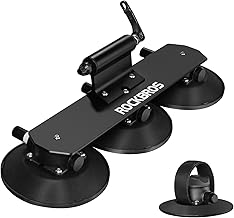
This suction-mounted rack fits most sedans, coupes, hatchbacks, SUVs, and vans, especially those with flat roof surfaces. It avoids frame contact with a rubber padding and includes a strap to secure the crank for added protection. It is best for temporary setups, rental cars, or vehicles without roof rails. It’s not ideal for highly curved or smooth roofs where suction adhesion may diminish over time.
Buying Guide: Key Considerations For Roof Rack Buyers
What roof rack design fits your car best? Choose between upright single-arm, upright dual-arm, and two-bike systems based on how many bikes you ride and how often you travel. For sedans with no roof rails, consider suction cup or clip-style racks, but be mindful of roof curvature and surface texture. If you regularly transport two bikes, prioritize a two-bike system with secure wheel-based mounting and anti-sway features.
How important is ease of installation? Racks that install in minutes and require minimal tools save time and reduce the risk of improper mounting. If you travel solo, look for one-handed loading mechanisms and intuitive tightening systems. For families with multiple bikes, a system with simple, repeatable mounting steps helps every rider get on the road faster.
What about stability and protection? Look for racks that contact the bike primarily at wheels, not the frame, to minimize scratches. Arm length, arm spacing, and wheelbase compatibility influence fit across bike sizes. Check weight limits per bike and total, ensuring the rack can carry your typical gear without strain.
On-road performance and vehicle fit matter. Some racks are optimized for flat roof surfaces, while others work on crossbars of various shapes. If you have aero or rounded crossbars, choose a rack with adaptable mounting and non-slip padding. Always confirm compatibility with your sedan’s roof contours and crossbar system before purchase.
Maintenance and durability. Materials like aluminum alloys and reinforced plastics resist corrosion and wear. Some racks include protective padding to shield paint and reduce noise. Periodic inspection of bolts, straps, and clamps keeps the system secure over time.
FAQ: Roof Rack For Sedan Questions
- Can I install a roof rack on any sedan? Most sedans with crossbars can accommodate a roof rack, but confirm crossbar compatibility, weight limits, and roof surface suitability.
- Is a two-bike rack worth it for a sedan? If you frequently transport two bikes, a two-bike roof rack avoids switching bikes between trips and saves time during loading.
- Do roof racks affect fuel efficiency? Some increase drag and may slightly affect fuel economy, especially at higher speeds; aerodynamic designs can help minimize this.
- Is it safe to transport bikes without removing wheels? Many racks are designed to hold wheels without removing them, but always secure front and rear wheels to prevent movement.
- How do I protect my car’s paint? Use racks with padded clamps and rubber contacts; avoid metal-to-paint contact and check fit regularly to prevent scratches.
- What maintenance is required for a roof rack? Regularly inspect straps, clamps, and padding; tighten loose components; clean off debris after trips.