Direct answer: If you want a teardrop trailer setup that doubles as a motorcycle carrier, consider light, versatile hitch-mounted racks designed for 2″ receivers. These options support multiple bikes, vehicle compatibility, and easy loading without a trailer. The best buyers are weekend riders needing simple, portable transport and frequent campers who want a compact, efficient hauler.
Overview: The following picks are tailored for American buyers seeking a hitch-style motorcycle carrier that complements a teardrop trailer setup. They emphasize load capacity, ease of use, and durability in varied weather. The top choices balance single-bike and dual-bike configurations, aluminum vs. steel builds, and tilt or roll-on/roll-off ramps for quicker loading. See the summary table for a quick comparison.
| Product | Material | Capacity | Best For |
|---|---|---|---|
| Black Widow Aluminum Motorcycle Hitch Carrier with Ramp | Aluminum | 400 lb | Lighter setups, single motorcycle, easy handling |
| VEVOR Motorcycle Carrier | Steel | 600 lb | Heavier bikes, higher stability, long ramps |
| Black Widow Aluminum Double Motorcycle Hitch Carrier | Aluminum | 600 lb total (400 per track) | Two bikes, compact trailer-ready |
| Mockins 83″ Tilting Motorcycle Hitch Carrier | Weatherproof steel | 500 lb | Tilting ramp, versatile use with fat tires |
| ECOTRIC 500LB Hitch Mount Carrier | Steel | 500 lb | Universal fit, versatile loading |
Black Widow Aluminum Motorcycle Hitch Carrier with Ramp
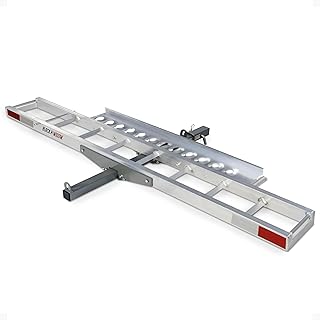
Features: Aluminum construction for light handling and durability; 400 lb capacity; 2″ hitch; roll-on/roll-off ramp with side-installation options; anti-wobble design; includes a youth bike adapter and self-storing ramp. Best for riders needing a lightweight single-bike carrier that folds away when not in use.
Best for: Weekend riders with 2″ hitch receivers who want easy loading and minimal setup. This option suits smaller, lighter bikes and urban camping setups.
Limitations: Aluminum may offer less capacity for very heavy bikes compared to steel; ensure load distribution aligns with hitch and vehicle rating.
VEVOR Motorcycle Carrier

Features: 600 lb weight capacity; 47″ ramp length with 76″ long platform; high-strength steel construction; designed for 2″ hitch receivers; rust-resistant. Best for: Riders transporting larger or heavier motorcycles and seeking a generous loading ramp and robust stability.
Limitations: Heavier setup can be harder to install and maneuver; ensure your vehicle hitch height and clearance accommodate the longer ramp.
Black Widow Aluminum Double Motorcycle Hitch Carrier

Features: Dual-track aluminum carrier enabling two motorcycles on one rack; 600 lb total capacity (400 lb per track); self-storing ramp; anti-wobble design; platform supports two bikes without trailers. Best for: Families or groups transporting two bikes to the same destination, with a preference for a compact, trailer-free setup.
Limitations: Heavier overall unit; ensure vehicle payload and hitch class can handle the distributed load of two bikes.
Mockins 83″ Tilting Motorcycle Hitch Carrier

Features: Tilting ramp for easier loading; supports fat tires up to 5.5″ wide; 500 lb capacity; 83″ length; fits 2″ receivers; weatherproof steel with a built-in stabilizer and straps. Best for: Riders who frequently haul dirt bikes, fat-tire bikes, or scooters and want tilting capability for easier loading in tight spaces.
Limitations: Tilting mechanism adds complexity; verify that tilting action works with your teardrop trailer clearance and tailgate height.
ECOTRIC 500LB Hitch Mount Carrier

Features: Universal fit for any 2-inch square receiver; dual-side loading ramp option; high-strength steel frame; 500 lb load capacity; stable locking mechanism to reduce sway. Best for: Versatile setups that require flexible loading from either side and reliable performance across various bikes and scooters.
Limitations: Steel construction can be heavier; confirm hitch capacity and vehicle compatibility before mounting.
Buying Guide
What to consider when pairing a teardrop trailer with a motorcycle carrier
- Hitch compatibility: Confirm a 2″ hitch receiver is standard on your vehicle and that the teardrop trailer’s tongue weight ratings align with the carrier’s weight plus the bike(s).
- Load capacity: Match the carrier’s weight rating with your motorcycle’s weight and any accessories (ramp, straps, locks). If you regularly move two bikes, prioritize dual-track aluminum or steel carriers with balanced load distribution.
- Material choice: Aluminum is lighter and resistant to corrosion; steel offers higher raw capacity and durability, though heavier and potentially more prone to rust without proper coating.
- Ramp design and clearance: Choose a ramp length and tilt feature that fit your yard and driveway. Longer ramps ease loading but require more clearance from the ground and trailer.
- Stability features: Anti-wobble designs and locking mechanisms help keep bikes steady during transport. Consider additional stabilizers for uneven surfaces or off-road trips.
- Storage and portability: Self-storing ramps and compact profiles are beneficial for teardrop setups where space is at a premium.
- Maintenance: Look for rust-resistant finishes and easy-to-clean surfaces, especially if you trailer in rain or snow.
FAQ
- Can I use a motorcycle hitch carrier with a teardrop trailer? Yes, if your tow vehicle and hitch are compatible, and the tongue weight can accommodate the carrier and bike(s).
- What is the typical weight limit for these hitch carriers? Capacity ranges from 400 lb to 600 lb depending on the model and configuration.
- Is a dual-bike carrier safer than a single-bike carrier? Dual-track designs distribute weight more evenly when carrying two bikes, but require careful balance and sufficient hitch rating.
- Do these carriers require special installation tools? Most carriers use standard 2″ hitch pins; some models include stabilizers or require basic hand tools for setup.
- Can I load from either side of the carrier? Several models offer side-loading ramps or dual-side ramps for convenient loading from different angles.
- What maintenance is recommended? Regularly inspect bolts, secure straps, and ramps; clean off dirt and apply light lubrication to moving parts if needed.