When selecting a tow bar for a motor home, choose a model that offers robust capacity, easy hook-up, and reliable safety features. This guide highlights five strong options that suit different RV setups, from bumper-mounted to baseplate-compatible designs. Best for frequent highway travelers, full-time RVers, and hobby campers who need dependable, straightforward tows.
Overview of the strongest picks:
| Product | Capacity | Best For | Notes |
|---|---|---|---|
| VEVOR Tow Bar | 5,500 lbs | General RV towing, bumper-mounted | 2-inch ball coupler; powder-coated alloy steel |
| Nilight Tow Bar | 5,500 lbs | Budget-friendly, universal fit | 41-inch opening; alloy steel |
| Roadmaster Sterling All Terrain | Up to 8,000 lbs | Heavy tows, non-binding design | Large hook-up radius |
| NSA RV Ready Brute II | 8,000 lbs | Lightweight aluminum, high capacity | US-made |
| NSA RV Ready Brute Elite II | 8,000 lbs | With supplemental brake system | Heavy-duty aluminum; enhanced safety |
VEVOR Tow Bar, 5500 Lbs Capacity

The VEVOR Tow Bar is designed for bumper-mounted tow setups with a 2-inch ball hitch and a 39.4-inch opening width. It uses alloy steel with powder coating for weather resistance. This model is best for RVs that require a straightforward, mid-range-towing solution and for buyers prioritizing a rugged, no-fuss attachment. Best for frequent highway use that doesn’t demand ultra-heavy loads.
Who it’s best for: RVers needing a reliable, mid-capacity bar that’s easy to install and maintain. Why selected: balances capacity, durability, and affordable pricing. Caution: ensure compatibility with your specific bumper mount and ball size before purchase.
Nilight Tow Bar With Safety Chains

The Nilight Tow Bar features a safe, universal 2-inch coupler with 5,500 pounds capacity and a 41-inch opening width. It’s bumper-mounted and constructed from alloy steel, making it suitable for a broad range of RV, car, and trailer combinations. Best for budget-conscious buyers who still want a robust towing option. Better for lighter to mid-weight tows on standard RVs.
Who it’s best for: occasional to frequent campers needing straightforward installation at an approachable price. Why selected: wider opening provides flexibility; safety chains support reliability. Caution: confirm compatibility with your baseplate or bumper configuration and ensure proper safety chain routing.
Roadmaster Sterling All Terrain Tow Bar

The Roadmaster Sterling All Terrain Tow Bar fits Blue Ox baseplates and hauls up to 8,000 pounds. Its non-binding design and large hook-up radius are designed to simplify alignment during connection, making it a strong choice for heavier-towing RVs or frequent setup in variable environments. Best for owners with compatible baseplates seeking a reliable, high-capacity tow bar. Better for long-term use with a larger towing envelope. Caution: ensure your baseplates are Blue Ox compatible and verify clearance for hook-up in tight spaces.
NSA RV Ready Brute II Tow Bar

The Ready Brute II uses heavy-duty aluminum construction and offers an 8,000-pound capacity. It is US-made and designed to be robust yet relatively lightweight for its class. Best for RV owners who want a high-capacity aluminum tow bar with durable, corrosion-resistant properties. Caution: aluminum construction can be more sensitive to wear in rough environments; confirm mounting compatibility with your towed vehicle and truck hitch system.
NSA RV Ready Brute Elite II Tow Bar
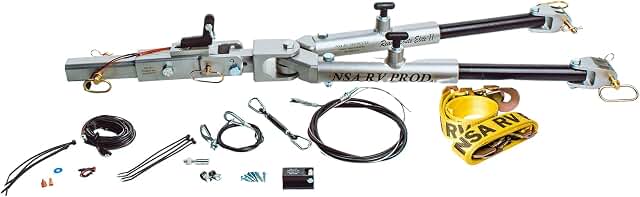
The Ready Brute Elite II offers an 8,000-pound capacity with a supplemental brake system, combining strong safety features with high capacity. Best for motor homes where added braking automation is desired to improve control and stopping distance when towing an additional vehicle. Choose this if you require proactive braking support for heavier tows. Limitation: supplemental brake systems add complexity and cost, and require proper installation and maintenance.
Buying Guide: Key Purchase Considerations
- Tow capacity vs. towed weight: Match the bar’s rated capacity to or above the total weight of the vehicle being towed to ensure safe operation.
- Mounting style: Choose bumper-mounted bars for simple setups or baseplate-compatible models for more integrated tows with fifth-wheel or hitch-based systems.
- Connection geometry: Consider opening width, hook-up radius, and alignment ease to minimize hitching time, especially in tight spaces.
- Materials and finish: Powder-coated steel is durable for the outdoors; aluminum options save weight but may have different wear profiles; rust resistance is key for long-term use.
- Safety features: Safety chains, non-binding designs, and optional brake systems improve control and reduce risk during towing.
- Compatibility: Confirm baseplate or bumper compatibility with your towed vehicle and the towing vehicle’s hitch system before purchasing.
FAQ
- What is a typical towing capacity to look for in a motor home tow bar?
Choose a bar rated for at least 1.5 times the weight of the heaviest towed vehicle to provide a safety margin.
- Do I need a brake system with a tow bar?
Not always, but a supplemental brake system can improve stopping distance and control for heavier towed vehicles.
- Can I use a bumper-mounted tow bar on any motor home?
No. Ensure your bumper and hitch setup are compatible with the tow bar’s mounting type and opening width.
- What maintenance is required for tow bars?
Regularly inspect for corrosion, cracks, and loose connections; grease moving joints if specified by the manufacturer.
- How important is the hook-up radius?
A larger hook-up radius eases alignment, especially in uneven or remote settings, reducing hitching time.