Looking to convert your bike into a capable electric ride? This guide highlights five top Amazon kits that fit a variety of needs—from budget-friendly DIY projects to powerful mid-drive options. Each kit is evaluated for suitability to different rider profiles, from casual commuters to hill-climbing enthusiasts. The following summary table helps you compare key points at a glance.
| Product | Motor Type | Wheel Size | Best For |
|---|---|---|---|
| 26-Inch Electric Bike Conversion Kit (440 RPM) | Rear Hub Motor | 26-Inch | Budget DIYers, road/commuter bikes |
| 26 Inch 48V 1000W Rear Wheel Kit | Rear Wheel Motor | 26-Inch | Power-focused upgrades, urban riding |
| Electric Bicycle Motor Kit, 24V 250W | Chain Drive, Brushed Controller | 16-28 Inch wheels | Basic DIY projects, lighter setups |
| Ktaxon 48V 1000W Front Wheel Kit | Front Hub Motor | 24-Inch wheels | Balanced front-drive option, easy installation |
| BAFANG Mid Drive Kit 1000W | Mid-Drive (BBS02B/HD) | 68-125 mm BB, various bikes | High performance, versatile compatibility |
26-Inch Electric Bike Conversion Kit, 48V 1000W Rear Hub

This kit uses a durable rear hub motor designed for 26-inch wheels, offering up to 33 mph with 45 N.m torque. It features a 36-spoke wheel to distribute stress evenly, supporting up to 265 pounds, making it suitable for most adult riders. The kit includes a thumb throttle, pedal-assist sensor, brake levers, a waterproof controller bag, and mounting hardware for a straightforward conversion. Best for riders seeking a robust, all-in-one DIY solution without complexity. Caution: rear-hub setups can add unsprung weight, potentially affecting ride feel on rough terrain.
26 Inch 48V 1000W Rear Wheel Kit, High-Power
This 48V 1000W rear-wheel kit emphasizes durability with aluminum, iron, copper, and rubber components and claims 53 km/h top speed with 45 N.m torque and 440 rpm. It’s designed for road use with a 120 kg (264.55 lbs) load capacity and offers over 80% efficiency. The kit is well-suited for commuters who want strong acceleration and a precision-made build. Better for riders who prioritize higher top speeds and consistent performance on paved surfaces. Limitation: as a rear-wheel system, suspension and weight distribution should be considered on bumpy terrain.
Electric Bicycle Motor Kit, 24V 250W

This 24V/250W chain-drive kit includes a motor, chain, freewheel, mounting hardware, and a controller. It covers wheels from 16 to 28 inches and aims at easy, entry-level DIY upgrades. Best for light-duty use, casual riders, or hobby projects. Caution: lower power means modest hill-climbing ability and slower top speeds compared with higher-wattage kits.
Ktaxon 48V 1000W Front Wheel Kit
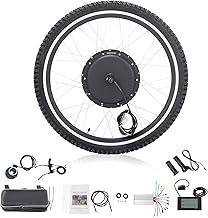
This front-wheel kit uses a powerful hub motor with an LCD display to track battery power, speed, mileage, riding mode, and error codes. It supports up to about 220 lbs and offers a cadence-sensing PAS with no throttle for a smoother, more natural ride. Best for riders who want a balanced front-drive option and easy installation. Limitation: front hub motors can affect steering feel and weight distribution on certain frames; verify compatibility with recumbent or trike configurations.
BAFANG Mid Drive Kit 1000W

The BAFANG mid-drive kit uses a CAN-Bus smart motor with USB programming, enabling customization of speed limits, throttle response, and PAS levels. It supports multiple bottom-bracket widths (68-125 mm) and is compatible with many frame types, including recumbents and trikes. It delivers high torque by routing power through the bike’s gearing, which is advantageous for climbs and heavy loads. Best for riders seeking strong torque and customization. Caution: mid-drive installations may require more precise alignment and potential frame considerations.
Buying Guide
What type of motor should you choose? Hub motors are straightforward and quiet, ideal for simple conversions and flat terrain. Mid-drive kits offer superior torque and efficiency on hills and varied terrain but require more careful installation and bike compatibility checks. Front hubs provide balanced traction but can alter steering feel; evaluate your riding style and frame.
How to assess compatibility? Check wheel size, bottom-bracket width, frame clearance, and weight limits. Recumbent or recumbent-trike riders should prioritize kits with flexible mounting and low profile components. Look for a kit including throttle, PAS, and braking levers, as these improve safety and control during conversion.
What about electrical performance? Consider voltage (24V–48V ranges), wattage (250W–1000W), and weight capacity. Higher wattage translates to faster acceleration and better hill-climbing, but may be subject to local regulations. Efficiency affects range, and a robust battery interface helps with long-term reliability.
Installation considerations. Some kits come with all mounting hardware and clear instructions, while others require additional adapters or professional help. A waterproof controller bag helps protect electronics in wet conditions. For riders wanting a clean look, choose a kit with a modular design and compatible brake lever integration.
Frequently Asked Questions
- What is the best kit for a recumbent bike conversion?
– A mid-drive kit or a front-hub kit with compatible frame spacing tends to work well, offering strong torque and easier integration with existing chain systems. - Do hub motor kits affect handling on hills?
– Rear-hub and front-hub kits provide solid torque, but weight distribution changes can affect handling on uneven terrain; consider frame geometry and suspension needs. - Is a throttle mandatory for e-bike kits?
– Not always. Pedal-assisted systems with PAS allow hands-free control, and some riders prefer throttle for acceleration from stops. - What maintenance is required after installation?
– Regular checks on the chain, spokes, brake alignment, and electrical connections help sustain performance and safety. - Can these kits be used on non-standard bikes?
– Some kits fit a wide range of wheel sizes (16-28 inches) or BB widths, but always verify wheel and frame compatibility before purchase. - Will these kits meet local regulations?
– Power and speed limits vary by region; review local e-bike laws to ensure compliance with your installation.