When shopping for valve keeper tools, the best options balance precision, durability, and ease of use for common small engine tasks. This guide highlights five products suitable for hobbyists and professional mechanics tackling Briggs & Stratton, Honda, Toyota, and other OHV engines. Each item is chosen for clear applicability to valve keepers, with notes on who benefits most and potential limitations. Use this overview to match your repair needs with the right tool for removal, retention, and installation of valve keepers.
| Product | Best For | Why It Stands Out | Limitations |
|---|---|---|---|
| 23300 Small Engine Valve Spring Compressor | General small engines | Versatile two-jaw set covers 3/4″ to 1-1/16″ springs; durable frame for repeated use. | Primarily a compressor, not a keeper-specific tool. |
| F FIERCE CYCLE Valve Keeper Locks (2 pcs) | Smaller valve stems around 7 mm | Solid steel construction; precise tolerances for reliable keeper seating. | Limited quantity per package; best when you need just a couple of locks. |
| F FIERCE CYCLE Valve Keeper Locks (20 pcs) | 8 mm valve stems | High quantity helps complete multiple repairs; steel, accurately machined. | More locks than some jobs require; storage matters. |
| F FIERCE CYCLE Valve Keeper Locks (10 pcs) | 8 mm valve stems | Balanced option for mid-sized jobs; strong steel construction. | Limited to 8 mm stems; not universal. |
| 36050 Valve Keeper Remover and Installer Kit | Wide engine compatibility | All-in-one kit for 4.5–7.5 mm stems; removes and installs on the vehicle or bench. | More premium tooling; may be overkill for simple uses. |
Buyer types covered: hobbyists performing routine maintenance, DIY enthusiasts working on common gas engines, and professional techs handling multi-engine repair tasks. The following sections detail each product’s fit, benefits, and potential caveats to help you decide the best match for your toolkit.
23300 Small Engine Valve Spring Compressor
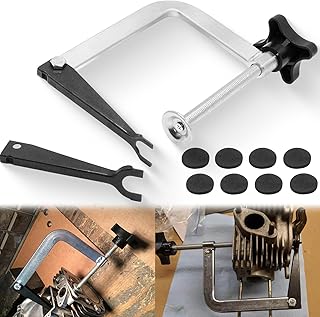
- Best for: General small-engine maintenance where valve springs need compression without removing cylinder heads.
- What it offers: Fits springs from 3/4″ to 1-1/16″; designed for Briggs & Stratton, Clinton, Harley-Davidson, and similar engines; heavy-duty frame for rigidity.
- Why chosen: Efficient tool to streamline keeper removal during valve service, reducing labor time.
- Caution: It is primarily a spring compressor; ensure compatibility with your exact engine model before use to avoid damage.
F FIERCE CYCLE 2pcs Valve Keeper Locks (7mm)

- Best for: Precision work on small-diameter valve stems around 7 mm.
- What it offers: Includes 2 valve keeper locks; steel construction machined to exact tolerances for secure seating.
- Why chosen: Compact option ideal for quick tasks or as a spare set in tight workspaces.
- Caution: Limited quantity; consider pairing with a larger set if your shop handles multiple engines.
F FIERCE CYCLE 20pcs Valve Keeper Locks (8mm)

- Best for: Moderate-volume repair work on 8 mm stems found in many modern small engines.
- What it offers: 20-piece set; steel construction with precise tolerances for reliable keeper seating.
- Why chosen: Good balance of quantity and reliability for shop workflows that handle multiple units.
- Caution: Stock management; avoid leaving all 20 in a loose tray to prevent loss.
F FIERCE CYCLE 10pcs Valve Keeper Locks (8mm)

- Best for: Mid-sized jobs requiring dependable 8 mm retaining hardware.
- What it offers: 10-piece set; steel locks machined to tight tolerances for secure engagement.
- Why chosen: Suitable for shops balancing cost with reliability on common engine families.
- Caution: May require pairing with larger kits for high-volume repair scenarios.
36050 Valve Keeper Remover and Installer Kit

- Best for: A versatile, all-in-one option for many engines, including Toyota 4-cylinder and Chrysler New World.
- What it offers: Combines valve keeper removal, installation, and a valve spring compressor in one kit; supports stems 4.5–7.5 mm (5/16″–3/8″).
- Why chosen: Eliminates tool switching; on-vehicle and bench-use capability improves workflow efficiency.
- Caution: May be more complex to use for beginners; follow included guidelines to avoid misalignment.
Buying Guide: Key Considerations For Valve Keeper Tools
What engine types do you service?
Identify whether you work primarily on Briggs & Stratton, Honda, Toyota, or Asian-import engines. Tools priced for 7–8 mm stems or universal kits can save time when you service multiple brands.
Do you prefer all-in-one versus modular kits?
All-in-one kits, like the valve keeper remover and installer, streamline workflows but may have a steeper learning curve. Modular sets let you buy only what you need for a specific job or engine family.
How important is kit quantity?
Higher piece counts help for shop environments with frequent repairs. Smaller sets are sufficient for occasional maintenance or spare parts in a home garage.
What about tool durability and material quality?
Steel construction with precise tolerances ensures consistent keeper seating and long service life. Look for hardened or robust frame designs for repeated use without deformation.
Are there compatibility notes to consider?
Check stem diameter ranges and whether each tool is compatible with overhead valve (OHV) systems. Some tools are engine-specific, while others claim broad compatibility across brands.
FAQ
- What is a valve keeper and why is it important? A valve keeper locks the valve stem and retainer in place, ensuring proper valve timing and sealing during engine operation.
- Can I use a valve keeper tool on any engine? Tools vary by stem diameter and engine design. Verify compatibility with your engine’s valve stem size before purchasing.
- Is it necessary to remove the cylinder head to service keepers? Some tools allow on-vehicle work, but certain scenarios still require head removal for access.
- When should I replace valve keeper locks? Replace damaged or worn keeper locks to prevent valve train failure and potential engine damage.
- Do I need a compressor in addition to keeper tools? If you’re performing valve spring work, a compressor helps compress springs; some kits combine functions for efficiency.
- Are there safety considerations when using these tools? Always follow manufacturer instructions, secure the engine, and wear eye protection during compression and removal work.