Whether you’re a DIY mechanic or a professional shop owner, the right automotive lifts and equipment can dramatically improve efficiency and safety. This guide highlights five essential options suited for different garages and tasks, from compact jack stands to full two-post lifts. The top picks are prioritized for portability, capacity, and ease of use. The buyer-friendly table below summarizes who each product is best for and the primary use case.
| Product | Best For | Key Use Case |
|---|---|---|
| Amazon Basics Steel Jack Auto Stands, 3 Ton | Home garages with sedans and compact SUVs | Vehicle support during maintenance and quick jacking tasks |
| 2 Post Lift 11000lbs LM1100S | Anyone needing a full-capacity shop lift | Professional or serious DIY lifting for maintenance and frame access |
| 2PCS 5 Ton Hydraulic Car Ramps | Low-profile cars and oil change setups | Under-vehicle access without a jack stand |
| XK Mobile 2 Post Car Lift 8500 lb | Mobile, smaller shops and home garages | Portable two-post lifting with wheels for versatile placement |
| Powerbuilt 3 Ton Unijack | Compact, all-in-one lifting solution | Carry-along, space-saving lifting with integrated stands |
Top picks overview: The 3-ton steel jack stands are ideal for compact cars and urban SUVs, offering stability in a lightweight pair. The LM1100S two-post lift delivers higher capacity for larger vehicles and deeper maintenance access. Hydraulic ramps provide a simple, low-profile approach for frequent oil changes. The mobile 2-post lift brings portability to a broader set of garages, while the Powerbuilt all-in-one unit emphasizes space-saving versatility. Each option targets different garage sizes, vehicle types, and maintenance workflows to help you choose with confidence.
Amazon Basics Steel Jack Auto Stands, 3 Ton Capacity

This pair of steel jack stands provides a 3-ton (2.7 metric ton) capacity, making them suitable for sedans and smaller SUVs. Best for DIY enthusiasts who need stable temporary support during brake, suspension, or oil-change work. The stands are easy to adjust in height and pair well with a hydraulic floor jack for quick setup. A potential limitation is maximum height for taller vehicles, which can constrain some lifted service tasks.
2 Post Lift 11000lbs LM1100S

This two-post lift offers an 11,000 lb capacity, enabling service on a broad range of vehicles including larger trucks and SUVs. It’s best for professional shops or serious DIY setups that require full undercarriage access. Considerations include installation space and maintenance routines typical for a fixed lift. It provides robust alignment and safe loading for routine and heavy maintenance tasks.
2PCS 5 Ton Hydraulic Car Ramps

These adjustable vehicle ramps boast a combined 10-ton capacity (5 tons per ramp) and are ideal for oil changes and low-clearance vehicles. They’re best for frequent maintenance at home or in small shops where space is limited and a traditional jack setup is impractical. A caveat is that ramps may require careful positioning on uneven surfaces and could be less stable on any slope compared to a proper jack stand system.
XK Mobile 2 Post Car Lift 8500 lb

This 8500 lb mobile two-post lift blends portability with capability, supporting trucks, SUVs, and various vehicles in a home shop or mobile service setup. It’s best for users needing a flexible lift that can be moved between bays or locations. The wheels facilitate placement, but ensure the floor is flat and rated to handle dynamic loads during lifting and lowering cycles.
Powerbuilt 3 Ton All-in-One Unijack
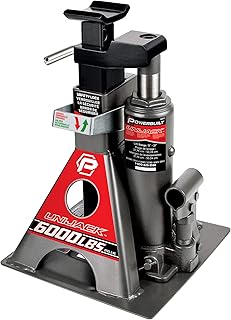
The Powerbuilt system combines a bottle jack with jack stands in a compact, all-in-one unit rated for 3 tons. It’s best for space-constrained garages and hobbyists who need a portable lifting solution that reduces the number of tools in use. A limitation is that it may require frequent repositioning when servicing multiple points under larger vehicles.
Buying Guide: Key Purchase Considerations
What vehicle type will you service most often? Choose higher-capacity lifts if you regularly work on trucks, SUVs, or lifted vehicles, and consider lighter stands for sedans. Do you have dedicated space or a mobile workflow? For fixed shops, traditional two-post lifts offer depth of access; for smaller spaces or intermittent use, portable options may be better. How important is speed and ease of setup? Hydraulic ramps and all-in-one units simplify setups for quick oil changes and routine maintenance. Assess floor conditions and mounting requirements to ensure stability and safety.
Capacity and Vehicle Type
Match lift capacity to the heaviest vehicle you plan to service. Underestimating capacity can compromise safety and performance. Consider both front and rear axle loads and the car’s weight distribution when selecting lifts and stands.
Space and Portability
Measure your garage length, width, and ceiling height. Portable lifts and mobile options offer flexibility but may require more floor space for safe operation. Fixed lifts demand dedicated installation space and proper anchoring.
Ease of Use and Safety
Look for features like simple height adjustment, stable base design, and clear load rating marks. Safety pins, locking mechanisms, and even alignment guides contribute to safer daily use. Always follow manufacturer instructions and wear appropriate protective gear during operations.
Maintenance and Installation
Consider the time and tools needed to install or assemble a lift, ramp, or jack system. Some products require professional installation or periodic inspection to maintain safety standards. Keep a regular inspection schedule to check for wear, corrosion, and operation accuracy.
Buying Considerations by Scenario
- First-time homeowner with sedans: choose 3-ton stands for basic support and a compatible jack.
- Small home shop with limited space: consider the all-in-one unijack and compact ramps.
- Garage aiming for deeper undercarriage access: prioritize a high-capacity two-post lift.
- Frequent oil changes in various locations: pick a mobile lift with wheels for easy relocation.
Common Limitations To Watch For
- Ramps and lighter stands may be less stable on uneven surfaces.
- High-capacity lifts require substantial installation space and dedicated power or mounting.
- Portable lifts may have height or reach limitations compared to fixed installations.
Recommended Setup Scenarios
- Home garage focusing on routine maintenance: ramps plus 3-ton stands.
- Professional shop with variable vehicle sizes: 2-post lift with high capacity.
- Mobile service with limited space: mobile 2-post lift and all-in-one unijack.
FAQ
- What is the safest way to lift a vehicle at home?
- Do I need professional installation for a two-post lift?
- Can I use ramps for all maintenance tasks?
- What should I consider when choosing between fixed and mobile lifts?
- How important is weight capacity?
- Are these products compatible with low-profile cars?
Use a combination of jack stands and a compatible floor jack, with the vehicle on a level surface and with the parking brake engaged.
Many two-post lifts require professional installation or specialized tools to ensure proper alignment and safety.
Ramps are convenient for oil changes and low-clearance work but may not be suitable for all suspension or brake tasks requiring wheel removal.
Fixed lifts offer deeper access and stability; mobile lifts provide flexibility and space-saving benefits for variable workflows.
Capacity should reflect the heaviest vehicle you plan to service to avoid overload and ensure safe operation.
Low-profile vehicles often pair well with ramps and adjustable-height stands, but verify the height range for compatibility with each model.