When selecting a channel tongue trailer coupler, the key goals are secure locking, proper compatibility with standard 2″ hitch balls, and a capacity that matches your trailer gross weight. This guide highlights five top choices best suited for boat, utility, and equipment trailers, especially when your setup uses a 2″ channel tongue. Each option is evaluated for who it’s best for, why it stands out, and any practical limitations to consider.
Summary table of chosen products:
- NBJINGYI Straight Trailer Coupler for 2″ Ball and 2″ Channel, 3,500 lbs GTW
- CURT 25100 Straight Tongue Trailer Coupler for 3-Inch Channel, 2-In Hitch Ball, 5,000 lbs
- METOWARE Straight Trailer Tongue Coupler, 2″ Ball, 3″ Channel, 3,500 lbs
- NBJINGYI Straight Trailer Coupler for 2″ Ball and 2″ Channel, 3,500 lbs (Zinc Plated)
- Adjustable Trailer Hitch Coupler Channel Bracket (3 Inch ID, 11-2/3 Inch Length)
NBJINGYI Straight Trailer Coupler For 2″ Ball And 2″ Channel

Best for heavy-duty boat and mid-sized equipment trailers that require a robust 3,500 lbs GTW capacity. This 2″ coupler fits a standard 2″ hitch ball and a 2″ straight channel tongue, simplifying cross-compatibility across multiple trailers. The quick-release latching system enables efficient attachment and detachment, which is useful for frequent hitching on marinas or job sites. Best for buyers who prioritize a straightforward, high-capacity coupler with reliable locking in rough conditions.
Who this is for: Boat trailers and utility trailers that need a sturdy, standard ball-and-channel connection.
Why selected: It combines high GTW rating with a simple latch mechanism, reducing the risk of accidental uncoupling during transport.
Limitation: It relies on a 2″ channel; check existing tongue dimensions if upgrading from a non-standard size.
CURT 25100 Straight Tongue Trailer Coupler
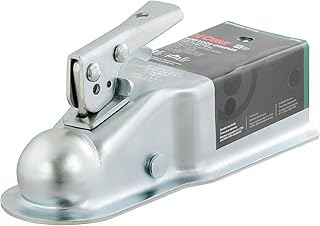
The CURT 25100 is designed for a 3-inch wide straight tongue and couples to a standard 2″ hitch ball. It features an adjustable inner nut and posi-lock spring to ensure a snug fit. This design supports secure coupling with the added option to use a safety pin or coupler lock for extra security. Best for trailers with a 3″ tongue width seeking a precise fit and enhanced security.
Who this is for: Operators with 3″ tongue beams seeking reliable alignment and easy adjustment.
Why selected: Its adjustable mechanism helps achieve a tight connection with the ball, reducing shake and wear during transport.
Limitation: Only compatible with 3″ channel tongues; not ideal for standard 2″ channel tongues without modification.
METOWARE Straight Trailer Tongue Coupler

Designed for 3″ channel tongues and a 2″ ball, this 3,500 lbs rated coupler emphasizes corrosion resistance with a durable galvanized finish. Easy to install and adjust, it is best for users who need reliable performance across wet or muddy conditions, such as boat trailers returning to saltwater marinas. Best for mid-size trailers and environments where rust resistance is important.
Who this is for: Trailer owners needing a corrosion-resistant option with straightforward installation.
Why selected: The galvanized finish offers added protection in challenging climates, extending the coupler’s life in exposure-heavy settings.
Limitation: Requires 3″ channel tongue, which may necessitate tongue modifications for some setups.
Adjustable Trailer Hitch Coupler Channel Bracket

This option is a channel bracket instead of a traditional ball-style coupler. It offers 5-position adjustment and a length of about 11-2/3 inches, adding versatility for trailers that use a more flexible tongue setup or different hitch configurations. Best for custom builds or when a fixed ball size isn’t ideal.
Who this is for: Do-it-yourselfers or builders working with non-standard tongue dimensions.
Why selected: Its adjustability helps achieve the right fit when standard couplers don’t align perfectly with the trailer’s tongue.
Limitation: Not a standard ball-and-socket solution; ensure your trailer’s ball and safety hardware are compatible with the bracket design.
Buying Guide: How To Choose The Right Channel Tongue Coupler
What capacity do you need? Choose a GTW capacity that comfortably exceeds your trailer’s gross weight. For most 19 ft boats or mid-sized equipment trailers, a 3,500 lbs rating provides a reliable margin.
Which tongue width do you have? Most channel tongues fall into 2″ or 3″ widths. Ensure the coupler’s tongue compatibility matches your trailer’s beam width to prevent misalignment or unsafe connections.
Is corrosion resistance important? If you frequently tow in wet, salty, or dirty environments, a galvanized or coated finish can significantly extend service life.
What about security and ease of use? A quick-release latch, posi-lock mechanism, and compatibility with a safety pin or lock add security and reduce the risk of accidental uncoupling on the road.
How easy is installation and adjustment? Look for adjustable inner nuts or latching systems that simplify proper seating on the hitch ball and reduce installation time on frequent trailer moves.
Should you go with standard or adjustable? Standard ball-and-channel couplers are simplest for typical setups. If you have a non-standard tongue or anticipate swapping tongues between trailers, an adjustable option can save time and headaches.
Frequently Asked Questions
- What is the typical GTW rating to look for? A rating between 3,000 and 5,000 lbs covers most small to midsize trailers, with 3,500 lbs being common for boat and utility trailers.
- Can a 2″ ball fit on a 2″ channel tongue? Yes, most 2″ ball and 2″ channel couplers are designed for standard 2″ channel tongues, ensuring universal compatibility across multiple trailers.
- Is corrosion resistance always necessary? Not always, but it is advantageous if you tow in rain, snow, or saltwater environments, as it reduces corrosion risk.
- What security features matter? Look for posi-lock latches, safety pins, or coupler locks to prevent detachment or theft during transport.
- Should I choose adjustable or fixed? Choose adjustable if your tongue size varies between trailers or you anticipate upgrades; fixed couplers are simpler and often more cost-effective for a single trailer.
- Are there compatibility caveats to watch for? Ensure the tongue width, ball size, and mounting pattern match the product’s specifications before purchase.