If you’re upgrading exhaust flow with long tube headers, selecting the right catalytic converter is crucial for emissions compliance, fitment, and overall performance. This guide highlights five compatible catalytic converters and explains who each product is best for. It emphasizes universal or direct-fit options that align with 2.5″ and 3″ systems, plus high-flow designs for improved exhaust flow. Use the buyer tips below to choose the best converter for your vehicle and goals.
- Best for universal fit in 3″ exhaust systems
- Better for high-flow needs in late-model trucks
- Choose this if you need a direct-fit kit with O2 ports
- Best for budget-conscious builds with EPA-compliant flow
- Choose this for a durable stainless steel build and heat resistance
| Product | Inlet/Outlet | Notes |
|---|---|---|
| ASOPARTS 3″ Universal Catalytic Converter | 3″ Inlet / 3″ Outlet | Universal 11″ length; stainless body; direct replacement option; recommended professional install. |
| FortunaFlow Catalytic Converter (GM/Chevy) | 3″ Inlet / 3″ Outlet (EPA high flow) | Vehicle-fit examples include Silverado, Tahoe, Escalade; not for CA/NY/CO/ME in some listings. |
| ECHO AUTOMILES Catalytic Converter | 4.3L-5.3L engines; 3″ or similar flow design | High-flow design; OE-matching references; EPA compliant. |
| RZOCARULE Universal Catalytic Converter | 2.5″ Inlet / 2.5″ Outlet | Direct-fit with O2 Port; heat shield; not sold in CA/CO/NY/ME. |
| Dylannet 2.5″ Inlet/Outlet Cat Converter | 2.5″ Inlet / 2.5″ Outlet | 2 PCS kit; insulation board; corrosion resistant stainless steel; EPA compliant. |
ASOPARTS 3″ Universal Catalytic Converter

This 3″ universal converter fits exhausts with a 3″ inlet and outlet and an 11″ overall length. It’s designed as a direct replacement matching the original car’s exhaust path and features a stainless steel body for durability. Best for builders needing a universal path to adapt to various vehicle exhaust layouts. A caution: professional installation is recommended to ensure proper fit and sealing. Best for owners who want a straightforward 3″ retrofit with reliable heat and corrosion resistance.
FortunaFlow Catalytic Converter, 4.3L-5.3L Chevy/GM

Designed for Chevrolet Silverado, GMC Sierra, Tahoe, Yukon, and Escalade applications with 4.3L-5.3L V8 engines. It’s a high-flow converter intended to improve exhaust efficiency while staying within EPA guidelines. Best for full-size GM trucks and SUVs needing a robust, direct-fit option. Limitation: not listed for sale in certain states; confirm your state compliance before purchase. Choose this if you drive a GM full-size truck/server and want a high-flow, near-OE fit.
ECHO AUTOMILES Catalytic Converter
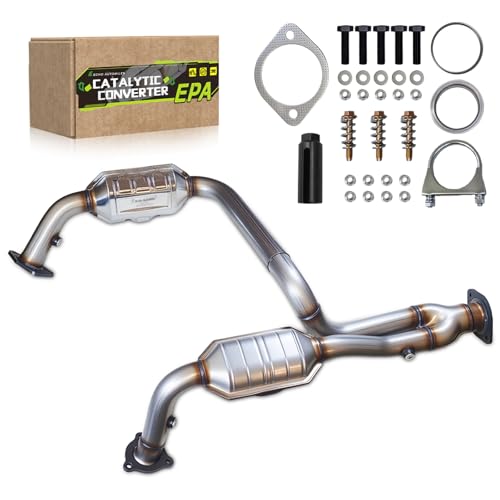
The ECHO AUTOMILES converter lists broad vehicle compatibility for late-model GM pickups and SUVs, including Silverado and Tahoe lines. It emphasizes a high-flow design intended to optimize exhaust efficiency, with a reference to OE numbers and a robust build. Best for owners seeking a high-flow, EPA-compliant option that aligns with common GM platforms. Caution: verify exact fitment for your year/model, as some variants reference multiple chassis specifications.
RZOCARULE Universal Catalytic Converter

RZOCARULE’s 2.5″ universal converter is designed for vehicles with a 2.5″ exhaust diameter and includes a heat shield with O2 Port. It stresses compliance with Obd3 standards and notes California/state restrictions. Best for mid-size vehicles with 2.5″ exhaust pathways. Consider this option if your system uses a 2.5″ pipe and you need a direct-fit, heat-shielded solution. Limitation: not sold in CA, NY, CO, or ME; confirm regulatory eligibility before purchase.
Dylannet 2.5″ Inlet/Outlet Cat Converter

The Dylannet kit ships as a two-piece set with 2.5″ inlet/outlet and insulation board plus O2 port. It claims durability from stainless steel construction and enhanced airflow to support horsepower and torque. Best for DIY installations needing a 2.5″ front converter with a heat shield. Caution: verify vehicle compatibility and total length (13 inches) to ensure a proper fit for your exhaust route.
Buying Guide: Key Considerations For Long Tube Headers And Catalytic Converters
- Fitment and diameter: Long tube headers commonly pair with 2.5″ or 3″ converters. Confirm inlet/outlet sizes and overall length to avoid gaps or fitment issues.
- EPA compliance and state restrictions: Some converters are EPA compliant, while others restrict sales in certain states. Check local emissions requirements before purchasing.
- Direct-fit vs universal: Direct-fit kits simplify installation but may be vehicle-specific. Universal converters offer flexibility but may require trimming or adapters.
- O2 ports and sensors: If your vehicle uses downstream O2 sensors, ensure the converter includes O2 ports or compatible fittings for proper monitoring.
- Material and durability: Stainless aluminized steel bodies resist heat, rust, and corrosion. Consider heat shields for under-vehicle protection and longer life in high-heat zones.
- High-flow design vs OEM-grade: High-flow substrates improve exhaust flow but ensure emissions compliance. Compare substrate cell density and flow characteristics for your engine.
- Installation notes: Some products recommend professional installation due to alignment, welding, or gasket requirements. Budget for proper mounting hardware and sealants.
Practical comparison questions
- Is a universal 3″ converter better than a 2.5″ direct-fit for my setup?
- Will California emissions standards affect my choice?
- Do I need an O2 Port on the converter for downstream sensors?
- What is the trade-off between price and durability in stainless steel vs aluminized steel?
Frequently Asked Questions
- Q: Do universal catalytic converters fit all vehicles? A: Universal converters fit many systems, but verify inlet/outlet diameters and length to ensure proper fit for your exhaust path.
- Q: Are all EPA-compliant converters allowed in all states? A: Not necessarily; some listings restrict sales in states with stricter emissions rules. Check local regulations before buying.
- Q: What is the benefit of a high-flow catalytic converter? A: High-flow designs can reduce backpressure and marginally improve engine efficiency, especially when paired with performance headers.
- Q: Do I need professional installation? A: Installation difficulty varies; universal units may require cutting or welding. Professional installation helps ensure proper seal and fit.
- Q: How do I know if my vehicle needs a 2.5″ or 3″ converter? A: Check your exhaust pipe diameter and the vehicle’s OEM specifications or consult a professional for a precise match.
- Q: Do catalytic converters affect emissions testing? A: Yes, proper replacement must meet local emissions standards to pass inspection; confirm with your installer and local regulations.