Finding the right 2 stroke outboard oil reservoir is essential for stable lubrication, spill prevention, and smooth engine operation. This guide highlights five top options that suit common Mercury, Mariner, and compatible outboards. Each product is described for who it’s best for, with practical pros, limits, and installation notes to help you decide quickly.
| Product | Brand | Best For |
|---|---|---|
| FASWORX Oil Tank Reservoir Assembly | FASWORX | Mercury/Mariner 3.0L V6 2-stroke engines (200–300 HP); OEM replacement users |
| Mercury 19299A1 Vented Oil Tank Cap | MERCURY | Select Mercury 30–125 HP carbureted engines needing a vented cap assembly |
| Quicksilver 828361A2 2-Cycle Oil Reserve Tank | Quicksilver | Mercury/Mariner 65–90 HP 2-stroke models needing a translucent reserve tank |
| LPFIDI 1200-8M0064075 Oil Tank Assembly | LPFIDI | Mercury DFI 3.0L/3.2L engines; durable polyethylene reservoir with strong seams |
| Quicksilver 43300A9 Oil Tank Reservoir Cap Assembly | Quicksilver | 135–250 HP Mercury/Mariner 2-stroke with cap, float, sender, and wiring |
FASWORX Oil Tank Reservoir Assembly for Mercury Mariner 3.0L V6 2-Stroke

The FASWORX reservoir is designed as a direct OEM replacement for popular Mercury/Mariner 3.0L V6 2-stroke engines across 200–300 HP. It emphasizes wide compatibility and marine-grade durability, using a UV-resistant, high-impact translucent polymer material suited to the engine environment. Best for boaters performing standard maintenance who want a seamless fit with original part numbers. A potential limitation is availability of exact compatibility for non-EFI engines beyond listed models.
Mercury 19299A1 Vented Oil Tank Cap for 30-125 HP 2-Stroke

This vented cap assembly is a genuine Mercury part intended for select two-stroke oil systems in 30–125 HP carbureted outboards. It’s ideal for owners needing an official vented solution designed for remote or engine-mounted oil tanks. The limitation is that it’s specified for certain engine configurations; verify your model before purchase.
Quicksilver 828361A2 2-Cycle Oil Reserve Tank
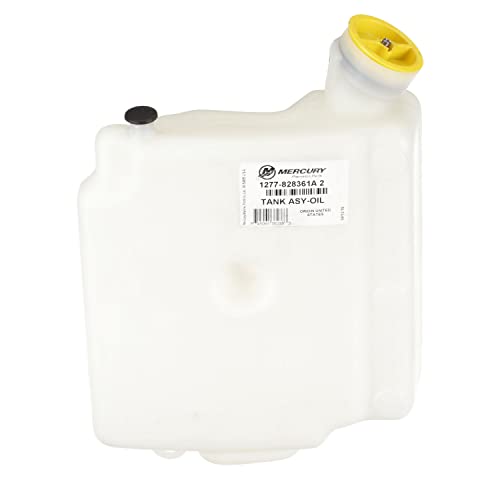
The Quicksilver reserve tank is translucent, aiding level checks, and intended for select Mercury/Mariner 65–90 HP 2-stroke models. It emphasizes ease of installation with common shop tools. Choose this if you want a straightforward, compatible reservoir with simple visibility. A limitation is that it targets specific horsepower ranges; confirm your engine’s compatibility with the exact model listing.
LPFIDI 1200-8M0064075 Oil Tank Assembly

LPFIDI’s 1200-8M0064075 tank is designed for Mercury outboards with DFI 3.0L/3.2L engines, featuring high-quality polyethylene and corrosion resistance. It emphasizes storage of oil in the outer tank and direct fuel conveyance to the engine. Best for boaters who prioritize durability and a strong seal in demanding conditions. A potential limitation is ensuring the part matches your exact engine model and fuel system configuration.
Quicksilver 43300A9 Oil Tank Reservoir Cap Assembly

This cap assembly covers a complete package for select Mercury/Mariner 2-stroke 135–250 HP models, including the cap, float, sender, and wiring harness. It’s best for owners replacing a failed cap assembly and needing a ready-to-install kit. The limitation is that it’s best used with Mercury/Quicksilver 2-stroke systems; verify compatibility with your specific model and electrical setup.
Buying Guide: Key Purchase Considerations
- Engine compatibility: Verify horsepower range and model year to ensure the reservoir or cap is designed for your Mercury/Mariner engine family.
- Replacement vs. upgrade: OEM-replacement parts (like 19299A1) provide direct compatibility; aftermarket options (like LPFIDI) may offer durability or cost benefits but require model verification.
- Material and durability: Marine-grade plastics and UV-resistant polymers help resist heat, vibration, and sunlight exposure; check for corrosion resistance.
- Visibility and maintenance: Translucent reservoirs let you monitor oil levels easily; consider whether a clear design fits your maintenance routine.
- Installation considerations: Some kits include a cap, float, and wiring harness; others are single-till replacements. Ensure you have the right tools and instructions.
- Sealing and leaks: Look for tight-sealing caps and robust O-rings to minimize spills and fuel loss in rough seas.
- Warranty and support: When possible, prefer parts that come with clear guidance from the manufacturer or reputable brands.
FAQ
- What is a 2-stroke oil reservoir cap assembly used for? It seals the oil system and, in some cases, houses the sensor and wiring for monitoring oil levels in the tank.
- Do I need OEM parts for 2-stroke outboard oil tanks? OEM parts guarantee precise fit for specific models; aftermarket options can work well but require careful compatibility checks.
- How can I tell if my reservoir is the correct size? Check your engine’s service manual for the exact part numbers and tank capacity specifications.
- Is a translucent oil reservoir better than a solid one? Translucent designs aid level checks and maintenance visibility, which can reduce accidental running low on oil.
- Can I install these parts myself? Basic mechanical skills and common hand tools are usually sufficient, but follow the manufacturer’s installation instructions exactly.
- What should I replace along with the tank or cap? When replacing, inspect hoses, O-rings, and clamps for wear and replace as necessary to prevent leaks.