If you’re upgrading to an in-tank fuel pump conversion, you need reliable, high-flow pumps that match your EFI goals. This guide highlights five capable options, spanning modern flex-fuel pumps to LS swap-ready modules. Each choice is suited to specific setups—from streetable builds to high-performance applications. Use this overview to compare flow, compatibility, and installation considerations before purchasing.
Summary Table
| Product | Best For | Key Benefit |
|---|---|---|
| AEM 400 LPH E85 Compatible Fuel Pump Kit | High-performance EFI builds needing 400 LPH and E85 compatibility | Stable pressure at 40 PSI; low turbulence fittings |
| Airdog R3SBD150 FRRP (Dodge Cummins) | Direct replacement where factory pumps show reliability issues | 150 GPH with adjustable regulator for tuning |
| Aeromotive 340LPH In-Tank Assembly | 1982–1992 Camaro EFI/LS swap prep | Pre-assembled module for quick install |
| Holley Retrofit Carb Pump Hngr | In-tank upgrade for various tanks | Low-profile, compact design |
| HELIXARXON 58 PSI 160 LPH EP381 | 1982–1995 GM LS swap-ready replacement | Direct-fit for factory hangers with 58 PSI support |
AEM 400 LPH E85 Compatible Fuel Pump Kit
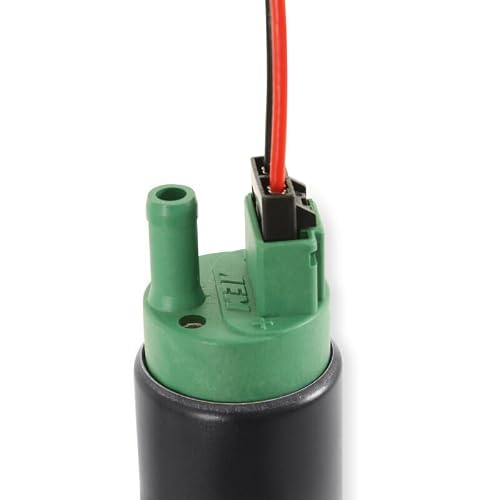
The AEM 400 LPH fuel pump kit is designed for high-demand EFI setups. It delivers up to 400 LPH at 40 PSI, ensuring consistent fuel pressure under load. The kit is explicitly compatible with gasoline, ethanol, and methanol, making it suitable for flex-fuel builds or fuel blends common in American street and track cars. Its tapered fittings reduce turbulence, which helps maintain stable pressure across a wide RPM range. Best for performance enthusiasts who need reliable, high-flow fueling for modern engines.
- Best for high-flow EFI systems requiring 400 LPH at 40 PSI
- Better for flex-fuel or E85-compatible builds
- Choose this if smooth, turbulence-minimized flow matters at high RPM
Limitation: While high-capacity, installation may require careful line routing to preserve pressure consistency. Ensure compatible connectors and the correct mounting approach for your vehicle’s tank.
AIRDOG R3SBD150 FRRP for Dodge Cummins
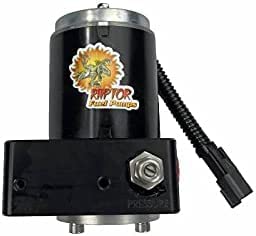
The Pureflow/Airdog R3SBD150 is a factory replacement pump designed for 1998.5–2002 Ram 5.9 Cummins engines. It provides 150 GPH and includes an adjustable regulator preset around 14–16 psi. This pump is intended for installations that maintain the factory feed architecture, with a larger 1/2″ feed line to support increased fuel flow. It’s best for Dodge diesel builds seeking a straightforward replacement that tolerates aftermarket modifications.
- Best for Dodge Cummins engines needing a direct replacement
- Better for setups using a factory bracket and feed line
- Choose this if your project requires an adjustable regulator and simple install
Limitation: Not designed for trucks converted from in-tank setups; compatibility is specific to certain years and configurations.
Aeromotive 340LPH In-Tank Assembly for F-Body, LS Swap

The Aeromotive 340LPH in-tank pump assembly is built for 1982–1992 Camaros with EFI or LS swap intentions. It’s a pre-assembled module that includes a hanger and sending unit, designed to replace the OEM pump without altering the stock outlet location. This makes it a practical option for LS swaps or EFI optimizations where a straightforward install matters. Best for classic GM applications moving to modern fuel delivery.
- Best for classic GM builds with LS swap goals
- Better for preserving stock outlet locations and tank geometry
- Choose this if you want a plug-and-play in-tank solution
Limitation: Suitability depends on tank depth and hanger compatibility; verify your tank’s depth and connector type before purchase.
Garage-Pro Electric Fuel Pump Module Assembly

The Garage-Pro module suits Chevrolet Express models from the late 1990s to early 2000s, including 5.7L and 7.4L engines. It functions as an electric fuel pump with a sending unit, compatible with multiple Express/Savana variants. This option is best for users upgrading older vans and trucks that rely on a factory-style module, aiming for improved reliability without complex modification.
- Best for Express/Savana vans and related GM models
- Better for factory-style integration with sending unit
- Choose this if you prefer a direct module replacement in older GM vans
Limitation: Market availability and specific model fit may vary by year; confirm your vehicle’s exact interchange numbers before purchasing.
HELIXARXON 58 PSI 160 LPH EP381

The HELIXARXON EP381 kit targets 1982–1995 GM vehicles upgrading to LS-series engines. It delivers 160 LPH at 58 PSI, designed to fit directly into factory hangers and sending units. This is ideal for LS swap enthusiasts who want a solid, direct-fit pump to meet higher fuel demands from modern injectors.
- Best for 1982–1995 GM vehicles converting to LS engines
- Better for LS swaps needing a stable 58 PSI supply
- Choose this if you want a direct-fit EP381 pump with standard bulkhead connections
Limitation: Suited to specific GM models; verify hanger and connector compatibility with your tank system before buying.
Buying Guide: Key Considerations For In-Tank Fuel Pump Conversions
Choosing the right in-tank fuel pump involves matching flow, pressure, and installation constraints to your build goals. Consider the following questions to guide your decision:
- What flow rate do I need? Assess your engine’s horsepower target and injector size to estimate required gallons per hour (GPH) and liters per hour (LPH).
- Which fuels will I use? If you plan on E85 or other blends, confirm ethanol compatibility and material robustness to prevent pump degradation.
- Is a direct-fit replacement important? Some pumps are designed to drop into factory hangers; others require adapters or tank modifications.
- Will I do a LS swap or a traditional EFI? Certain pumps are optimized for LS swaps or for older TBI/in-tank configurations.
- What about installation complexity? Pre-assembled modules save time, but verify outlet sizes, line routing, and essential mounting hardware.
- Future tuning needs? Pumps with adjustable regulators or wide pressure ranges provide room to tune fueling for performance and efficiency.
Practical Comparisons At A Glance
- Highest flow: AEM 400 LPH kit, suitable for high-power EFI builds and E85 fuellines
- Best factory-replacement approach: Airdog FRRP and Aeromotive In-Tank Assembly offer compatible, plug-and-play options
- LS swap readiness: HELIXARXON EP381 and Aeromotive 340LPH target LS readiness and modern injection needs
- Versatile non-LS options: Holley Retrofit Hngr enables wide tank compatibility for various vehicles
FAQ
- Can I use any in-tank pump for any vehicle? No. Tank depth, hanger design, and outlet size vary; verify compatibility with your tank and sending unit.
- Do these pumps support E85? Some models are E85-compatible, but check fuel compatibility and elastomer seals to prevent seal degradation.
- Is a higher GPH always better? Not necessarily. Fuel system pressure, rail demand, and injector sizing determine the optimal flow. Oversizing can waste energy.
- Is an adjustable regulator beneficial? Yes for precise fuel tuning, especially in boosted or high-HP builds where fuel pressure must be tightly controlled.
- Will installation affect warranty? Some aftermarket pump modules may affect vehicle warranties; consult your dealer or manufacturer guidance.
- Do I need professional installation? For complex LS swaps and in-tank modifications, professional installation reduces risk and ensures proper calibration.