Answer: For engine gasket leaks, the best approach is to select a proven coolant leak sealant or head gasket repair product that matches your engine type and leak location. These products are designed to seal leaks quickly, reduce overheating, and minimize downtime. The top options listed below are suited for different needs—from fast, all-in-one fixes to targeted head gasket repairs—so readers can choose based on the leak type, engine size, and maintenance goals.
| Product | Best For | Why It Stands Out |
|---|---|---|
| K-Seal ST5501 Multi-Purpose One Step Coolant Leak Repair | Multiple-leak scenarios in light cars | One-step, quick sealing for radiators, head gaskets, and more; compatible with all antifreeze |
| Bar’s Leaks HG-1 Head Seal | Blown head gaskets and warped news | Targeted head seal repair to stop coolant loss |
| Bar’s Leaks Block Seal Head Gasket Fix | Block and gasket leaks | Block sealant focused on head gasket and nearby areas |
| Bar’s Leaks 1100 Head Gasket Repair Sealant | Block and head gasket leaks | Stops leaks in blocks and cracked heads |
| ATP Automotive AT-205 Re-Seal | General stops-leaks for various systems | Versatile, widely used for automotive cooling and lubrication systems |
Note: This guide highlights five products commonly used for engine gasket leak fixes. Each option serves different leak types and engine configurations. Consider the leak location, engine type, and maintenance considerations when selecting a product.
K-Seal ST5501 Multi-Purpose One Step Coolant Leak Repair

Best for quick, all-in-one sealing of multiple water-cooled engine leaks. The formula seeks out holes and cracks in radiators, head gaskets, blocks, heater cores, and water pumps, forming a seal within minutes. It is compatible with all antifreeze coolant and suitable for cars and light trucks with up to 12 cylinders.
Who it’s best for: Home mechanics or DIYers needing a fast, broad-spectrum fix without disassembly. Why selected: It covers the most common leak points with a single product, reducing downtime.
Caution: Effectiveness depends on the extent of damage; very large cracks may require traditional repair. Ensure the cooling system is clean before application.
Bar’s Leaks HG-1 Head Seal

Best for blown head gasket repair and seal of warped or cracked heads and blocks. This product focuses on creating a reliable head gasket seal to minimize coolant loss and overheating.
Who it’s best for: Owners of vehicles with suspected head gasket failures seeking a sealant-based mitigation before full engine teardown. Why selected: Targets head gasket and intake gasket leaks commonly reported in overheating events.
Caution: May not be suitable for engines with multiple simultaneous, extensive failures; follow product directions carefully for dosage and compatibility.
Bar’s Leaks Block Seal Head Gasket Fix

Best for block and head gasket-related leaks. This product aims to stop leaks at the block-head interface and surrounding areas, helping prevent coolant loss and overheating.
Who it’s best for: Vehicles showing leaks around the cylinder head or block where a sealant is preferred to reduce downtime. Why selected: Focuses on critical gasket-to-block sealing, a common failure point in older engines.
Caution: Results can vary by engine design; large cracks may require mechanical repairs beyond sealant scope.
Bar’s Leaks 1100 Head Gasket Repair Sealant

Best for repairing block leaks and cracked cylinder heads and blocks, focusing on head gasket repair. Sealing capabilities are designed to address hot spots and head-related coolant loss.
Who it’s best for: Users facing suspected head gasket leakage with a need for a sealant solution that targets seals near the head area. Why selected: Addresses head gasket concerns with a proven sealant approach.
Caution: As with other sealants, effectiveness depends on leak severity and engine condition; major damage may require professional repair.
ATP Automotive AT-205 Re-Seal Stops Leaks
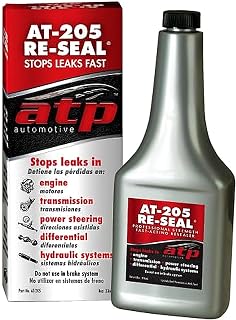
Best for versatile stops-leaks across automotive cooling and lubrication systems. This product is formulated to repair minor leaks and slow seepage in a range of areas.
Who it’s best for: DIYers seeking a general-purpose stop-leak solution that works across multiple systems. Why selected: Flexibility makes it suitable when the exact leak location is uncertain.
Caution: Not a substitute for major gasket or structural failures; use as part of a broader repair plan if leaks persist.
Buying Guide: How to Choose The Right Engine Gasket Leak Fix
What type of leak are you dealing with? Identify if the leak is in the radiator, head gasket, block, or other cooling components. For quick, broad coverage, a one-step coolant leak repair is convenient. For suspected head gasket failures, a targeted head seal product can be more effective. If the leak location is uncertain, a versatile stop-leak like ATP AT-205 offers flexible use.
Leak Location and Engine Type
- Radiator or coolant system leaks: Consider a multi-purpose sealant like K-Seal ST5501.
- Head gasket leaks: Bar’s Leaks HG-1 or 1100 Head Gasket Repair Sealant can provide targeted sealing.
- Block leaks or complex gasket issues: Bar’s Leaks Block Seal or similar products may address the seal at the block-head interface.
- Uncertain leak scope: A general purpose stop-leak product (ATP AT-205) offers flexibility.
Engine Size and Vehicle Type
- Up to 12-cylinder engines typically align with one-step solutions like K-Seal for broad coverage.
- Smaller engines generally respond well to head gasket specific sealants when leaks are localized.
Safety and Compatibility
- Verify antifreeze compatibility with the sealant before use to avoid chemical reactions.
- Follow directions on dosage and flushing requirements to maximize effectiveness.
Application Considerations
- One-step sealants are convenient for quick fixes but may not replace professional repairs for extensive damage.
- Targeted sealants may require more precise leak identification but can be more effective for specific gasket issues.
Usage Tips
- Ensure the cooling system is clean and free of heavy deposits before applying any sealant.
- After application, monitor for recurring leaks and engine temperature to assess effectiveness.
FAQ
- Q: Can these products fix all gasket leaks? A: They are designed to seal small to moderate leaks; severe or cracked components may require professional repair.
- Q: Do I need to flush my cooling system? A: Some products require no flushing; others advise a flush before use—follow the product instructions.
- Q: Will sealants clog the system? A: If used as directed, modern sealants are formulated to minimize clogging; excessive deposits can occur if misused.
- Q: Can I drive after applying a sealant? A: Yes, but monitor for overheating and leaks; discontinue use if symptoms persist or worsen.
- Q: Which product should I choose for an uncertain leak? A: A versatile stop-leak like ATP AT-205 provides flexibility across systems while you diagnose the issue.
- Q: Are these products compatible with all antifreeze types? A: Most are designed to work with common antifreezes; check product specifications to confirm compatibility.