When choosing an RV dinghy tow bar, select a model that matches your vehicle’s weight, hitch type, and towing environment. The top picks below are suited for flat towing behind motorhomes or RVs, with a focus on reliability, ease of hookup, and durability. This guide helps buyers decide which tow bar fits best based on capacity, construction, and installation.
| Product | Capacity | Best For | Notes |
|---|---|---|---|
| VEVOR Tow Bar | 5500 lbs | Standard 2″ hitch setups | Budget-friendly option with 39.4″ opening |
| NSA Ready Brute Elite II Tow Bar | 8000 lbs | Heavy-duty flat towing | Includes premium aluminum body |
| Blue Ox Avail Tow Bar | 10,000 lbs | Higher-capacity towing | Self-aligning, easy storage |
| NSA Ready Brute II Aluminum Tow Bar | 8000 lbs | Lightweight aluminum design | US-made |
| Tow Bar Universal 5000 lbs | 5000 lbs | Budget or second vehicle | 2″ ball coupler compatible |
VEVOR Tow Bar, 5500 Lbs Capacity

The VEVOR Tow Bar supports up to 5500 pounds and features a 39.4-inch opening width, making it suitable for mid-weight tows behind RVs with 2-inch receivers. Its powder-coated alloy steel construction offers durability in various weather conditions. This model is best for buyers who need a cost-effective solution that still provides solid towing capacity and reliable engagement.
Who it’s best for: RV owners seeking an economical tow bar for standard flat towing with a 2″ hitch. Why selected: Balanced capacity, straightforward installation, and a rugged build for everyday use. Caution: Check compatibility with your specific vehicle dimensions and ensure proper attachment hardware is included or bought separately.
NSA RV Ready Brute Elite II Tow Bar
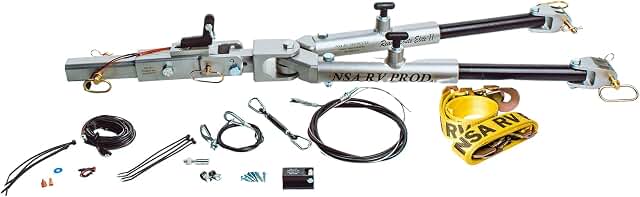
The Ready Brute Elite II tow bar is designed for high-capacity flat towing, rated up to 8,000 pounds. It features a heavy-duty aluminum body with self-locking mechanisms and a telescoping arm system for easier hookup on uneven surfaces. This model suits owners who need robust power with smooth towing across varied roads.
Who it’s best for: RV owners needing substantial towing power and a lightweight yet durable aluminum frame. Why selected: High capacity, US-made reliability, and ease of use with self-locking action. Caution: Aluminum components require careful inspection for wear at connection points over time.
Blue Ox BX7420 Avail Tow Bar

The Blue Ox Avail Tow Bar is a Class IV unit rated for up to 10,000 pounds, featuring self-aligning capability and a simple folding storage design. It includes safety cables and a user-friendly latch system that helps with quick connection and disconnection, even on uneven ground. This is a top pick for higher-capacity needs with convenient handling.
Who it’s best for: RVers needing maximum towing capacity with dependable self-assembly and storage options. Why selected: Higher load rating, self-aligning design, and included safety cables. Caution: Heavier unit may require more robust mounting hardware and space for storage in smaller rigs.
NSA Ready Brute II Aluminum Tow Bar

The Ready Brute II Aluminum Tow Bar combines aluminum construction with a rugged design, rated for 8,000 pounds. It emphasizes lightweight durability and a tight-fit system for reliable flat towing. This option appeals to buyers who want a strong but lighter alternative to steel models.
Who it’s best for: RV owners who prioritize reduced weight without sacrificing towing capacity. Why selected: Aluminum body improves weight handling and corrosion resistance. Caution: Aluminum components may require periodic inspection for wear in moving joints and locking points.
Tow Bar, Universal Car RV Tow Bars

The universal tow bar is rated for 5000 pounds and uses a 2-inch ball hitch. It provides a straightforward solution for flat towing with standard setups and offers a balance of cost and functionality for lighter to mid-weight tows. It is best for casual users or secondary-tow plans.
Who it’s best for: RV owners with lighter to mid-range tow needs or those prioritizing affordability. Why selected: Reasonable capacity, simple 2″ hitch compatibility, and compact design. Caution: Not ideal for very heavy tows or high-mileage, frequent use, or uneven terrain.
Buying Guide: Tow Bar Basics, Selection Criteria, and How to Compare
What capacity do you need? The towing capacity must meet or exceed the vehicle weight being towed plus any trailer weight. Consider future needs if you plan to upgrade to a heavier vehicle.
Which mounting and compatibility matter? Ensure your RV’s hitch receiver is a 2-inch standard, and verify bolt patterns, mounting hardware, and pin sizes. Self-locking or self-aligning features simplify hookup and reduce setup time on uneven surfaces.
How important is material and durability? Aluminum tow bars are lighter and resistant to corrosion, while steel units tend to be tougher and less expensive. Evaluate weight, storage space, and climate exposure in your typical towing environment.
What about storage and transport? Look for foldable or easily stowable designs if you have limited storage in the RV or garage. Weighing factors like length when collapsed helps with maneuverability in campsites or driveways.
Safety features to consider include safety cables, rotating clevis connectors, and non-binding latches. These components prevent accidental disconnection and ease reuse on uneven ground.
Maintenance and inspections are essential. Regular checks of locking mechanisms, joints, and mounts prevent failures during use and extend the life of the tow bar.
Frequently Asked Questions
- What is a dinghy tow bar? A tow bar used to flat-tow a car or light vehicle behind an RV, connecting via a 2-inch hitch.
- How much weight can a typical tow bar handle? Tow bars range from about 5,000 to 10,000+ pounds in capacity, depending on model and design.
- Is self-aligning necessary? Self-aligning bars ease hookup on uneven ground and reduce alignment errors, useful for frequent hookups.
- Do aluminum tow bars require special care? Aluminum components are lightweight and resistant to corrosion but should be checked for wear at connection joints.
- Should I buy a higher-capacity tow bar than my vehicle requires? If you foresee upgrading to a heavier vehicle, choosing a higher-capacity model can provide flexibility and longevity.
- Can I use a tow bar with any RV or car? Compatibility depends on hitch size, mounting pattern, and vehicle-to-tow compatibility; always verify with your equipment specs.