The top picks below help you add significant horsepower to a standard bicycle, with options ranging from 2.1 kW (about 2.8 hp) to 7.5 hp in compact engine kits. These kits are best for riders seeking robust hill climbing, longer rides, or a motorized bike that can handle faster, more aggressive use. Choose these if you want a DIY conversion that can still run on gasoline. Suitable buyers include enthusiasts seeking road-ready motorized bikes, riders needing higher acceleration, and hobbyists comfortable with installation. A quick summary table follows the intro to compare core specs at a glance.
| Product | Engine Size | Approx. Power | Best For |
|---|---|---|---|
| 1) 80cc Bicycle Engine Kit | 80cc | ~2.1 kW (≈2.8 hp) | Casual riders seeking extra speed |
| 2) 100cc Four-Stroke Kit | 100cc | ~3.5 hp | Road and mountain bikes needing more torque |
| 3) IMAYCC 100cc Kit | 100cc | ~2 kW (≈2.7 hp) | First-time installers |
| 4) 212cc Engine Kit | 212cc | ~7.5 hp | Go-kart/mini-bike power |
| 5) IMAYCC 80cc Kit | 80cc | ~2.1 kW (≈2.8 hp) | Lightweight conversion with easy start |
80cc Bicycle Engine Kit 2 Stroke Power Upgrade

Engine type: 2-stroke, single-cylinder; power output around 2.1 kW and top speed near 23.6 mph. This kit provides a strong boost for 26″ and 28″ bikes and is pedal-start friendly via a CDI ignition. Best for riders seeking brisk acceleration and a sporty ride on light to moderate terrain. A design note: fuel economy is cited at about 0.53 gallons per 62 miles, which helps extend riding range on longer commutes. The kit uses a carburetor for smoother operation in varying conditions.
Who it’s best for: riders who want a straightforward install with noticeable speed gains without stepping into high-displacement power. Limitations: as a 2-stroke, maintenance and proper lubrication are essential to maintain performance and longevity.
100CC Four-Stroke Bicycle Engine Kit
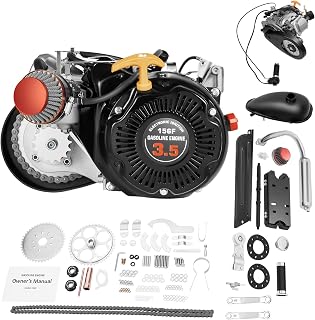
Engine: 100cc four-stroke with chain drive, air-cooled, and a 415# steel chain. Rated power around 2 kW and a max speed up to 50 km/h. Strong four-stroke torque makes it better for climbing hills and longer rides. The kit features a robust fuel system and durable side components designed to withstand longer usage. Best for riders needing consistent power with a more durable engine profile and a wide 26-28 inch bike compatibility.
Who it’s best for: riders who prioritize steady torque and longer ride ranges. Limitation: installation space and frame clearance should be checked to ensure the engine fits larger frames.
IMAYCC Bike Motor Kit 100cc
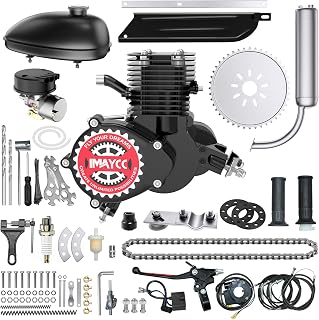
Overview: 100cc, 2-stroke single-cylinder with CDI ignition and foot pedal starting. Installation guidance notes 2-4 hours and suggests watching installation tutorials for best results. Engine speed around 6500 RPM with a claimed output near 2 kW. Spoked wheels and chain considerations are part of the kit with 44-tooth sprocket and 110-link chain. Best for DIY enthusiasts seeking a complete kit with straightforward start methods.
Who it’s best for: first-time or intermediate installers who want a complete engine kit and clear, step-by-step guidance. Caution: improper setup could affect starting reliability; follow the included instructions and online tutorials closely.
212CC Engine Kit for Go-Karts and Mini Bikes

Displacement and power: 212cc displacement with a 7.5 hp output class, four-stroke design, and a max rpm of 3600. Features a 3.6-liter fuel tank for longer ranges and a forced-air cooling system for continuous operation. Notable for high-power projects where the engine is paired with lightweight chassis or go-kart frames. Best for those who want substantial horsepower in compact engines and have space to accommodate a larger unit.
Who it’s best for: builders seeking high horsepower for go-kart or mini-bike builds. Limitation: higher power requires careful handling, frame reinforcement, and safety considerations during operation.
IMAYCC 80cc Bike Motor Kit

Engine: 80cc, 2-stroke single cylinder with CDI ignition and foot pedal starting. Power around 2.1 kW (approximately 2.8 hp) and a top speed near 5000 rpm. Includes 44-tooth sprocket and 110-link chain. Installation guidance notes emphasize 2-4 hours for setup and tuning. The kit targets riders seeking affordable horsepower gains with a simpler installation process.
Who it’s best for: riders seeking a balance of cost, power, and ease of installation. Caution: as a two-stroke, regular maintenance and proper lubrication are essential for longevity and performance.
Buying Guide: How to Choose the Right 5 HP Bicycle Engine Kit
What bicycle frame size fits a motor kit? Confirm compatibility with 26″ or 28″ frames and ensure there is enough open frame space for the engine and mounting hardware. Consider the engine displacement: 80cc kits offer quick gains and lighter weight, while 100cc to 212cc engines deliver more torque and higher top speeds, which may require stronger frames and more robust brakes.
Two-stroke vs four-stroke: Two-stroke kits are lighter and offer higher power-to-weight ratios but require more frequent lubrication and maintenance. Four-stroke kits tend to be smoother, quieter, and more durable for longer rides, at the cost of extra weight and possibly more complex installation.
Starting method and ignition: CDI ignition with foot-pedal start is common, but some kits rely on manual starting or hand starters. If you’re a first-time installer, look for complete kits with clear instructions and online tutorials from the seller.
Installation considerations: set aside several hours for installation, especially for first-timers. Verify sprocket dimensions, chain length, mounting points, and fuel tank placement. Ensure you have basic mechanical tools and hardware knowledge or seek professional help if needed.
Safety and maintenance: install a proper fuel line routing, check for exhaust clearance, and confirm reliable braking performance after installation. Regular maintenance includes oil or fuel mix checks for two-stroke engines and periodic inspection of mounts and fasteners.
Frequently Asked Questions
- Can a 5 hp bicycle engine be installed on most bikes? Most kits are designed for standard road or mountain bikes with 26″ or 28″ wheels, but frame clearance and mounting space vary. Check the manufacturer’s fit guide.
- Are two-stroke engines easier to install than four-stroke? Two-stroke kits are typically lighter and have simpler power delivery but require more frequent lubrication and maintenance. Four-stroke kits tend to be smoother and more durable.
- Will a higher displacement engine affect frame durability? Yes. Higher displacement engines exert more stress on mounting points. Ensure your frame and fork can handle the added weight and torque, and reinforce as needed.
- Is professional installation recommended? For first-time installers, following the provided instructions and watching installation tutorials is recommended. Complex kits or frames may benefit from professional installation.
- What maintenance does a bicycle engine kit require? Regular inspection of fuel lines, ignition components, sprockets, and the exhaust is essential. Two-stroke engines require proper lubrication and fuel mixing per kit instructions.
- Can I use these kits for off-road or racing purposes? Some kits may be suitable for light off-road use, but always follow local regulations, safety guidelines, and the manufacturer’s intended use for the kit.