Answering the question “which 8-speed triple crankset should I buy?” this guide highlights five compatible options that balance cost, durability, and shifting performance. Best for budget riders are the Shimano Tourney and FC-TY301 variants; better for versatile setups are the THALOUS and SRAM S600; choose the Shimano FC-M311-L when you want a reliable, square-taper front chainwheel for 8-speed systems. The following sections compare features, ideal riders, and potential limits to help you choose confidently.
Summary table of selected products:
- Shimano Tourney FC-TY501 Crankset — 175mm, 48/38/28T, square taper JIS
- Relwears FC-TY301 42-34-24T — 170mm, 3×8/7/6-speed compatibility
- SRAM S600 Crankset — 175mm, 42-32-22T, square taper
- THALOUS 42/34/24T — 170mm, 3×6/7/8-speed compatibility
- Shimano FC-M311-L — 175mm, 42/32/22T, for 8/7-speed
Shimano Tourney FC-TY501 Crankset — 175mm

Best for budget builds and casual riders who need reliable triple gearing without high-end features. This crankset offers a 48/38/28T chainring setup and a Square Taper JIS interface for easy installation on many frames. The plastic chainguard helps protect the chainring and keeps debris away in light trail use. Best for starters or refurbished bike projects where cost matters more than advanced shifting adjustments.
Who this is for: entry-level cyclists, commuter bikes, and DIY restorations seeking a straightforward, compatible 3×8 drivetrain. Caution: available data omits advanced ramping for smoother shifts in some setups; consider proper chainline alignment and bottom bracket compatibility during installation.
Relwears FC-TY301 42-34-24T Crankset

Best for versatile, budget-friendly builds that require reliable 3×8/7/6-speed compatibility. The 42-34-24T gearing offers a mid-range setup suitable for mixed terrains, while 170mm crank arms balance leverage and clearance on many frames. Made from aluminum alloy to improve rigidity without excessive weight. Ideal for riders who want adjustable gearing without breaking the bank.
Who this is for: riders upgrading an older 3x drivetrain or assembling a value-conscious mountain or hybrid bike. Caution: presence of a 170mm arm length may need frame clearance checks on smaller bikes.
SRAM S600 Crankset — 3×8-Speed
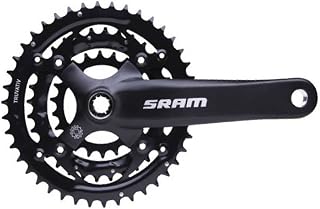
Best for riders seeking a performance-oriented 8-speed front end with a forged alloy construction for strength. The triple 42-32-22T chainrings are paired with 175mm crank arms to provide a balanced leverage profile across all gears. This option suits mountain and hybrid bikes where dependable, consistent shifts are prioritized over ultra-light weight.
Who this is for: riders needing robust shifting for mixed terrain and longer climbs. Caution: data does not specify compatibility with all bottom brackets; verify spindle type and bike frame clearance before purchase.
THALOUS 42/34/24T Crankset

Best for riders who want a forged aluminum alloy crank with strong construction and broad compatibility. The 170mm arm length supports 9/16″ pedals and suits 3×6/7/8-speed drivetrains. The 42/34/24T configuration emphasizes everyday versatility, offering practical climbing and cruising gears. Nice balance of weight and stiffness for price-conscious builds.
Who this is for: mountain and hybrid riders needing a dependable, all-around crank. Caution: weight is higher than some compact sets; check chainline compatibility with existing components.
Shimano FC-M311-L Front Chainwheel

Best for riders needing a dependable square-taper front chainwheel for HG-chain compatibility in 8/7-speed systems. The 42/32/22T setup is a classic option for mixed terrain, providing predictable shifting and chain retention. This chainwheel is straightforward to install and widely compatible with older bikes seeking a replacement front crank.
Who this is for: riders seeking a traditional 3x front end with reliable performance and broad compatibility. Caution: not designed for modern compact crank configurations; confirm chainring spacing and bottom bracket compatibility with your frame.
Buying Guide
What to consider when choosing an 8-speed triple crankset:
- Compatibility: Check bottom bracket type (JIS vs. others), spindle, and frame clearance. Ensure the crankset matches your rear derailleur and shifter speeds (3×8, 3×7, or 3×6).
- Arm length: Common options are 165mm, 170mm, and 175mm. Longer arms improve leverage on climbs but may rub on bike frames; shorter arms suit smaller riders or tighter frames.
- Chainring configuration: 42/34/24T and 48/38/28T are typical for versatile setups. More teeth in the outer ring improves top speed; a smaller inner ring benefits steep climbs.
- Material and weight: Aluminum alloy crank arms offer strength with moderate weight. Forged alloys generally provide higher stiffness and durability.
- Maintenance and ease of installation: Square Taper JIS interfaces are common and simpler to install, but verify crank and bottom bracket compatibility with your pedals and frame.
- Intended riding: Choose a setup that matches terrain; budget builds prioritize reliability and serviceability over advanced shifting features.
FAQ
- What is an 8-speed triple crankset? A three-ring front crankset designed to work with an 8-speed chain and derailleur system, offering three gear ranges for broad terrain coverage.
- Are square taper cranksets compatible with most bikes? They are widely compatible with many frames that support square taper bottom brackets, but always confirm spindle type and bottom bracket width.
- What should I consider when choosing gear ratios? Consider your typical riding terrain; more outer teeth improve top speed, larger inner teeth aid climbing in hilly conditions.
- Can I mix cranksets with different chainring sizes? Mixing is possible but may affect shifting performance; ensure compatible chainline and derailleur capacity.
- Is weight a major concern for cranksets? For casual riding, durability and reliability are more important; racing-focused components may prioritize weight savings.
- Do these cranksets fit 9/16″ pedals? Most listed options support 9/16″ pedals, but verify the pedal threading if using older or specialty pedals.