The right car charger jumper cables can save time, reduce risk, and get you back on the road quickly. This guide highlights five top options suited for different buyers—from quick starts on compact cars to heavy-duty needs for trucks and SUVs. Whether you want an all-in-one jump starter with a built-in flashlight or reliable booster cables with a carrying case, you’ll find clear comparisons and practical buying tips here.
| Product | Best For | Key Benefit | Limitations |
|---|---|---|---|
| TREKURE Car Battery Jump Starter | Busy mornings, cold climates | High 5000A jump start with built-in power bank | Bulkier; price may be higher |
| Energizer Jumper Cables, 16 ft | Standard sedans, small to mid-size cars | Thick vinyl coating; easy storage | May be heavier for casual users |
| TOPDC 4 Gauge, 20 ft | SUVs, trucks, multiple vehicles | Long reach; strong clamps | Length adds weight |
| Heavy Duty 0 Gauge, 30 ft | Large vehicles, frequent use | High conductivity with carry case | Heaviest option |
| NOONE 10 ft | Compact cars, quick top-ups | Lightweight and universal fit | Shorter length limits placement options |
TREKURE Car Battery Jump Starter With 5000A Power

This all-in-one jump starter is designed for quick engine starts on a range of vehicles. Best for drivers who want an emergency jump device that doubles as a power bank and offers hands-free lighting. The built-in Force Start technology helps jump vehicles with deeply discharged batteries, including 0V states, making it ideal for winter starts or after long storage.
Best for: everyday drivers who value speed, reliability, and multi-use tools in one device. Why selected: its 5000A peak jump power and integrated flashlight improve usability in dim or roadside scenarios, while the power-bank function adds charging versatility for phones or small devices.
Caution: the unit’s extra features add weight and size, so store in a dedicated space in your vehicle to keep it ready without crowding other gear.
Energizer Jumper Cables For Car Battery, 16 Feet

These heavy-duty booster cables are designed for a wide range of vehicles, from small cars to full-size trucks. The 16-foot length provides flexibility for reaching a distant battery, while the 6-gauge conductor supports robust current delivery. The thick vinyl coating protects against rust and corrosion, and the included carrying case makes transport simple.
Best for: drivers seeking a dependable, widely compatible set with protective coating and easy storage. Why selected: the combination of durable construction and a dedicated case enhances longevity and portability while maintaining solid performance in normal roadside jumps.
Limitation: while versatile, cables alone lack a built-in power source—you’ll still need a vehicle or jump starter elsewhere to provide the initial boost.
TOPDC 4 Gauge, 20 Feet Heavy Duty Jumper Cables
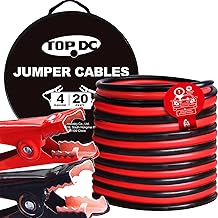
TOPDC offers a longer reach with robust 4-gauge cables and long 20-foot length, making them suitable for larger vehicles and awkward parking layouts. The clamps are designed for secure attachment, with insulating rubber to reduce shock risk. The wiring uses copper-clad aluminum for reliable conductivity and flexibility even in cold weather. It’s a strong choice for households with multiple vehicles or infrequent use but varied parking setups.
Best for: households with several cars or where the jump location is not close to the battery. Why selected: long length provides versatility, and the clamps are engineered for secure grip across different battery terminals. Limitation: heavier and bulkier than shorter cables, which can affect portability.
Heavy Duty Jumper Cables, 0 Gauge 30 Feet

This 0-gauge cable set emphasizes maximum conductivity and endurance with a 30-foot reach. The included carry case and gloves support organized storage and safe handling when performing roadside starts. These cables are best for frequent use, commercial settings, or when you need extended reach for distant battery locations.
Best for: professional drivers or families with large vehicles who need performance and durability. Why selected: 0-gauge cables handle high current with less resistance, providing faster, more reliable starts for heavy-duty batteries. Limitation: heavier to maneuver and store compared with lighter gauge options.
NOONE Jumper Cables For Car Battery, 10 Feet

NOONE offers a compact 10-foot option with universal fitments and 200A peak current suitable for many 12/24V cars. The rubber-covered cables provide insulation to protect against leakage current, and copper-clad aluminum conductors help maintain conductivity in varying temperatures. The clamps are designed for strong bite and secure crimping to reduce the chance of loose connections.
Best for: drivers who prioritize compact size and straightforward use in everyday cars. Why selected: a balance of portability and performance for standard passenger vehicles. Limitation: shorter length may not reach the battery on parked vehicles with crowded engine bays.
Buying Guide: How To Choose The Right Car Charger Jumper Cables
- Vehicle compatibility: Match gauge and length to your typical vehicle (compact car vs. SUV/truck). Higher gauge (thicker) cables deliver more current, which is important for large engines.
- Length considerations: Longer cables offer flexibility, especially if the battery is located in tight spaces or there are two cars of different sizes. Short cables are lighter and easier to store.
- Conductor material: Copper-clad aluminum offers a balance of cost and performance, while pure copper delivers the best conductivity but at a higher price and weight.
- Clamps and safety features: Look for strong, corrosion-resistant clamps with protective insulation. Some models include safety sleeves and reinforced jaws for secure grip on both top-post and side-terminal batteries.
- Coating and build quality: Thick vinyl or rubber coatings protect against heat, moisture, and rust, extending the lifespan in harsh environments.
- Portability: If you prefer a compact setup, a shorter length or a jump starter with integrated features can simplify storage and reduce bulk in the trunk.
FAQ
- What gauge jumper cables are best for a small car? – 4 to 6 gauge cables are common for small cars and light-duty use; they are flexible and adequate for most jump starts.
- Do I need a jump starter or jumper cables? – A jump starter offers built-in power and can start a dead battery without another vehicle, while jumper cables require another powered vehicle.
- Is length more important than gauge? – It depends on your setup. Longer cables improve reach but can add resistance; gauge determines current capacity, which is crucial for large engines.
- Can jumper cables be used in cold weather? – Yes, but choose cables with robust insulation and copper conductors to maintain conductivity in low temperatures.
- Are there safety precautions I should follow? – Always connect positive to positive and negative to a metal ground, ensure vehicles are off, and avoid touching clamps during operation.
- Should I store cables with the clamps open or closed? – Store clamps closed and cables coiled; keep them in a dedicated case or bag to prevent tangling and ensure quick access.