Answer: A complete brake line kit bundles copper, zinc-plated, or stainless steel lines with flaring tools and fittings to simplify brake line repair or replacement. Ideal buyers include DIY enthusiasts, weekend mechanics, and professional technicians tackling brake line upgrades, repairs, or custom installations. The top options below balance versatility, tool quality, and kit completeness to help you choose the right set for your vehicle.
| Product | Best For | Key Benefit |
|---|---|---|
| 25Ft 1/4″ and 3/16″ Brake Line Kit (VKQTS Store) | DIYers who need two line sizes | Includes flaring tool kit and case for organized storage |
| 3/16″ 1/4″ Brake Line Repair Kit (Ailbiuko Store) | Professional-like versatility | Wide adapter set and premium copper-plated tubing |
| 3/16 Inch Brake Line Repair Kit (Mixed vendors) | All-in-one repair and flare kit | Extensive inverted nut assortment for leak-free joins |
| Dorman 919-236 Stainless Steel Kit | Jeep and rugged applications | Stainless steel for corrosion resistance |
| smseace 26Pack 3/16 Inch Kit | Budget-conscious builders | Comprehensive with bender and single flare tool |
25Ft 1/4″ and 3/16″ Brake Line Kit

This kit provides both 3/16″ and 1/4″ brake lines with a complete flaring tool set. It is best for DIYers who want a versatile kit with storage in a blow-molded case. The included 32 inverted fittings and 5 adapters support single and double flare operations across common sizes. Use this for routine brake line repairs or custom tubing runs in light-to-moderate duty vehicles. A potential limitation is that the kit’s reliability hinges on the quality of the included flaring components for specialized applications.
3/16″ 1/4″ Brake Line Repair Kit with 100Pcs Fittings
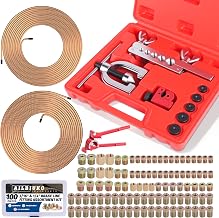
Best for: professional-like repair capability with a robust fitting set. The kit includes two 25 ft lines, 100 fittings, and a double/ single flare tool, making it suitable for vehicles requiring precise, leak-free connections. The strength lies in the wide fittings assortment and the bender-ready tubing. A caution: ensure proper flare alignment to avoid leaks on critical braking paths.
3/16 Inch Brake Line Repair Kit (Ailbiuko Store)

Best for: users who want a complete, value-packed solution. This kit includes a flaring tool, tubing, and an extensive inverted nut and union set for easy sizing. It supports 3/16″, 1/4″, 5/16″, 3/8″, and 1/2″ tubing. The copper-plated tubing offers corrosion resistance, which benefits long-term performance. Limitation: copper-plated steel alternatives may require careful handling to avoid kinking during installation.
Dorman 919-236 Stainless Steel Brake Line Kit

Best for: Jeep and off-road applications needing corrosion resistance. The stainless steel construction offers extended longevity in harsh environments. The kit is pre-formed for easier installation and includes all tubes and fittings for a complete repair. Caution: stainless lines can be stiffer to bend than copper, so follow bending guidelines closely to prevent kinks.
smseace 26Pack 3/16 Inch Kit

Best for: budget-minded buyers who still want a complete set. It includes 25 ft lines, a brake line bender, a single flare tool, cutter, and multiple unions. The zinc-plated lines promise good flexibility and corrosion resistance for general use. Limitation: the extensive accessory mix can require organization and careful storage to keep track of components.
Buying Guide
What should I consider when choosing a complete brake line kit?
- Line material and corrosion resistance — Copper-plated, stainless steel, or zinc-plated lines each offer different longevity and ease of bending. Choose based on vehicle environment and local moisture exposure.
- Line sizes and compatibility — Most kits cover 3/16″ and 1/4″ lines; verify your vehicle specifications to ensure the kit includes the required size.
- Flaring capability — Ensure the kit supports single and double flares and includes the necessary adapters for your tubing size.
- Included fittings and nuts — A broad assortment of inverted nuts and unions helps complete repairs without purchasing extras separately.
- Tools quality and storage — A flute of tools like tube cutters, bending tools, and a durable case improves workflow and keeps components organized.
- Application scope — Some kits are tailored for general repairs; others are designed for specific vehicles like Jeeps or older models. Pick accordingly.
How to choose between copper vs stainless vs zinc-plated lines
Copper-plated lines are flexible and easy to form, good for standard repairs. Stainless steel offers superior corrosion resistance, ideal for harsh climates or off-road use. Zinc-plated lines provide a balance of cost, flexibility, and corrosion resistance for everyday driving.
What is the right flare tool setup for my project?
Single flare tools are typically adequate for most standard brake lines. Double flare tools are favored for heightened leak safety on certain vehicles. Ensure the tool fits the line diameter you plan to use.
Is a complete kit worth it for a single repair?
For frequent brake line work, a complete kit saves time and reduces the risk of missing essential fittings. For rare, one-off repairs, buying individual components might be more economical, but a kit still provides convenience.
Maintenance and safety reminders
Inspect lines for cracks or corrosion, ensure clean, dry connections, and carefully test pressure after installation. Always follow vehicle repair procedures and local regulations when performing brake line work.
FAQ
- What sizes do these brake line kits commonly support? The kits typically cover 3/16″ and 1/4″ lines, with some including up to 1/2″ tubing options.
- Do these kits include a flaring tool? Yes, most kits include a flaring tool suitable for single and/or double flares.
- Are stainless steel brake lines better than copper? Stainless steel offers superior corrosion resistance, especially in harsh environments; copper-plated lines are easier to shape for custom runs.
- Can I use a brake line kit for fuel or transmission lines? Some kits state they are suitable for multiple lines, but check the included materials and tolerances to ensure compatibility.
- Is a blow-molded case important? A case helps with organization and transport, but the tool quality is the critical factor for reliability.
- Should I choose a kit with a bender? A bender is helpful to create smooth, consistent curves, reducing kinks in the line.