Whether you’re spraying epoxy, automotive coatings, or household finishes, a paint sprayer pressure tank helps maintain steady flow and consistent pressure. This guide highlights five top options, clarifying who each product is best for and why it was selected. Ideal buyers include DIY enthusiasts, hobbyists, auto body professionals, and home decorators seeking controlled performance and reliable pressure delivery.
Summary table of featured products:
| Product | Best For | Key Benefit | Limitations |
|---|---|---|---|
| TCP Global 2.5 Gallon Pressure Pot | Auto body and epoxy work | Clamp-on lid, useful gauge and regulator | Heavy setup for small projects |
| VEVOR 10L Pressure Pot Tank (2.5gal, 60 PSI) | Home decor and architecture | Dual nozzle/gun option, two spray guns | Max 60 PSI may limit heavy coatings |
| VEVOR 10L Pressure Pot Tank (70 PSI) | Automotive and resin crafting | Metal rack, leak repair sealant included | Higher pressure requires careful handling |
| VEVOR 750W Stand Airless Sprayer | General interior/exterior painting | High efficiency, fine and even finish | Non-pressure pot; different workflow |
| VEVOR 2L Lightweight Pot | Lightweight portable jobs | Compact and easy to maneuver | Lower capacity, lower PSI |
TCP Global 2.5 Gallon Heavy Duty Steel Pressure Pot
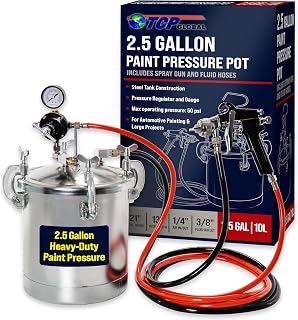
This steel pressure pot is designed for heavy-duty use with epoxy resin, painting, and autobody tasks. It includes a clamp-on lid, regulator, gauge, spray gun, and a 10-foot hose assembly. Best for automotive projects or resin work that requires steady pressure and durable construction. Consider this when you need a robust setup and have space to accommodate a larger tank. Caution: heavier equipment may be less suitable for small, tight spaces.
VEVOR 10L Pressure Pot Tank with Dual Nozzles

This 10-liter pot supports two nozzle options and two spray guns, appealing to users who want versatile setup for decorating, architecture, or light automotive use. It’s best for projects that require different spray patterns or quick swaps between finishes. Better for mid-sized jobs where you want extra control without switching systems. Limitation: 60 PSI maximum may inhibit thicker coatings; plan accordingly.
VEVOR 10L Pressure Pot Tank with Metal Rack

Engineered for spray painting and resin crafting, this 70 PSI-capable pot includes a metal rack and leak repair sealant. It’s suitable for automotive refinishing and architectural coatings requiring consistent pressure. Choose this if you need higher pressure and built-in support accessories. Caution: higher pressure calls for secure handling and regular seal checks to prevent leaks.
VEVOR 750W Stand Airless Sprayer

This stand-mounted airless sprayer delivers high efficiency and a fine, even finish for interior and exterior painting. It does not rely on a traditional pressure pot, yet integrates with pressure-driven workflows for fast coverage. Best for larger wall or fence projects where speed matters. Limitation: not a dedicated pressure pot system, so it may require different setup and cleanup compared to a true pressure pot.
VEVOR 2L Lightweight Pressure Pot
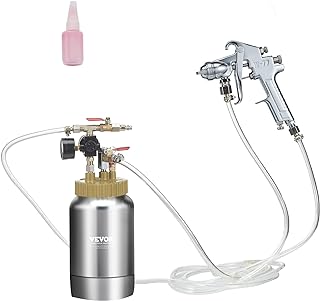
This compact 2-liter pot is ideal for portable jobs and tight spaces. It supports a lighter workflow with a 1.8mm nozzle and a 3-meter hose, suitable for small projects in home decoration or architecture. Best for quick touch-ups or hobby work where mobility matters. Caution: lower capacity and PSI may limit larger projects or thicker primers.
Buying Guide: Key Considerations for Paint Sprayer Pressure Tanks
What size tank do I need? Capacity ranges from 2L to 10L. Choose larger tanks for extended spray sessions or bigger projects; smaller pots suit portable, detail-oriented work.
What pressure do I require? Higher PSI supports thicker coatings and faster application but demands careful handling and compatible equipment. If spraying epoxy or automotive finishes, verify PSI limits and regulator accuracy.
Is a rack, gauge, or dual guns important? A metal rack and built-in gauge simplify setup and monitoring. Dual guns offer flexibility for different finishes or patterns, but add weight and complexity.
How mobile should the system be? Portable pots are lighter and easier to maneuver, ideal for furniture and decorative tasks. Stand-alone sprayers may better serve large surface areas requiring speed.
What coatings will I spray? Thicker coatings (resins, heavy primers) benefit from robust tanks; thin sealants and lacquers may work well with lighter pots. Always match nozzle size and hose length to the coating viscosity.
What accessories matter? Hoses, regulators, leak repair seals, and spray guns influence reliability and maintenance. Ensure parts compatibility with your chosen system to avoid leaks or inconsistent spray.
FAQ
- What is a paint sprayer pressure tank used for? It stores and pressurizes coatings for consistent flow to a spray gun, helping avoid pulsation and clogging.
- Which tank size is best for beginners? A 2–5 liter capacity offers manageable weight and straightforward setup for small projects.
- Do I need multiple spray guns? Dual guns are useful for switching finishes or patterns, but require more space and setup.
- Is higher PSI always better? Higher PSI helps with thick coatings, but may require stronger seals and careful handling to prevent leaks.
- Can a pressure pot be used for epoxy and resin? Yes, but ensure the pot material and seals are rated for resin chemistry and cure times.
- What maintenance is essential? Regularly check seals, regulators, and hoses; clean after use to prevent coating buildup and corrosion.