If you’re looking for a reliable glue to repair a car body, you want products that offer strong bonds, durability, and ease of use. This guide highlights top automotive body adhesives and describes who each is best for. The selections focus on common repair scenarios like panel bonding, trim adhesion, weatherstripping, and lightweight plastic repairs. The aim is to help DIYers, professional technicians, and hobbyists choose the right adhesive for their specific needs.
Summary table of selected products:
| Product | Best For | Key Benefit |
|---|---|---|
| J-B Weld 50139 Plastic Bonder Body Panel Adhesive | Plastic panels, coated metals, carbon fiber composites | Strong 1:1 mix, quick set, sandable for refinishing |
| Automotive Adhesive 100ml, Car Trim Glue Silicone Sealant | Weather stripping, door seals, rubber seals | Weatherproof seal with precise nozzle |
| Automotive Super Glue Liquid, 1.75 oz | Fine cracks, interior trims, small fast repairs | Clear, heat resistant, versatile across materials |
| Multi-Purpose Car Bumper Repair Adhesive (green) | Bumper and exterior panel repairs | Two-pack value for exterior bonding |
| J-B Weld AutoWeld, 25ml, Black | General automotive bonding, fast repairs | Trusted brand for durable bonds |
J-B Weld Plastic Bonder Body Panel Adhesive
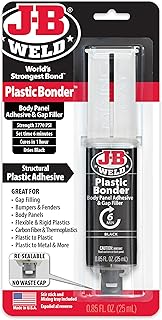
Best for: Plastics, coated metals, and composite panels. This 1:1 mix, quick-setting urethane adhesive is designed for automotive body repairs where plastics or carbon fiber components need a lasting bond. The formula reaches a tensile strength around 3770 psi when cured, making it a solid choice for panel reattachment and gap filling in non-structural areas. It’s particularly well-suited for DIY enthusiasts repairing bumper covers, interior trim, or plastic body panels where traditional epoxies fall short. A potential limitation is the curing time and surface preparation requirements, which should be followed for the strongest bond.
Automotive Adhesive 100ml Car Trim Glue Silicone Sealant
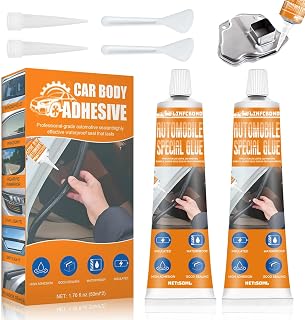
Best for: Weatherstripping, door seals, and exterior sealant needs. This black silicone sealant provides a durable, weatherproof bond with fast drying characteristics. It’s suitable for sealing and bonding rubber seals, weather strips, and some vinyl components on cars. Choose this if the repair involves gaps around trim edges or weather seals where water resistance is essential. A caution: silicone sealants can be difficult to paint over; plan accordingly if a painted finish is required.
Automotive Super Glue Liquid For Car Body

Best for: Quick, small interior or trim repairs where a clear, water- and heat-resistant bond is needed. The liquid formula is versatile across plastics, metals, fiberglass, and rubber. It is useful for fine cracks and discreet fixes inside the vehicle. A limitation is that large exterior repairs may require more substantial bonding methods beyond a small bottle of glue.
Multi-Purpose Car Bumper Repair Adhesive (Green)

Best for: Exterior bumper and lightweight panel repairs. The green two-pack adhesive is designed for exterior use and can help close gaps or bond bumper components. It’s a practical option when a two-part system is beneficial for durability in outdoor conditions. A caution: surface prep and proper clamping are essential for a clean finish, and it’s not ideal for structural metal repairs that require industrial-grade bonding.
J-B Weld AutoWeld, 25ml, Black

Best for: General automotive bonding needs, especially when quick repairs are required on various substrates. AutoWeld from J-B Weld is positioned as a dependable option for fast, durable bonds on metal, plastic, or composite parts. Choose this if you want a trusted brand with a straightforward application. A potential limitation is that some applications may require longer cure times or surface preparation to maximize bond strength.
Buying Guide: Key Considerations For Car Body Adhesives
- Material compatibility: Identify if the adhesive works on plastics, metals, vinyl, rubber, or composites present in your repair area.
- Bond strength and cure time: Balance how quickly you need a bond against the required strength for the specific panel or seal.
- Temperature and weather resistance: For under-hood or exterior uses, ensure the adhesive withstands heat and weather exposure.
- Gap filling and precision: Some products excel at filling gaps or applying in tight spaces; others are better for general bonding.
- Ease of use: Consider mixing ratios, pot life, and whether a nozzle or applicator helps your workflow.
- Reversibility and repairability: Some adhesives allow easier future disassembly if needed.
Common Scenarios And Recommendations
- Plastic body panels or coated metals: J-B Weld Plastic Bonder is a strong, fast-setting option, with the ability to sand after cure for refinishing.
- Weather seals and trims: Silicone sealants with precise nozzles provide durable waterproof bonds around weatherstripping and door seals.
- Interior repairs and fast fixes: A clear, heat-resistant super glue works well for small cracks and trims inside the car.
- Exteriors and bumpers: Green bumper repair adhesives offer exterior bonding options for non-structural components where color and finish matter.
- General automotive bonding: AutoWeld provides a versatile option suitable for multiple materials encountered in daily repairs.
FAQ
- What type of adhesive is best for plastic car panels? – A urethane or specialized plastic bonder designed to bond plastics and coated metals, with a proper surface prep, typically yields strong, durable results.
- Can I use silicone sealant for car door seals? – Yes, silicone sealants are effective for weatherstripping and rubber seals, especially when a waterproof bond is needed. Note it may be difficult to paint over later.
- Is epoxy suitable for bumper repairs? – Epoxies can bond bumpers, but for exterior plastics and flexible components, products designed for plastics or urethanes may perform better in terms of impact resistance.
- How long should I clamp after applying adhesive? – Follow the product’s cure time guidelines; many automotive bonds require several minutes to set and hours to cure fully. Always clamp as directed for the best finish.
- Are there safety considerations I should follow? – Work in a ventilated area, avoid skin contact, and wear eye protection. Read the manufacturer’s safety data for handling and disposal instructions.
- What is the advantage of a 1:1 mixing ratio? – A 1:1 ratio simplifies mixing, reduces errors, and speeds up the initial set, which is helpful for on-the-spot repairs.