If you’re shopping for a durable 20-inch bike, you’re likely balancing kid-friendly features, safety, and future-proof performance. This guide highlights five 20-inch options that fit a range of riders—from energetic kids to adults seeking a fat-tire ride. Each pick is chosen for ease of use, build quality, and compatibility with common riding goals. Use the quick comparison table to identify the best match for your needs, whether it’s training wheels, sleek dashboard features, or rugged off-road capability.
| Product | Best For | |
|---|---|---|
| 12 16 20 inch Kids Bike with Dashboard | Your young rider ages 3–12 | Simulated dashboard, sound maker, safety chain guard |
| Air Zone Aftershock 20″ | Young riders who want better suspension | Dual suspension, six-speed grip shift |
| WEIZE Freestyle BMX 20″ | Kids entering freestyle riding | 360-degree rotor, 4 pegs, single-speed |
| Jasion X-Hunter Fat Tire Electric 20″ | Adults seeking power and range | Up to 30 mph, fat tires, removable battery |
| Kid Bike 14-20 Inch for Ages 3-13 | Bigger kids ready for independent riding | Triple brake system, adjustable seat/handlebars |
Best All-Around 20 Inch Kids Bike With Safety Features

This bike targets younger riders who need engaging visuals and simple controls. It features a simulated dashboard, a sound maker, a decorative number plate, and an accessible water bottle design. The wide seat and front fender improve riding comfort. Best for children ages 3–12 who benefit from a visually stimulating ride and easy-to-use features. A fully enclosed chain guard and a dual braking system help protect safety and pants from tangling. A caution: the sound features may be distracting in quiet environments or crowded areas.
Air Zone Aftershock 20″ Bike

Best for riders who want improved ride quality thanks to dual suspension. The 20″ frame paired with a six-speed grip shift drivetrain offers a versatile setup for hills and flat terrain. Front and rear linear pull brakes provide straightforward stopping power, making it a solid choice for beginners and intermediate riders. Choose this if you prioritize smoothness and adaptability; avoid if you need a simple single-speed setup for easier maintenance on a budget.
WEIZE Freestyle BMX 20″ For Young Riders
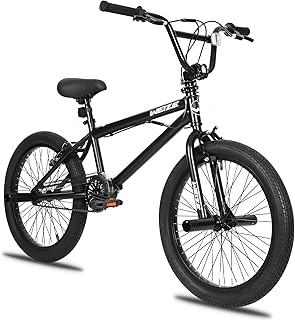
Best for aspiring freestyle riders who want a robust rotor and pegs. The 360-degree rotor enables bar spins and other tricks, while four pegs expand stunt opportunities. The single-speed drivetrain reduces shifting maintenance and keeps riding simple for beginners. Best for parks and street riding; better for trick-focused training than long-distance cruising. A limitation to know: single-speed bikes offer fewer gearing options for hilly terrain.
Jasion X-Hunter 20″ Fat Tire Electric Bike

Best for adults seeking power and range in a 20″ fat-tire format. This folding electric bike delivers up to 30 mph with a robust 1400W peak motor and a removable 48V 13Ah battery. The dual suspension improves comfort on varied surfaces, including urban streets and light off-road. Choose this if you need a capable commuter or recreational e-bike; note that heavier weight and higher energy use may affect range in hilly areas or long trips.
Kid Bike With Training Wheels For Older Kids

Best for bigger kids ages 7–13 who are transitioning away from training wheels but still need stability. This 20″ bike is designed for riders with heights around 48–62 inches and includes a single kickstand, adjustable seat and handlebars, and a triple brake system (front, rear caliper brakes, and rear coaster brake). It provides multiple stopping options and a comfortable growing ride. A caution: higher weight riders may require more frequent adjustments to brake alignment and tire pressure.
Buying Guide: Key Purchase Considerations
Essential questions to guide your decision:
- Who will ride it? Kids vs. adults, experience level, and height range determine frame size and features.
- What type of riding will occur most? Freestyle, commuting, or casual neighborhood rides influence drivetrain and suspension choices.
- How important is safety? Consider chain guards, brake types, and helmet compatibility.
- How much maintenance can you handle? Multi-gear vs. single-speed impact upkeep and adjustments.
- Will you need portability? Folding designs and weight affect storage and transport.
Practical Comparison Points
- Best for beginners: bikes with enclosed chains, simple braking, and training wheels or kickstands.
- Better for hills: multi-gear or performance-focused setups with reliable brakes and suspension.
- Choose this if you want trick-ready features: BMX pegs and a full rotor system.
- Avoid this if you need long-range electric assistance on hills: consider battery capacity and weight.
FAQ
- What does “20 inch” refer to? It indicates wheel diameter, not frame size. Match wheel size to rider height for safety and control.
- Are training wheels necessary? Not always; they help beginners. Transition to coaster or hand brakes as skills develop.
- Is a fat-tire 20” bike suitable for pavement? Fat tires can handle uneven surfaces but add weight and rolling resistance—best on varied terrains.
- Do I need to worry about assembly? Most 20” bikes require basic assembly; follow instructions and secure brakes, wheels, and handlebars before riding.
- What maintenance is essential? Check brakes, tires, chain lubrication, and brakes alignment periodically for safe riding.
- Can adults ride 20” bikes? Yes, but ensure the frame size and seat height fit your inseam and reach for safe control.