The top picks shown here are ready-to-install sending units that work with standard 33-240 ohm gauges. They’re suited for boats, RVs, cars, and trucks, and designed to survive marine environments. This guide helps you choose the right unit based on tank depth, durability, and ease of installation. Ideal buyers include boat owners replacing a failed sender, RV travelers updating fuel monitoring, and anyone seeking a clearer fuel or water level readout without modern electronics.
Summary of chosen products
| Product | Tank Depth Range | Material / Build | Best For |
|---|---|---|---|
| Marine Fuel Tank Sending Unit (4-28″ Depth) (CLLOMAGY) | 4-28 inches | Flexible, adjustable design | Owners replacing a broken unit in deeper tanks |
| Marine Fuel Sending Unit (6-12″ Depth) (CLLOMAGY) | 6-12 inches | Flexible, adjustable | Medium-depth tanks; tight spaces |
| RUPSE Fuel Sender Unit (6.8″ / 175mm) | 6.8 inches | Stainless steel, reed switch sensors | Long-lasting marine use with high corrosion resistance |
| Rupse Fuel Sender Unit (6″ / 150mm) | 6 inches | Stainless steel, easy installation | Compact tanks needing precise readings |
| Moeller Marine 035722-10 (6-12″ Tank) | 6-12 inches | Industry-standard 33-240 ohms; corrosion-resistant | Reliable replacement for standard gauges |
Marine Fuel Tank Sending Unit (4-28″ Depth) — CLLOMAGY

Best for: Boats with deep or variable tank depths where a single unit must adapt to multiple measurements. This model supports a wide range and is noted for adjustable depth via simple rotation and cutting. The flexible design helps fit tanks in tight spaces without replacing the gauge.
Why selected: It matches a broad 4-28 inch depth range and provides an adaptable wake-free setup that can align with most 33-240 ohm gauges. The ability to cut the sender to fit reduces waste and installation time.
Caution: Cutting must be done precisely to maintain seal integrity; improper cutting can affect performance. Ensure the center screw is loosened before adjusting.
Marine Fuel Sending Unit (6-12″ Depth) — CLLOMAGY

Best for: Medium-depth tanks where space constraints limit larger units. This model’s adjustability helps tailor depth without replacing the gauge.
Why selected: It offers reliable measurement in the 33-240 ohm range with similar flexible mounting. The design supports tight spaces and still provides clear readings.
Caution: Compatibility with your tank depth should be verified before installation to avoid over-shooting the intended depth.
RUPSE Fuel Sender Unit (6.8″ / 175mm)
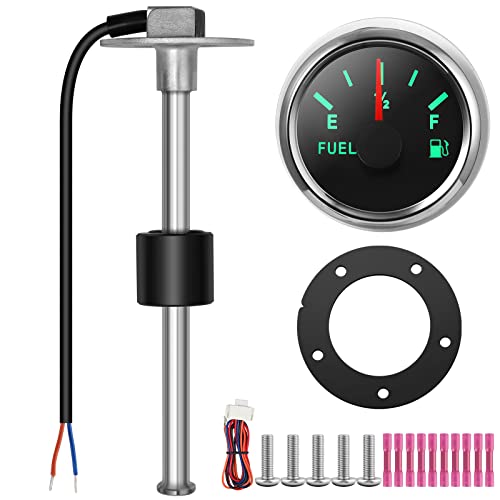
Best for: Boats and vehicles needing a robust, corrosion-resistant sender with long life and precise readings in mid-sized tanks.
Why selected: Stainless steel exterior and reed-switch interior deliver durable operation. The unit includes multiple backlight options and IP67 waterproofing for easy visibility in various lighting conditions.
Caution: Ensure proper SAE 5-hole mounting alignment to avoid seal leaks or vibration.
Rupse Fuel Sender Unit (6″ / 150mm)

Best for: Tanks with about 6 inch depth where quick and accurate readings are essential.
Why selected: Similar stainless steel build with reed switch sensors, offering steady output and resistance to corrosion in marine contexts. The 8-backlight color option improves readability in low light.
Caution: Verify gasket and wiring compatibility with your existing gauge system to ensure a proper seal and connection.
Moeller Marine 035722-10 (6-12″ Tank)

Best for: Users seeking a standard, dependable replacement unit that pairs with common dash gauges in mid-range tanks.
Why selected: Calibrated to the industry standard 33-240 ohms, and designed to resist rust and corrosion, making it a straightforward upgrade for many vessels.
Caution: The unit relies on compatible dash gauges; confirm your gauge expects 33-240 ohms for accurate readings.
Buying Guide
What tank depth should you choose?
Count your tank depth and select a sender that covers that range. Deeper tanks benefit from units with wider depth flexibility, while shallow tanks fit compact senders without excess length projecting into the tank.
What materials matter?
Stainless steel housings and reed-switch sensors resist corrosion in saltwater environments. Units with IP67 waterproofing offer better protection against moisture and splashes.
How important is ease of installation?
Consider SAE mounting patterns and gasket materials. A unit with adjustable length or simple cutting can simplify installation in boats with unusual tank shapes.
What about gauge compatibility?
Most marine senders use 33-240 ohms. Confirm that your dash gauge matches this range to ensure accurate readings. A mismatch can yield wrong fuel level indications.
When should you avoid a particular design?
Swing-arm or arm-based designs may be less reliable in rough seas due to moving parts. If your vessel experiences significant slosh, choose a sensor with a non-swing design or robust reed-switch technology.
Quick-reference comparison
- Best for very deep tanks: CLLOMAGY 4-28″ depth units
- Better for tight spaces: CLLOMAGY 6-12″ depth unit
- Best corrosion resistance: RUPSE stainless steel options
- Best standard replacement: Moeller 6-12″ unit
FAQ
- What is a sending unit? A fuel or water level sender that measures liquid level and reports to a dash gauge.
- Do all gauges use 33-240 ohms? Most marine gauges use 33-240 ohms, but some models vary. Check your gauge documentation.
- Can I trim a sending unit for my tank depth? Yes, if the unit is designed to be cut. Follow manufacturer instructions to preserve sealing.
- Is stainless steel always necessary? Stainless steel bodies offer better corrosion resistance in marine environments, especially saltwater use.
- Are backlight indicators important? Yes, backlit gauges improve readability in low-light conditions and tough outdoor environments.
- Will these senders work with diesel or water tanks? Many are suitable for gasoline, diesel, and water, depending on the sensor design and compatibility notes.