Looking to convert a standard bicycle into an electric-assisted ride? These top picks are best for different rider needs, from easy retrofit kits to high-power rear-hub options. Ideal buyers include casual riders wanting simple installation, commuters seeking extra assist, and hobbyists who crave more torque for hills. The following selections cover a range of wheel sizes, power levels, and installation styles to help you decide what fits your bike and riding goals.
Quick product snapshot for involved buyers:
| Product | Best For |
|---|---|
| LIVALL PikaBoost 2 E-Bike Conversion Kit | Simple rear-wheel pedal assist on 25-35 mm round seat posts |
| Electric Bike Conversion Kit, 48V 1000W (Rear Wheel) | Higher power, fast hills, general commuters |
| Electric Bicycle Motor Kit, 24V 250W | Budget-friendly DIY projects, lightweight builds |
| 26 Inch 48V 1000W Rear Wheel Kit | Powerful rear-hub upgrade for robust performance |
| Ktaxon 48V 1000W Front Wheel Kit | Front-hub option with PAS for cadence sensing |
LIVALL PikaBoost 2 E-Bike Conversion Kit

The LIVALL PikaBoost 2 is a rear-wheel pedal-assist system designed for round seat posts (25-35 mm). It offers a built-in 220Wh battery and app control, with LED lighting for safer riding. Best for riders who want a quick, clean installation without routing wires. The kit supports up to 70 km (43 miles) of range under ideal conditions with the 220Wh battery and ensures a safer stop with a robust BMS. A caution: check seat-post size before purchase, and note that it is a pedal-assist accessory, not a complete bike.
Best for: Riders seeking a tidy retrofit with app control and a mid-to-long-range battery, primarily on bikes with standard round seat posts.
Limitations: Not suitable for children’s bikes; installation depends on correct seat-post sizing; ensures pedal-assist only, not full e-bike functionality.
Electric Bike Conversion Kit, 48V 1000W Rear Wheel
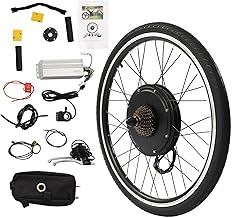
This high-power rear-hub kit delivers up to 1000W and speeds up to 53 km/h, with 45 Nm of torque. It includes a controller and safety features like a power-off brake handle. It’s well-suited for riders who want strong acceleration and hill-climbing ability, and who don’t mind a heavier, more powerful upgrade. A caveat: installation requires some mechanical aptitude to align the motor with your bike’s hub and disc brakes if present.
Best for: Enthusiasts needing substantial torque and higher top speeds for urban commutes or hillier terrain.
Limitations: Heavier setup; requires careful mounting and brake compatibility checks.
26 Inch 48V 1000W Rear Wheel Kit

This rear-wheel kit emphasizes durable construction with high-grade materials and a 48V 1000W motor capable of 53 km/h and 45 Nm torque. It’s designed for road use with a 120 kg (264.55 lb) load capacity and includes multiple structural components to improve efficiency. Best for riders who want a robust, long-lasting upgrade for daily commuting or higher-speed riding. Caution: ensure your bike frame can accommodate a rear hub motor kit and verify wheel size compatibility.
Best for: Riders needing a strong all-around upgrade capable of sustained performance.
Limitations: May require frame and brake compatibility verification; heavier and more complex to install.
Ktaxon 48V 1000W Front Wheel Kit
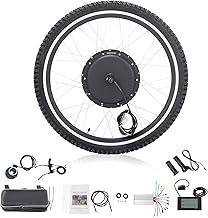
The Ktaxon front-wheel kit uses a brushless hub motor with PAS for cadence sensing, and an LCD display to monitor speed, battery, and mode. This front-hub option provides a different balance of weight distribution and steering feel. Best for riders who prefer front-drive assist or want a simpler motor placement on certain frames. Note that front-hub setups can affect steering dynamics and wheel alignment; ensure your frame and fork are compatible.
Best for: Riders seeking front-drive assist with cadence sensing and an LCD display for easy monitoring.
Limitations: Front-hub setups may alter steering feel and require careful fork compatibility checks.
Buying Guide
What should you consider when choosing an electric tandem bike conversion kit?
- Power and speed: Higher wattage (like 1000W) offers better hill climbing and faster top speeds but adds weight and complexity.
- Wheel and frame compatibility: Check wheel size, hub type (front or rear), and whether your frame supports motor mounting without modifications.
- Battery capacity and range: Larger batteries provide longer range but add weight; balance range needs with bike use and typical routes.
- Installation complexity: Some kits are plug-and-play, others require professional assembly or mechanical know-how.
- Safety features: Look for cut-off braking, durable braking compatibility, and reliable wiring with good BMS protection.
- Purpose and ride style: Commuting, hills, or leisure rides will steer you toward different power, weight, and control configurations.
FAQ
- What is a pedal-assist kit? A pedal-assist kit uses sensors to provide motor assistance when you pedal, without a throttle in most cases.
- Can I install a kit on any bike? Most kits work on standard frames, but you must check wheel size, hub compatibility, and seat-post diameter.
- Is a front-wheel kit safer than a rear-wheel kit? Both have safety considerations; front-hub kits influence steering and handling differently than rear-hub setups.
- Do these kits require specialized tools? Some kits are installable with common bike tools, while others may benefit from professional assembly or alignment.
- Will a 1000W kit be illegal on streets? Local laws vary; verify legal wattage limits and motor-assisted speed limits in your area before riding.
- Do these kits affect the bike’s braking performance? Proper installation should preserve braking functionality; test braking after installation and ensure compatibility.