When you need a reliable portable fuel solution for boats, fishing vessels, or small craft, a marine portable fuel tank is essential. This guide highlights top options that balance capacity, safety features, and ease of use. Best suited for boaters who value EPA and CARB compliance, built-in gauges, and convenient transport, these choices help ensure you have fuel where and when you need it. The following selections emphasize compatibility with common outboard motors, spill-prevention design, and practical handling for both weekend adventures and extended trips.
Summary table of chosen products:
| Product | Best For | Key Feature | Capacity |
|---|---|---|---|
| Scepter 12 Gallon Portable Marine Gas Can | Mid-sized boats, long trips | 2-way vented cap, built-in fuel gauge | 12 gallons |
| 3 Gallon Portable Boat Gas Tank | Yamaha outboards, compact spaces | EPA compliant, specific connector | 3 gallons |
| Scepter 6 Gallon Portable Marine Gas Can | Under-seat storage, quick swaps | Top handle, built-in gauge | 6 gallons |
| Attwood 6-Gallon Portable Tank | General marine use, robust design | EPA and CARB certified | 6 gallons |
| 6 Gallon Marine Portable Tank with L-Handled Design | Easy carry, outboard transfers | L-shaped handle, compact | 6 gallons |
Scepter 12 Gallon Portable Marine Gas Can

The Scepter 12 Gallon Portable Marine Gas Can features a tall profile with a 2-way vented cap, a built-in fuel gauge, and a pickup for easy access to fuel when needed. This makes it a strong choice for boats that require a larger, readily accessible reserve without frequent refueling stops. It is EPA and CARB compliant, aligning with common regulatory expectations for marine fuel containers.
Best for: boaters needing a sizable single-till fuel option for mid-length trips or mid-range vessels that benefit from a tall, easy-to-handle can. Better for those who want a visible fuel level and a robust pickup tube to improve dispensing accuracy.
Limitations: Taller profile may be less ideal in compact cockpit spaces or under-seat storage where height is constrained.
3 Gallon Portable Boat Gas Tank
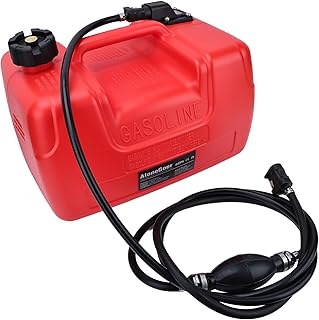
This compact 3-gallon option is EPA compliant and designed for compatibility with Yamaha outboard motors, featuring a dedicated connector (6YL-24201-24-00) for straightforward installation. Its smaller size makes it ideal for tight spaces or as a supplementary fuel source for shorter trips or small craft.
Best for: owners of Yamaha outboards or boats with limited storage who need a light, portable fuel tank as a supplementary reservoir. Choose this if space is at a premium and you want ERA-aligned compliance.
Limitation: Lower capacity means more frequent topping off on longer journeys.
Scepter 6 Gallon Portable Marine Gas Can

This 6-gallon can offers a practical balance of capacity and portability, featuring a top handle for easy carrying and a built-in fuel gauge. The 2-way vented cap helps maintain safe pressure levels during transport and fueling. It is EPA and CARB compliant, making it a versatile mid-size option for various vessels.
Best for: boaters who want a portable, under-seat-friendly option with a strong gauge and easy handling, suitable for day trips and short excursions.
Limitation: Not as large as the 12-gallon model, so longer trips may require refueling more often.
Attwood EPA and CARB Certified 6-Gallon Tank

This Attwood tank is EPA and CARB certified, designed for reliable marine fuel storage and transfer. Its 6-gallon capacity makes it suitable for a broad range of vessels and conditions, providing a practical balance between capacity and portability. The certification signals alignment with environmental and safety standards in many regions.
Best for: boaters seeking a certified, straightforward 6-gallon solution that prioritizes compliance and general compatibility across a wide range of boats.
Limitation: The listing does not specify unique design features like built-in gauges, so users may rely on external fuel measurement methods if gauge presence is essential.
6 Gallon Tank With L-Shaped Handle
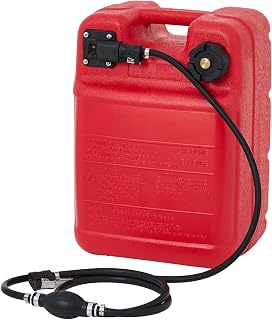
This 6-gallon tank emphasizes portability with an ergonomic L-shaped handle for comfortable carrying and carrying versatility around a vessel. The compact dimensions enhance storage in tight spaces, and the design supports straightforward transfer to and from the boat’s fuel system. It is suitable for many outboard configurations and general marine use.
Best for: users prioritizing ease of carrying and compact storage with a reliable 6-gallon capacity for routine fueling needs.
Limitation: The source does not confirm built-in gauges or venting features, so verify compatibility with your fueling setup if those features are important.
Buying Guide: How To Choose The Right Marine Portable Fuel Tank
Capacity and usage: Determine the typical voyage length and engine fuel consumption. For longer trips or larger boats, a 12-gallon option may reduce refueling stops; for small boats or spare fuel, a 3–6 gallon tank often suffices.
Compliance and safety: Look for EPA and CARB certifications to ensure regulatory compliance and safer handling. Venting caps and secure pickups help prevent spills during transport and fueling.
Portability and fit: Consider the tank’s height, width, and handle design relative to your vessel’s storage space and cockpit layout. Taller designs may not fit under seating or within tight compartments.
Fuel system integration: Check for built-in gauges and compatible connectors if your boat’s fueling system requires specific fittings. If a gauge is not included, plan for an external measurement method.
Material and durability: Most marine tanks use high-density polyethylene or similar materials for rugged use and chemical resistance. Ensure the surface is resistant to corrosion and UV exposure.
Maintenance: Consider ease of cleaning, fuel smoothing features, and compatibility with common marine fuels to minimize varnish buildup and line clogs over time.
Best-use scenarios: If storage space is limited, prioritize compact designs with ergonomic handles. For boats that frequently require quick fuel swaps, a larger gauge and pickup setup can improve efficiency.
FAQ
- What size marine portable fuel tank should I choose? Choose based on boat size, engine fuel consumption, and planned trips. Smaller boats often do well with 3–6 gallons, while larger vessels may benefit from 12 gallons.
- Are marine fuel tanks EPA and CARB compliant? Many models are certified to EPA and CARB standards, which helps ensure compliance with environmental and safety regulations.
- Do these tanks have built-in gauges? Some models include built-in gauges; others rely on external measurement methods. Check product specifics for gauge availability.
- Can these tanks fit under seats or in small cockpits? Some designs are compact with under-seat compatibility, while taller options may require open storage space. Verify dimensions before purchase.
- Is venting necessary for portable tanks? Yes, vented caps help manage pressure buildup during transport and fueling, reducing spill risk.
- What maintenance is required for marine fuel tanks? Regular inspection for cracks, cleaning of the pickup area, and ensuring fittings remain secure will support long-term reliability.