Finding the right auxiliary fuel bottle can improve reliability for long trips, carburetor tuning, and on-the-spot testing. This guide highlights five practical options, clearly explaining who benefits most from each and why they’re selected. Use the quick reference table to compare capacities, compatibility, and key features at a glance.
| Product | Capacity | Best For |
|---|---|---|
| MOTO4U Auxiliary Gas Fuel Tank Universal Motorcycle Gas Tank Repair Tool Kit | 1L | Minor fueling needs, on-bike testing |
| Motorcycle Auxiliary Fuel Tank (500ml with Vent) | 0.5L | Carburetor tuning, bench testing |
| Auxiliary Gas Fuel Tank Universal Motorcycle Gas Tank Repair Tool Kit | 1L | Long rides, extended travel |
| MOTO4U 500ml Motorcycle Auxiliary Fuel Tank with Cut-Off Valve & Vent | 0.5L | Carburetor tuning, small engine work |
| Nelson-Rigg Trails End Fuel Bottle Holder | Holder only | Mounting options, MOLLE-compatible setups |
MOTO4U 1L Auxiliary Gas Tank With Hose And Valve

The MOTO4U 1L Auxiliary Gas Tank combines a complete repair kit with a 1-liter reservoir, suitable for on-bike testing and fuel routing to the carburetor. Best for riders who need a compact, all-in-one solution that includes a fuel hose, cut-off valve, lid, and an air outlet. The included components support precise fuel delivery and safer operation during maintenance tasks.
Who it’s best for: riders performing routine maintenance or tuning who want a single, integrated kit. Why selected: its 1-liter capacity and included valve and hose simplify testing without requiring separate purchases. Caution: ensure the hose length suits your bike’s configuration to avoid kinks or routing issues.
Motorcycle Auxiliary Fuel Tank 500ml With Vent

This 500ml auxiliary tank includes a vent and a scale, enabling precise flow control when bypassing the main tank for carburetor work. It’s designed to be hung on a handlebar or bench vice, making it a practical option for field adjustments or bench testing. The air inlet on the cap balances pressure for smoother gasoline flow.
Who it’s best for: small-engine specialists and riders focused on carburetor tuning or initial engine testing. Why selected: it emphasizes controlled fuel delivery and safe use during delicate adjustments. Caution: smaller capacity means more frequent refuels on longer sessions.
Auxiliary Gas Fuel Tank Universal 1L Tool Kit

This universal 1-liter auxiliary tank features ABS construction, a clear scale, a large filler cap, and a durable brass petcock valve with a lengthy hose. It’s suitable for longer rides or commuters who want extended range without frequent refueling stops. The kit’s 108 cm hose provides flexible operation for various mounting positions.
Who it’s best for: riders seeking extended travel storage and reliable fuel delivery. Why selected: combination of capacity, material, and included hose supports extended use. Caution: ABS plastic can be sensitive to heat and prolonged UV exposure; store away from direct sunlight where possible.
MOTO4U 500ml Auxiliary Fuel Tank With Cut-Off Valve

The 500ml MOTO4U tank is designed for carburetor tuning and small engine repair. It includes a cut-off valve and vent, making it easier to control fuel flow during adjustments. A compatible universal fit ensures it can be used across various bikes and engines.
Who it’s best for: riders focusing on precise carburetor tuning and compact testing. Why selected: its straightforward setup and dedicated cut-off valve aid precise control. Caution: smaller capacity may require more frequent fuel topping-up during long sessions.
Nelson-Rigg Trails End Fuel Bottle Holder
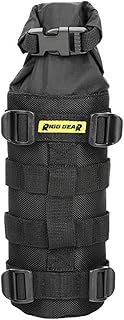
The Nelson-Rigg Trails End Fuel Bottle Holder is a mounting accessory rather than a fuel bottle itself. It uses UltraMax fabric for fade resistance and features a roll-top closure to secure bottles. It integrates with MOLLE systems or tail bags commonly used on adventure setups.
Who it’s best for: riders who want flexible mounting options for various bottles and gear. Why selected: it enables easy integration with existing MOLLE-compatible gear. Caution: this is a holder, not a bottle; you’ll need a compatible bottle to use with it.
Buying Guide: How to Choose The Right Auxiliary Fuel Bottle
Capacity and use case: Choose 0.5L for quick tests and carburetor tuning on smaller engines; 1L for longer testing runs or extended rides. Consider whether you need a built-in valve, venting, or a reinforced cap to maintain pressure balance.
Material and durability: ABS and other plastics offer light weight, but consider UV exposure and heat resistance for outdoor use. Look for weather-resistant seals and secure fittings to prevent leaks during vibration.
Mounting options: If you plan to hang the tank on a handlebar or bench vice, ensure the included mounting hardware supports your setup. For MOLLE-compatible packs, verify compatibility with your existing gear.
Ease of use: A clear scale helps monitor fuel precisely. A long hose improves placement flexibility, but make sure it’s not susceptible to kinking or snagging on bike components.
Safety considerations: Ensure the cap has an air inlet to equalize pressure, reducing flow issues. Choose a design that minimizes the risk of spills when the bike leans or moves on rough terrain.
Frequently Asked Questions
- What is an auxiliary fuel bottle used for on motorcycles?
It provides an additional, controllable fuel source for testing, carburetor tuning, and extended riding or maintenance tasks without relying solely on the main tank.
- Can I mount an auxiliary fuel bottle on any motorcycle?
Most are universal or come with adaptable fittings, but confirm compatibility with your bike’s mounting points and available space.
- What capacity should I choose for long trips?
Consider 1L for longer trips or when fuel stops are infrequent, or 0.5L for quick tests and tuning sessions.
- Are there safety concerns with using auxiliary fuel tanks?
Yes. Ensure proper venting, leak-proof fittings, and secure mounting to prevent spills or fuel contact with hot surfaces.
- What maintenance steps are recommended for these tanks?
Inspect hoses and valves for wear, clean any fuel residue, and store away from direct sunlight to preserve material integrity.
By comparing these options, riders can pick an auxiliary fuel bottle that matches their maintenance needs, riding style, and gear setup. The right choice supports safer, more efficient carburetor work and longer, more reliable rides.