If you’re looking to turn a standard bicycle into a capable electric ride, an e-bike conversion kit is the simplest path. This guide highlights five reliable options, outlining who each kit is best for, how they perform, and potential limitations. It’s ideal for DIY riders, commuters seeking assistive power, and hobbyists upgrading older bikes. Below is a quick buying table to compare the essentials at a glance.
| Product | Motor Power | Wheel Size | Best For |
|---|---|---|---|
| Electric Bicycle Motor Kit, 24V 250W | 250W | 16–28 inch | Budget-friendly upgrades and simple retrofits |
| Electric Bike Conversion Kit, 48V 1000W (Hub) | 1000W | 26 inch | Higher speed and powerful assist |
| 36V 350W Front Wheel Kit | 350W | 26 inch | Front-wheel upgrade with cruise control |
| 26-Inch 48V 1000W Rear Hub Kit | 1000W | 26 inch | Strong torque for road, mountain, and commuter bikes |
| 1000W Front/Rear Conversion Kit with LCD | 1000W | Universal | All-in-one kit with display and PAS |
Electric Bicycle Motor Kit, 24V 250W: Basic Conversion for Light Use

This kit includes a complete 24V 250W DC motor, a chain, a freewheel, a motor controller, and mounting hardware. It’s designed for 16–28 inch wheels and standard handlebars, making it a straightforward upgrade for light-duty commuting or recreational riding. Best for entry-level DIY projects where cost-conscious riders want modest assistance without high top speeds.
Who it’s for: riders seeking a simple, affordable retrofit for urban trips, weekend rides, or short commutes. Why chosen: compact 250W setup with essential parts ensures a cohesive conversion without extra complexity. Limitation: lower power means slower acceleration and limited climbs compared with larger kits.
Electric Bike Conversion Kit, 48V 1000W Hub Motor (Rear): Strong All‑Around Performance
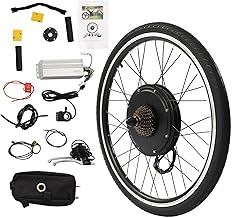
This rear hub motor kit delivers 1000W of power with a 440rpm motor and 45N·m torque. It’s paired with a robust controller and a safety brake cutoff, enhancing ride reliability and emergency stopping. It suits riders who want brisk acceleration and the ability to tackle hills. Best for: fast commutes or mountain-style routes on a familiar bike frame. Caution: rear-hub installations may require more wheel-specific alignment and truing.
36V 350W Front Wheel Kit: Easy Front‑Wheel Upgrade

Designed for 26-inch bikes, this 350W front-wheel motor provides immediate assistance with five levels of assist and a cruise control function. It’s a practical upgrade for riders who want to preserve the bike’s original drivetrain and geometry while adding predictable, mid-range power. Choose this if you prefer front-wheel drive for quick response and simple installation. Limitation: front-wheel motors can affect steering feel at very high speeds; use with caution.
1000W Electric E-Bike Conversion Kit with LCD and PAS

This kit offers a complete set to transform a bike into an e-bike with a 1000W motor, front or rear compatibility, and an LCD display paired with pedal-assist sensor (PAS). It supports five-speed adjustments and cruise functionality for steady rides. Best for riders who want a full-featured system with ride metrics and easy cruise control. Caution: ensure compatibility with your frame and brakes when upgrading to high wattage.
Buying Guide: How To Choose The Right Electric Add-On For Your Bike
Power needs and riding style: If you mainly ride short urban trips, a 250–350W kit may be enough. For hills, longer commutes, or higher speeds, a 1000W system provides stronger torque and faster acceleration.
Wheel and frame compatibility: Check wheel size (16–28 inches) and whether the kit is front- or rear-drive. Rear-hub kits deliver more torque but may require wheel rebuilding, while front drives are easier to install but can alter steering feel at higher speeds.
Control features: Consider throttle vs. pedal-assist, and whether the kit includes an LCD display or cruise control. Cruise control and PAS can reduce rider fatigue on longer rides.
Safety and braking: Look for a controller with reliable safety cutoffs, and ensure your braking system can handle added weight and speed. Some kits include power-off brake levers as a safety feature.
Installation effort: Some kits come with all mounting hardware and detailed manuals; others may require shop support or extra components. If you’re a first-time converter, choose a kit marketed as beginner-friendly.
Durability and materials: Aluminum and reinforced components improve longevity and reduce wear on frames and hardware during off-road use or daily commuting.
FAQ
- Do I need professional installation? Installation ranges from simple plug-and-play on some kits to more involved wheel work on hub motor versions. Review the manual and assess your mechanical skills before starting.
- Can I convert any bicycle to an e-bike? Most standard bikes can be converted with the appropriate wheel size and mounting hardware, but check frame clearance, brake type, and weight limits for safe operation.
- Will an electric kit affect my bike’s warranty? Some manufacturers may have warranty exclusions for aftermarket conversions. Check your bike and kit terms before installation.
- What maintenance is required for converted bikes? Regularly inspect the motor, controller, and wiring; keep cables dry and clean; check spoke tension after installation; and service brakes as needed.
- Which kit is best for hills? A higher wattage system (like 1000W) typically provides better torque for uphill riding compared to smaller 250–350W kits.
- Is front-wheel or rear-wheel drive better? Rear-wheel kits usually offer better traction and torque, while front-wheel kits provide simpler installation and handling for light-to-mid-use needs.