When choosing a fuel injector cleaning kit, the goal is to restore spray quality, reduce misfires, and improve fuel efficiency. This guide highlights five popular options suited for DIY enthusiasts and professional use alike. Each pick targets different needs—from universal testing to non-dismantle cleaning—and includes practical limits to help you decide. The following summary table compares key aspects to aid quick decisions.
| Product | Best For | Key Benefit |
|---|---|---|
| Universal Fuel Injector Tester and Cleaner Tool Kit | DIY enthusiasts needing pulse-mode flexibility | 8 pulse modes and multiple adapters for two injectors |
| Fuel Injector Cleaner Tool Kit 1000ML | Gasoline engines requiring high-pressure cleaning | Disassembly-free cleaning with sizable reservoir |
| Fuel Injector Cleaner Kit (Non-dismantle) | Budget-friendly, quick cleanups | Clean throttle body and intake without disassembly |
| FOXWELL JT210 Fuel Injector Tester & Cleaner | Visual inspection of spray pattern | Ultrasonic cleaning and real-time flow visualization |
| 4Pcs Fuel Injector Cleaner Kit | Multi-vehicle maintenance and testing | Universal adapters and test leads for quick flushes |
Note: This article presents objective descriptions based on listed features. Choose according to your vehicle type, maintenance goals, and whether you prefer disassembly-free or portable testing capabilities.
Universal Fuel Injector Tester And Cleaner Tool Kit

Features include 8 pulse modes and a 4-wire dual channel setup capable of testing two fuel injectors simultaneously. It also ships with 8 cleaning adapters and supports 12V/5V output power. Best for DIYers who want programmable cleaning and clear injector comparison.
Best for: Home mechanics who want flexible testing scenarios and the ability to tailor pulse patterns to different injectors. The kit’s dual-channel design helps compare injections side-by-side.
Caution: The device requires basic electrical know-how to avoid short circuits or incorrect wiring. Ensure power is disconnected before setup.
Fuel Injector Cleaner Tool Kit 1000ML

This kit provides a 1000ML reservoir and 150PSI cleaning pressure for thorough fuel injector cleaning. It emphasizes a disassembly-free workflow, suitable for engines where intake and injector access is common.
Best for: Cars with accessible injectors that benefit from a high-volume cleaner without dismantling fuel lines. It supports quick, routine maintenance.
Caution: High-pressure cleaning requires careful handling to prevent hose kinks or leaks. Follow adapter-specific instructions for correct connection.
Fuel Injector Cleaner Kit (Non-dismantle)

Non-dismantle cleaning focuses on the intake path and fuel system cleaning through a 1000ML reservoir and 150PSI. It’s tailored for cars where removing components is impractical or time-consuming.
Best for: Busy shop setups or vehicles with hard-to-reach injectors where non-invasive cleaning proves advantageous. It’s a straightforward option for routine maintenance without disassembly.
Caution: May not reach all injector ports on very modern or highly integrated engines. Check your vehicle’s service manual for access limitations.
FOXWELL JT210 Fuel Injector Tester & Cleaner
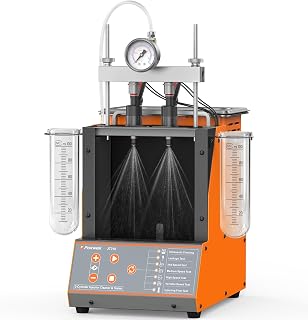
The JT210 offers ultrasonic cleaning and a visual spray pattern display, with features like side-by-side flow comparison and RPM simulation for 12V injectors. It helps diagnose misfires and rough idle by showing actual spray quality.
Best for: Technicians or enthusiasts who want diagnostic insight alongside cleaning. It’s ideal for identifying imperfect spray patterns and comparing injector performance in real time.
Caution: Ultrasonic cleaning requires careful placement of the injector and safe handling of cleaning fluids. Verify compatibility with your injector type before use.
4Pcs Fuel Injector Cleaner Kit
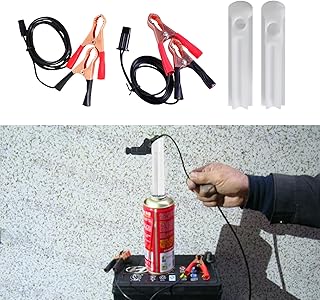
This kit includes four universal adapters and test leads, enabling flexible cleaning and testing across multiple vehicles. It suits multi-vehicle fleets or home garages with varied injector styles.
Best for: Owners who service more than one vehicle or frequently switch between different injector configurations. The kit’s universals simplify widespread use.
Caution: Adapter compatibility varies by injector model. Double-check the adapter-to-injector match before operation.
Buying Guide
What should you consider when choosing a fuel injector cleaning kit?
Vehicle compatibility matters. Check whether the kit supports your engine type, injector style, and required pressure or pulse modes. For DIY users, a kit with clear wiring and simple setup reduces the risk of errors.
Disassembly vs non-dismantle cleaning—which is right for you?
Disassembly-free kits are faster and less invasive, suitable for routine maintenance. Non-dismantle options can save time but may not reach every injector port on complex modern engines.
How important is diagnostic capability?
Tools with spray pattern visualization or flow comparison help diagnose misfires and rough idle. If you suspect injector issues, a tester with real-time feedback is valuable.
What about pressure and reservoir capacity?
Higher PSI and larger reservoirs enable more thorough cleaning but may require sturdier equipment and better handling. Choose based on your typical service scope and vehicle types.
What are practical safety considerations?
Follow manufacturer instructions for electrical connections and cleaning fluids. Ensure power is off during setup, and handle high-pressure lines with care to avoid leaks or injuries.
FAQ
- Do I need a specialized tool to test injector spray patterns? A tester with a visual spray pattern feature can reveal irregular jets and misfires, helping you decide if cleaning is needed.
- Can these kits clean all types of fuel injectors? Most kits target common gasoline injectors; consult the product specs to confirm compatibility with your injectors’ size and type.
- Is disassembly-required cleaning less effective? It depends on injector access. Disassembly-free methods are quicker but may not reach all ports on some engines.
- What maintenance tasks complement injector cleaning? Cleaning the throttle body, intake valves, and catalytic converter can improve overall air-fuel mixing and efficiency.
- Are ultrasonic cleaners necessary? Ultrasonic cleaning offers deep cleaning for stubborn deposits, but it’s not mandatory for all vehicles. Use as needed based on symptoms.
- How do I store used cleaning fluids safely? Use sealed, labeled containers and follow local disposal guidelines to prevent environmental impact.