When choosing a wheel puller for a lawn tractor, you want tools that provide solid leverage, precise alignment, and durable construction. This guide highlights five reliable options that are well-suited for lawn-tractor work, flywheels, hubs, and steering components. The best pick depends on your specific job: lightweight gear pullers for small bearings, or heavy-duty flywheel pullers for Briggs & Stratton engines. The table below compares the chosen products to help you decide at a glance.
| Product | Best For | Key Benefit |
|---|---|---|
| Briggs & Stratton 19069 Flywheel Puller | Briggs & Stratton engines | Genuine part with compatible fit for multiple engine series |
| Tlence 2-Jaw Gear Puller | Bearings and gears | Adjustable depth and grip for varied sizes |
| Orion Motor Tech Front Hub And Rear Axle Puller Set | Front hubs and rear axles | Specialized set for common tractor hubs and axles |
| OEMTOOLS 25200 Steering Wheel Puller | Steering wheels | Durable steel with multiple sizes included |
| 19203 Flywheel Puller | Briggs & Stratton flywheels | Flywheel-specific compatibility |
Briggs & Stratton 19069 Flywheel Puller
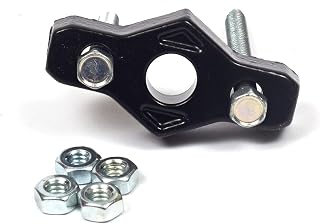
The Briggs & Stratton 19069 Flywheel Puller is a genuine Briggs & Stratton part designed for engine flywheels across several Briggs & Stratton series. This tool is best for owners of Briggs engines who need a reliable, brand-specific puller to remove flywheels without risking damage. It’s most suitable for lawn tractors or small engine projects where a manufacturer-aligned puller offers straightforward compatibility. Use caution when aligning the puller to avoid bending the flywheel or crankshaft components.
Who it’s best for and why
Best for: Briggs & Stratton engine owners performing standard flywheel removal. The authentic part fit reduces confusion about compatibility and aligns with Briggs mounting patterns.
Pros and limitations
- Pro: Direct compatibility with multiple Briggs & Stratton engine series
- Con: Limited use outside Briggs & Stratton engines
Tlence 2-Jaw Gear Puller
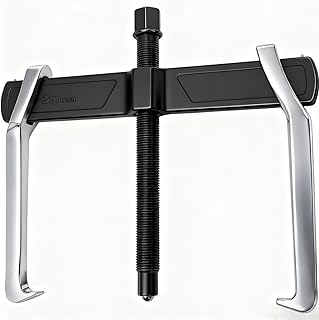
The Tlence 2-Jaw Gear Puller uses forged chrome vanadium steel and offers adjustable clamping depth and grip width. It’s designed to safely remove gears and bearings, including steering wheels, with limited risk of surface damage. The tool’s length specifications place its reach between compact and mid-size pulls, making it versatile for various lawn-tractor components. A caution: ensure the jaws are fully seated and aligned before applying force to prevent slippage.
Who it’s best for and why
Best for: Homeowners and DIYers tackling gears and bearings of varying sizes. Its adjustable design helps accommodate different puller needs without purchasing multiple tools.
Pros and limitations
- Pro: Strong build with adjustable depth and width
- Con: May require a separate support tool for extremely tight fits
Orion Motor Tech Front Hub And Rear Axle Puller Set
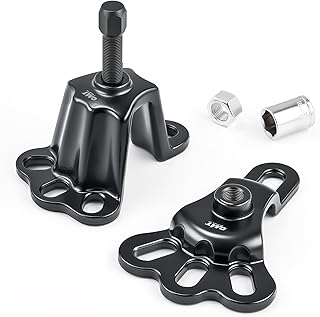
This puller set includes tools designed for front wheel hub and rear axle work, with IDs in the 3- to 5-inch range. It’s well-suited for tractors that use separate hub pullers and axle pullers, offering a cohesive kit for several common lawn-tractor configurations. Best for: owners who need a complete kit to tackle both hubs and axles without swapping tools. Limitation: the set’s effectiveness depends on correct sizing for your specific hubs and axles.
Who it’s best for and why
Best for: Yard machines with combined hub and axle removal tasks. The kit covers multiple ID ranges, reducing the need to source individual pullers.
Pros and limitations
- Pro: Comprehensive kit for hubs and axles
- Con: May be larger and heavier than single-purpose pullers
OEMTOOLS 25200 Steering Wheel Puller

The OEMTOOLS 25200 steering wheel puller is a standard option for removing steering wheels on a variety of makes and models, including some lawn tractors. It includes multiple sizes in steel construction, offering reliable leverage. Best for: users who need a general-purpose steering wheel puller that can be adapted for smaller hubs within lawn-tractor applications. Limitation: not all steering wheels inside lawn tractors will match every included size; verify wheel hub thread compatibility before use.
Who it’s best for and why
Best for: DIYers seeking a versatile puller for steering components beyond a single brand. The included sizes provide flexibility for common wheel diameters.
Pros and limitations
- Pro: Durable steel construction with multiple size options
- Con: General-purpose tool may require adapters for exact lawn-tractor fits
19203 Flywheel Puller
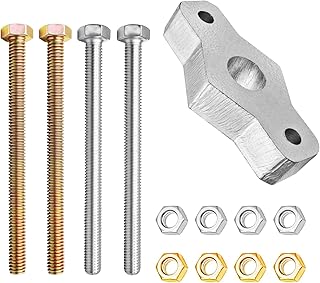
The 19203 Flywheel Puller is designed to be compatible with Briggs & Stratton flywheels, offering a straightforward solution for flywheel removal. Best for: Briggs-based lawn tractors that require a flywheel puller with a direct fit. Limitation: as a flywheel-specific tool, its utility is narrow if you’re working on other brands or engine types.
Who it’s best for and why
Best for: Briggs & Stratton engine users who need a flywheel puller specifically matched to that family of engines.
Pros and limitations
- Pro: Targeted compatibility with Briggs flywheels
- Con: Limited cross-brand applicability
Buying Guide: Wheel Pullers For Lawn Tractors
What type of puller do I need?
Assess whether you primarily work with gears and bearings, hubs and axles, or flywheels. Gear pullers excel at bearings and gears; hub pullers handle wheel hubs; flywheel pullers are wheel-specific and engine-family specific. Matching the tool to the job reduces risk of damage and improves success rates.
How do I judge size, compatibility, and material?
Look for forged steel or alloy construction for durability. Check jaw width, reach, screw thread sizes, and overall dimensions to ensure the tool fits your tractor’s hubs, belts, and flywheels. Adjustable pullers offer versatility across different sizes, but dedicated pullers provide the best fit for frequent tasks.
What safety considerations matter?
Always secure the tractor and relieve tension before pulling. Use support stands if needed, and avoid over-tightening. Misalignment can bend components or cause tool slippage, leading to damage or injury.
Which kit is best for a DIYer?
A kit that covers front hubs, rear axles, and flywheels provides broad coverage for a typical lawn-tractor maintenance workflow. Consider sets that include multiple size options and sturdy storage cases for organization.
How should I store and maintain wheel pullers?
Clean after use to prevent corrosion. Lubricate moving joints sparingly, and inspect jaws for wear. Store in a dry place to extend tool life and keep edges aligned for next use.
FAQ
- What puller is best for a lawn-tractor flywheel? – A flywheel-specific puller (like Briggs & Stratton 19069 or 19203) is typically best, as it matches the engine’s mounting pattern and thread size.
- Can I use a general steering wheel puller on a tractor? – It can work if sizes and threads match, but confirm compatibility before applying force.
- Are adjustable gear pullers safer for DIY use? – Yes, adjustable pullers reduce the risk of bending parts by adapting to different sizes.
- Should I replace worn puller jaws? – Yes; damaged jaws reduce grip and increase the chance of slippage during use.
- Do I need a complete kit or can I buy individual tools? – A complete kit is convenient for multiple tasks, but individual pullers are cost-effective if you only need a single type.
- Is a puller suitable for lawn tractors with aluminum hubs? – Verify material compatibility; aluminum hubs may require gentler pressure and specialized pullers.