Looking to upgrade your vehicle’s clutch with a hydraulic slave cylinder conversion? This guide presents five select options that balance actuation feel, compatibility, and installation practicality. Ideal buyers include hot-rodders and motorcycle enthusiasts seeking smoother clutch engagement, improved reliability, and easier maintenance. The table below summarizes key choices to help compare fit, travel, and bore size at a glance.
| Product | Bore | Travel | |
|---|---|---|---|
| Speedway Motors Push-Type Hydraulic Clutch Slave Cylinder Kit | 7/8 inch | 1.25 in | Custom hydraulic clutch conversions |
| Speedway Motors Hydraulic Clutch Floor Mount Kit | 7/8 inch (slave) | Not specified | Floor-mount pedal setups with 6:1 leverage |
| Forlevlaep Pull Type Slave Cylinder | 7/8 inch | Not specified | Compact spaces and hydraulic throwout bearing use |
| Acouto Clutch Slave Cylinder | Not specified | Not specified | Motorcycle applications with M10x1.25 fittings |
| Speedway Motors 1960-66 Chevy C10 Hydraulic Kit | 3/4 inch master bore | Not specified | Classic pickups needing complete hydraulic conversion |
Speedway Motors Push-Type Hydraulic Clutch Slave Cylinder Kit

This push-type slave cylinder converts hydraulic pressure into clutch release movement, making it suitable for custom hydraulic clutch conversions. The 7/8 inch bore and approximately 1.25 inches of travel provide reliable actuation for performance setups. The durable aluminum cylinder body resists corrosion while keeping weight low, aiding installation on tight engine bays. Best for custom builds or retrofit applications where push-style actuation is preferred. A potential limitation is the lack of explicit compatibility details with all throwout bearing systems, so verify match with your hardware.
Speedway Motors Hydraulic Clutch Floor Mount Kit

This kit offers a 6:1 ratio forged pedal arm with a reinforced I-beam design and a non-skid waffled pedal pad. It includes a 3/4″ bore master cylinder with a compact reservoir and a pull-type 7/8″ bore slave cylinder designed for clutch use. It’s best for builders who want a ready-to-install, space-conscious hydraulic system with compatibility to stock-style bearings. Choose this if you prefer a full pedal assembly and integrated hydraulic push/pull operation; avoid if you need a larger bore master cylinder for high-demand clutch systems.
Forlevlaep Pull Type Slave Cylinder

This pull-type slave cylinder uses a 7/8″ bore and is designed for compatibility with hydraulic throwout bearings. It features a 3/8″ O.D. ram shaft and a compact body suitable for multi-disc clutch configurations. Best for tight engine bays or setups where space constraints limit push-type solutions. A limitation is that detailed compatibility with specific master cylinders isn’t listed, so confirm fit with your hydraulic line and throwout bearing before purchase.
AngyMeck 910-25604 Pull Type Slave Cylinder
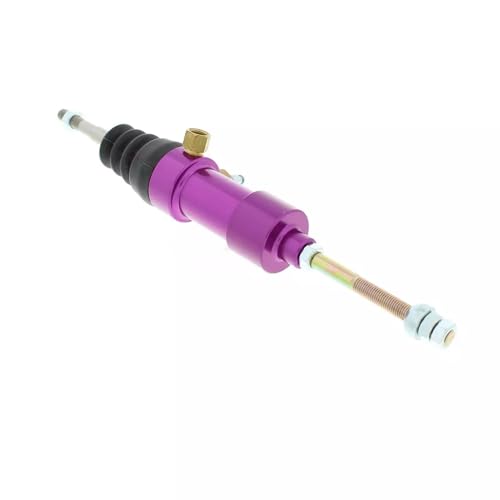
AngyMeck’s model emphasizes a high-efficiency pull-type design, offering 7/8″ bore leverage and a standard 3/8″-24 inverted flare inlet with a bleeder adapter. It is built from CNC-machined billet aluminum for corrosion resistance and heat dissipation. Best for high-performance environments with limited installation space, especially where hydraulic throwout bearings are used. It’s important to verify the bleed port compatibility with your line fittings to ensure leak-free operation.
Hydro Clutch Sportster Slave Cylinder (Harley Ironhead)

This unit replaces a problematic ramp-and-ball release in 1977-1984 Harley Ironheads, offering maintenance-free operation and self-adjusting features. It threads into the clutch adjustment hole and uses an 11/16″ bore for plumb-to-master compatibility. The billet aluminum body and stainless steel plunger add durability. Best for classic Harley applications needing a modernized hydraulic conversion; note that installation is specific to certain motorcycle models, so confirm fit before purchase.
Hydro Clutch Sportster Slave Cylinder (Harley Ironhead, 1971-1976)
This model mirrors the earlier Ironhead solution, focusing on easy installation and a billet aluminum body with a 11/16″ bore. It is designed to eliminate fade and chatter associated with older release mechanisms. Best for vintage Harley builds that require reliable hydraulic activation. A limitation is model-specific compatibility; verify your year and engine configuration before ordering.
Buying Guide: Choosing The Right Hydraulic Slave Cylinder Conversion
Key considerations help ensure you select the best option for your vehicle and goals. Start with the application type: car, motorcycle, or vintage truck may dictate whether a push-type or pull-type cylinder is preferable based on space, fit and available throwout bearings.
What bore size do I need?
Bore size affects hydraulic force and pedal effort. A 7/8″ bore typically provides strong actuation for most performance applications, while smaller bore masters may be used in compact installs. Match the slave bore with your master cylinder for balanced feel and reliable clutch disengagement.
Is space a major constraint?
In tight engine bays or retrofits, pull-type cylinders and compact bodies can simplify routing and clearance. When space is abundant, push-type units often deliver straightforward installation and predictable pedal feel.
Should I use a complete kit or a standalone slave cylinder?
Complete kits (master + slave + pedal or mounting hardware) simplify installation and alignment. Standalone slave cylinders offer modularity if you already have a compatible master and routing plan but require careful compatibility checks.
Materials and durability
Look for CNC-machined billet aluminum or anodized aluminum for corrosion resistance and heat dissipation. Durable seals and a robust plunger help long-term performance, especially under high-stress driving conditions.
Compatibility considerations
Verify fittings (inverted flare vs. straight), thread sizes (3/8″-24), and master/slave pairing with hydraulic throwout bearings. Always confirm the system’s compatibility with your existing components to avoid leaks or misalignment.
Frequently Asked Questions
- What is a hydraulic slave cylinder used for?
It converts hydraulic pressure into clutch release movement, enabling smoother clutch operation on hydraulic conversions.
- Do I need a master cylinder compatible with my slave cylinder?
Yes. The master’s bore size and the slave’s bore should be matched to ensure balanced pedal feel and reliable engagement.
- Are pull-type cylinders better for tight spaces?
Often yes, as they can fit where push-type cylinders do not, but verify mechanical fit with your build.
- Can these kits be used on classic vehicles?
Yes, several kits are designed for vintage trucks and Harley motorcycles, but model-specific compatibility is essential.
- What maintenance is required for hydraulic clutch systems?
Regular checks for leaks, bleeder integrity, and proper fluid levels help maintain performance over time.