Choosing a reliable 12 volt deep cycle battery is essential for RV life, off-grid solar setups, trolling motors, and marine use. This guide highlights top AGM options that prioritize longevity, safety, and performance. Each entry includes official specs and practical considerations to help you compare models side by side and pick the right fit for your power needs.
Summary of Selected Products
- Weize Deep Cycle AGM 12V 100Ah Battery
- Renogy Deep Cycle AGM 12V 100Ah Battery
- Interstate Batteries Marine Deep Cycle 12V 100Ah
- Renogy Deep Cycle AGM 12V 200Ah Battery
- Newport 12V 50Ah Deep Cycle AGM Battery
Weize Deep Cycle AGM 12V 100Ah Battery
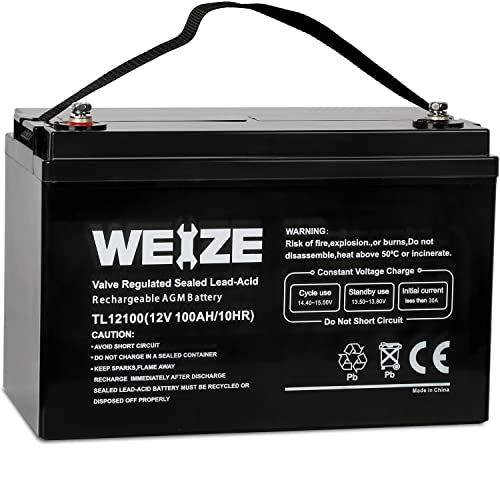
The Weize 12V 100Ah AGM battery is maintenance-free with a compact 12.99 x 6.73 x 8.43-inch footprint. It features a sealed lead acid design suitable for RVs, solar setups, trolling motors, and off-grid installations. A low self-discharge rate supports longer storage between uses, while a strong 1100A max discharge current offers quick power delivery when needed. Operating temperatures range from 14℉ to 122℉ during charging, with similar discharge limits to protect longevity.
Renogy Deep Cycle AGM 12V 100Ah Battery

Renogy’s 12V 100Ah AGM battery is designed for safe operation with minimal electrolyte handling. It supports both series and parallel configurations, allowing flexible expansion for RV, camping, cabin, or off-grid systems. The battery emphasizes safety and stability due to its sealed, maintenance-free design, which reduces troubleshooting and maintenance tasks compared with flooded alternatives. With robust internal structure, it handles deep discharge with reliable performance over time.
Interstate Batteries Marine Deep Cycle 12V 100Ah

Interstate’s 12V 100Ah AGM battery targets marine use with extreme deep-cycle capability. Built with thick plates to sustain repeated discharges and recharges, it aims to deliver longer overall life and reliable power for trolling motors, appliances, and other boat electronics. The design emphasizes rugged performance for harsh marine environments while maintaining safety and stability through a sealed, lead-acid composition.
Renogy Deep Cycle AGM Battery 12V 200Ah

This Renogy 200Ah AGM model provides a high-capacity option for longer off-grid runs and larger RV or cabin systems. It uses thick AGM separators and regulated technology to minimize acid leakage and maintenance needs. The battery offers low internal resistance and high discharge currents, supporting sustained power delivery for extended periods, with a shelf life designed to stay usable with minimal self-discharge.
Weize Dual Purpose AGM Battery BCI Group 24M

Weize’s Group 24M dual-purpose AGM battery combines starting power with deep cycling capability. It features a low internal resistance for reliable high-output performance and has a design that supports quick charging. This model caters to both marine and RV applications, offering flexibility for users who require dependable starts along with deep-cycle capacity.
Notes on the five selected products: Each option uses AGM technology for safer, maintenance-free operation and reduced risk of leakage. Capacity, discharge ratings, and temperature tolerances vary, so consider your load profile, climate, and space constraints when choosing a battery. In RVs or solar systems, pairing these with an appropriate charging source and battery management can maximize lifespan and performance.
Buying Guide: Key Purchase Considerations
- Capacity and discharge rate: Deep-cycle batteries are rated by amp-hours (Ah). Higher Ah means longer runtimes, but larger, heavier packs may require more storage space and stronger mounting.
- AGM vs. other chemistries: AGM (absorbent glass mat) offers maintenance-free operation, spill resistance, and better safety compared to flooded configurations. It typically accommodates deep cycling well, with lower self-discharge than some other chemistries.
- Discharge depth and cycle life: Evaluate how deeply you plan to discharge and how many cycles the battery is rated to support. Higher cycle counts generally translate to longer service life if used within recommended depths of discharge.
- Temperature tolerance: Battery performance can decline in extreme heat or cold. Check operating temperature ranges to ensure compatibility with your environment.
- Shape, size, and mounting: Ensure the battery fits your battery tray or compartment. Check terminal arrangement (left/right polarity) to match your system wiring.
- Safety and maintenance: Sealed AGM designs reduce venting and leakage risks. Maintenance-free batteries are advantageous for remote setups where regular checks are impractical.
- Expansion options: If you may need more capacity later, verify whether the model supports series or parallel configurations with other compatible batteries.
- Brand support and warranty: Reputable brands with solid warranties can reduce risk in case of early failures or performance concerns.
Practical considerations for selection: For off-grid solar, prioritize higher Ah and robust discharge capability to sustain loads during low sun. For marine or trolling-motor use, consider a battery with strong cold-cranking and deep-cycle performance to handle frequent starts and steady draws. For RVs, balance capacity with weight and space constraints to maintain efficient energy storage without overloading the vehicle.