Towing with confidence depends on choosing the right anti-sway weight distribution hitch. This guide highlights top options that balance weight across axles, reduce sway, and improve control in various towing scenarios. Each pick is evaluated for durability, ease of installation, and sway performance, helping you compare features side by side.
| Product | Brand | Capacity | Notable Feature | Shank Type |
|---|---|---|---|---|
| Reese 49913 Integrated Sway Control WDT Kit | Reese | 11,500 lbs | Integrated sway control ball and preinstalled components | Deep drop shank |
| CURT 17063 Round Bar WDT with Lubrication | CURT | 10,000–14,000 lbs | Integrated lubrication and sway control bar | 2-Inch |
| CURT 17601 TruTrack 2P WDT with Sway Control | CURT | Up to 10,000 lbs | 2X sway control and tilting head | 2-Inch |
| Reese 49912 Pro Round Bar WDT with Sway Control | Reese | 8,000 lbs | Pro round bar with sway control and deep shank | 8.5-Inch deep |
| Equal-i-zer 4-Point Sway Control Hitch | Equal-i-zer | 12,000 lbs | Four-point sway control for maximum stability | Standard shank (not included) |
Reese 49913 Integrated Sway Control WDT Kit

The Reese 49913 kit combines a head with a preinstalled sway-control ball, tapered spring bars, a deep drop shank, control brackets, lift-assist bar, and all hardware for straightforward installation. It is designed to improve stability by distributing trailer weight across axles while actively controlling sway. The high-strength steel head and welded hitch bar, paired with a powder-coated finish, aim to deliver durability and corrosion resistance in varied towing conditions. This integrated design reduces setup complexity, letting you tow with enhanced ride quality and security.
Key considerations include compatibility with standard 2-5/16″ hitch balls and the included lift-assist system, which can help with installation on heavier trailers. The kit emphasizes constant weight distribution on the axles for a smoother ride, even in gusty winds or uneven roads. Users should verify receiver compatibility and trailer tongue height to ensure optimal sway control performance.
CURT 17063 Round Bar WDT with Lubrication
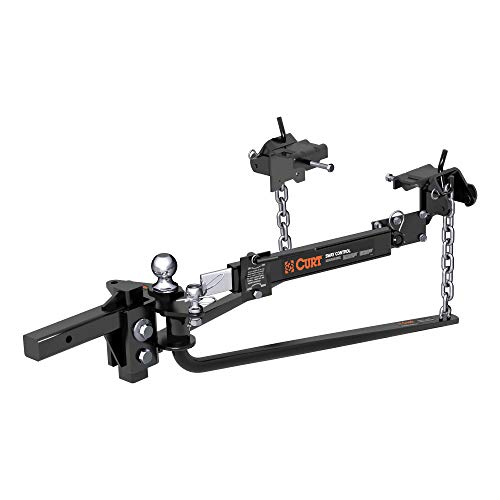
This CURT design emphasizes level towing through weight distribution and a built-in sway-control bar. An integrated lubrication system with accessible grease zerk fittings supports smoother operation and less maintenance over time. The forged steel spring bars and a robust head construction provide reliable strength for loads ranging up to 14,000 lbs gross trailer weight. This option suits longer trailers or those with variable tongue weights where continuous lubrication offers quieter towing and potential wear reduction on moving parts.
Key considerations include ensuring you have a compatible receiver size (2-Inch typical) and fitting the shank height to achieve level towing on your setup. Lubrication access points should be checked for ease of service, and some setups may benefit from periodic re-torquing and inspection of mounting hardware to maintain optimal sway control performance.
CURT 17601 TruTrack 2P WDT with Sway Control

The TruTrack 2P integrates sway control with weight distribution for precise leveling of both tow vehicle and trailer. It uses a pair of round spring bars and a 7-hole adjustable shank compatible with a 2-inch receiver, and a tilting head facilitates adjustments without full disassembly. This approach supports smoother handling during lane changes and on winding roads, with an emphasis on predictable steering and braking. The system is designed for easy setup and reliable performance across typical towing loads.
Considerations include compatibility with your trailer frame width and pickup or SUV type. The tilting head reduces disassembly for adjustments but requires attention to correct mounting angles and fastener torque. While it supports up to 10,000 lbs, verify tongue weight capacity for your trailer configuration and plan for periodic inspection of spring bars for wear.
Equal-i-zer 4-Point Sway Control Hitch

The Equal-i-zer 4-point sway control provides a high level of resistance to trailer sway by employing four sway control points. The weight-distributing design transfers tongue weight to all axles, improving steering, braking, and overall control. This system is known for creating a safer ride by minimizing sway under varying road conditions, which helps protect both occupants and cargo. Tongue weight distribution is central to stable handling across speeds and terrains, including crosswinds and road irregularities.
Note that the package often includes a standard hitch shank rather than a complete kit with ball. When pairing with this hitch, ensure you have a compatible ball and adjust to your vehicle’s towing setup. Regular maintenance, including inspection of sway bars and mounting hardware, is recommended to maintain peak sway-control performance.
CURT 17500 TruTrack 4P WDT with Sway Control

The TruTrack 4P variant actively resists trailer sway while delivering precise weight distribution. Its four-point sway-control system uses a spring and cam mechanism to handle sway at multiple contact points, providing a steadier ride. The 35-9/16-inch trunnion spring bars and a 2-inch receiver-compatible shank offer robust performance for up to 10,000 lbs gross trailer weight. The tilting head design eases setup and adjustments without full disassembly, supporting faster returns to towing readiness after changes in load or terrain.
Purchase considerations include ensuring adequate ground clearance and trailer frame compatibility, especially for longer trailers. The 4-point sway mechanism provides broad-based stabilization, but regular inspection of springs, bushings, and fasteners is advised to preserve sway-control effectiveness over time.
VEVOR Sway Control WDT

VEVOR’s sway control hitch emphasizes a multi-directional stability system designed to neutralize inertia forces from all directions. Its weight distribution capabilities help balance the trailer’s load across vehicle axles, improving braking response and steering stability. Made from forged alloy steel, the unit focuses on durability and resistance to deformation under heavy towing conditions. A four-way stabilization approach aims to minimize sway during turns and lane changes, contributing to a steadier ride on highways and country roads alike.
When evaluating VEVOR, verify compatibility with your hitch receiver size and tongue weight. The all-weather construction suggests strong performance in varied climates, but confirm that installation hardware and mounting points align with your trailer’s frame and axles. Regular lubrication and inspection of connection points will support ongoing sway-control performance.
FAHKNS Weight Distribution Hitch

The FAHKNS anti-sway hitch targets stability through a weight-distribution design capable of towing up to 12,000 lbs, with a 2-1/2 inch overall ball size and a 2-inch shank. Its spring-loaded bars and other sway-counteracting components aim to limit trailer sway, enhancing ride comfort and safety for longer trips and varying road conditions. The kit’s powder-coated finish offers outdoor durability, reducing corrosion risk in harsh weather.
Considerations include ensuring compatibility with your trailer frame and receiver. Tongue weight capacity and overall hitch height should align with your vehicle and trailer for effective sway control. Like other systems, routine inspection of bars, bolts, and the shank is recommended to maintain performance and reliability over time.
Buying Guide: Key Purchase Considerations
- Trailer weight and tongue weight: Choose a hitch that supports the gross trailer weight (GTW) and tongue weight specified for your trailer.
- Shank and receiver compatibility: Confirm 2-Inch or other receiver sizes and ensure the shank height produces level towing for your vehicle/trailer combination.
- Sway-control mechanisms: Decide between single-point sway control, multi-point systems, and whether lubrication, tilting heads, or quick adjustments matter for your setup.
- Durability and corrosion resistance: Look for powder-coated steel, welded construction, and high-strength components to withstand road conditions.
- Ease of installation and maintenance: Integrated designs or preinstalled components can simplify setup; check for required tools and maintenance needs like lubrication access.
- Maintenance and inspection: Regularly inspect bars, bolts, and mounting brackets; retorque fasteners as recommended by the manufacturer.
- Vehicle and trailer compatibility: Some hitches are optimized for specific frame widths, trailer types, and axle configurations; verify fit before purchase.
- Warranty and support: Consider brands that offer clear warranty terms and accessible support resources for replacement parts and adjustments.