Finding the right battery system for camping, RVs, or off-grid setups requires balancing capacity, weight, temperature tolerance, and maintenance. This guide highlights five top batteries that cater to campers, including AGM, LiFePO4, and self-heating options. Each choice is evaluated for rugged camping conditions, ease of monitoring, and long-term reliability to keep lights, refrigeration, and electronics running wherever your adventures take you.
| Product | Type | Capacity | Key Benefit |
|---|---|---|---|
| Weize Deep Cycle AGM 12V 100Ah | AGM | 100Ah | Low self-discharge, maintenance-free |
| Renogy Deep Cycle AGM 12V 100Ah | AGM | 100Ah | Trusted safety, scalable configurations |
| ECO-WORTHY 3584Wh 12V 280Ah LiFePO4 | LiFePO4 | 280Ah | Real-time monitoring, robust BMS |
| VATRER POWER 12V 300Ah LiFePO4 | LiFePO4 | 300Ah | Self-heating for cold climates |
| TEMGO 12V 300Ah LiFePO4 | LiFePO4 | 300Ah | Smart display and Bluetooth monitoring |
Weize 12V 100Ah AGM Battery
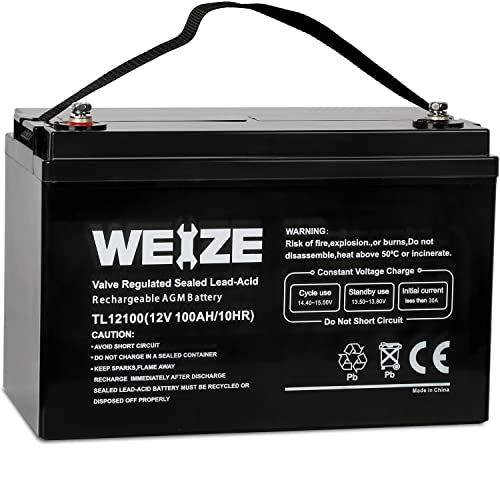
The Weize 12V 100Ah AGM battery is designed for RVs, solar setups, trolling motors, and off-grid systems. Its AGM design provides maintenance-free operation with a low self-discharge rate, enabling longer storage between recharges. The battery’s compact dimensions and sealed construction help minimize risks of acid leakage, making it a practical choice for campers who value reliability and ease of use. Operating temperature ranges accommodate varied outdoor conditions, with a strong discharge capability suitable for powering essential camping electronics.
Renogy Deep Cycle AGM 12V 100Ah Battery

Renogy’s 12V 100Ah AGM battery offers solid safety and performance for campers. It supports series and parallel configurations, allowing flexible system sizing for added capacity. The sealed design minimizes leakage risk and reduces maintenance needs, which is advantageous for remote camping locations. This battery is well-regarded for stability and safety, making it a dependable option for powering lights, fans, and essential appliances during extended trips.
VATRER POWER 12V 300Ah LiFePO4 Battery

This 300Ah LiFePO4 battery emphasizes longevity and resilience, with a robust 200A BMS and low-temperature performance protections. Real-world benefits include longer cycles, a lighter overall weight compared with lead-acid options, and the ability to support larger camper setups. Features like Bluetooth-assisted monitoring enhance maintenance efficiency and on-site troubleshooting for off-grid travel.
TEMGO 12V 300Ah Self-Heating LiFePO4

TEMGO’s 300Ah LiFePO4 battery integrates a smart touch screen and Bluetooth app for real-time status checks. A built-in 200A BMS provides protection against overcharge, over-discharge, and other electrical faults. Its low-temperature protection ensures operation in cooler camping environments, while the high cycle life of LiFePO4 chemistry supports long-term off-grid use.
Elefast 100Ah LiFePO4 Battery with Bluetooth

Elefast’s 100Ah LiFePO4 battery emphasizes Bluetooth connectivity for monitoring. It includes a low-temperature sensor and a capable BMS to protect against temperature extremes, short circuits, and overcharging. The battery is designed for flexible configurations and easy integration into various camper power systems, including solar and alternator charging, with a focus on reliable performance in diverse climates.
NOCO Snap-Top BG31 Battery Box

The NOCO Snap-Top BG31 Battery Box is a practical accessory for campers using Group 24-31 batteries. It offers a rugged, rigid housing with easy installation, helping protect batteries from damage during travel and simplifying mounting in cramped compartments. While not a battery itself, it enhances safety and organization for camp power setups, particularly with deep-cycle AGM or LiFePO4 packs.
NOCO Snap-Top BG27 Battery Box

Another option from NOCO, the BG27 Battery Box is tailored for Group 27 batteries. It mirrors the SnapTop design with enhanced rigidity and straightforward mounting. It supports a wide range of 12V batteries used in campers, including deep-cycle and lithium variants, helping to secure power systems against movement and vibration during travel.
Buying Guide: Key Purchase Considerations
- Battery chemistry: AGM batteries deliver reliable, maintenance-free performance and are well-suited for campers who need solid, corrosion-resistant options. LiFePO4 (lithium iron phosphate) cells offer longer lifespan, lighter weight, and better efficiency but come at a higher upfront cost. Choose based on budget, weight tolerance, and desired cycle life.
- Capacity and load needs: Estimate daily energy use (lights, fridge, fans, charging devices) and choose capacity that provides a comfortable reserve. Larger rigs and cold-weather camping often benefit from higher Ah or multipack systems.
- Temperature tolerance: Cold climates require batteries with low-temperature protection or self-heating features (common in some LiFePO4 models). AGM batteries perform well in a wide range of temps but may require more attention in freezing conditions.
- Monitoring and control: Apps, Bluetooth, and built-in displays help track voltage, current, and state of charge. Real-time monitoring reduces risk of unexpected outages and simplifies maintenance on the road.
- Charging options: Consider compatibility with solar panels, shore power, generators, and alternators. LiFePO4 batteries typically benefit from steady charging and can tolerate higher charging efficiency, while AGM can be more forgiving with varied charging sources.
- Safety and installation: Sealed designs minimize leakage risk, and modular accessories like battery boxes enhance installation safety and organization in small camper spaces.
- Maintenance and lifespan: AGM batteries usually offer 3–5 years of service with proper care, whereas LiFePO4 systems can deliver 8–15+ years and more cycles, impacting total cost of ownership over time.
- Weight considerations: Lithium options are significantly lighter than lead-acid counterparts for the same capacity, which matters for towable campers and compact installations.