Finding the right RV battery involves balancing weight, capacity, chemistry, and pricing. The following selections focus on reliable deep-cycle technologies suitable for motorhomes, campers, and off-grid setups. Each option emphasizes safety, longevity, and compatibility with typical RV electrical loads, from lights to inverters. Read on for concise product details, practical considerations, and a buying guide to help compare options side by side.
| Product | Type | Approx. Capacity | Chemistry | Notes |
|---|---|---|---|---|
| Weize Deep Cycle AGM 12V 100Ah | AGM | 100Ah | Lead-Acid AGM | Maintenance-free, low self-discharge |
| GRNOE 2-Pack 12V 100Ah LiFePO4 | LiFePO4 | 100Ah per unit | LiFePO4 | Built-in 100A BMS, cold protection |
| ECO-WORTHY 3584Wh 12V 280Ah LiFePO4 | LiFePO4 | 280Ah | LiFePO4 | Bluetooth monitoring, 200A BMS |
| Renogy Deep Cycle AGM 12V 100Ah | AGM | 100Ah | Lead-Acid AGM | Solid safety record, multiple configurations |
| ELEFAST 12V 330Ah LiFePO4 | LiFePO4 | 330Ah | LiFePO4 | 200A BMS, RV-ready design |
Below are five selections most relevant to “Best Battery For An RV,” organized to help you compare capacity, chemistry, and protection features at a glance. Each product section includes direct access to the product page and a quick look at key benefits for RV use.
Weize Deep Cycle AGM 12V 100Ah Battery
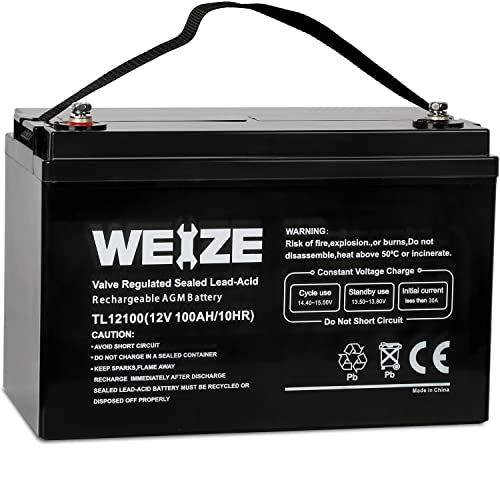
Weize’s AGM battery is a maintenance-free option designed for RVs, solar setups, and off-grid applications. Measuring roughly 12.99 x 6.73 x 8.43 inches, this sealed lead-acid battery minimizes leakage risk and reduces routine upkeep. It supports a broad operating temperature range and offers a high current discharge (up to 1100A for short bursts), making it suitable for powering inverters and essential RV appliances. Its lower self-discharge rate—reported around 1-3% per month—helps when storage between trips is necessary. Consider this option if you want a proven, cost-effective AGM solution with straightforward installation.
GRNOE 2-Pack 12V 100Ah LiFePO4 Batteries

GRNOE offers a compact LiFePO4 solution with a built-in 100A BMS and low-temperature protection. Each 100Ah cell is smaller and lighter than traditional lead-acid equivalents, delivering higher energy density (about 57 Wh per pound) and a longer lifespan, with claimed cycles well beyond traditional SLA/AGM packs. The 12V battery includes smart protections against overcharge, over-discharge, short circuits, and temperature extremes. For RVs in colder climates orю when weight is a concern, this 2-pack provides scalable capacity while preserving charge quality.
ECO-WORTHY 3584Wh 12V 280Ah LiFePO4 Battery

This ECO-WORTHY model packs substantial capacity (up to 280Ah) with real-time battery monitoring via a dedicated app. It uses a 200A BMS offering multi-protection features, including low-temperature cutoffs. Bluetooth connectivity lets users track voltage, current, and state of charge. The battery’s robust construction includes an internal frame design for durability in RV compartments, with a focus on stability during vibration and long-term cycling. It’s well-suited for larger RVs or off-grid systems needing sustained power for appliances, computers, and entertainment systems.
Renogy Deep Cycle AGM 12V 100Ah Battery

Renogy is a trusted name in RV and marine power systems. Their 12V 100Ah AGM battery emphasizes safety and reliability, with the ability to be connected in series or parallel (up to four in parallel) to scale capacity. The sealed design minimizes maintenance, reduces risk of electrolyte leaks, and supports safe charging with typical RV inverters. Renogy’s reputation for safety and performance makes this a solid choice for users prioritizing a widely supported, interoperable AGM option with straightforward installation and compatibility across Renogy and third-party components.
ELEFAST 12V 330Ah LiFePO4 Battery

ELEFAST offers a high-capacity 12V 330Ah LiFePO4 pack designed for RVs with a built-in 200A BMS and Bluetooth monitoring. Its design supports series/parallel configurations and claims up to 8000 deep cycles, making it suitable for heavy daily use and extended trips. The battery emphasizes cold-weather resilience via BMS protections and a robust enclosure, targeting RV owners who require substantial, dependable power for climate control, kitchen appliances, and electronics without frequent recharging.
Buying Guide
Key purchase considerations help RV owners select the best battery for their needs. First, chemistry matters: AGM batteries deliver inexpensive, maintenance-free operation but lower cycle life than LiFePO4; LiFePO4 offers longer life, lighter weight, and deeper discharge tolerance, albeit at a higher upfront cost. Second, capacity and discharge rate determine how long resources will run critical systems, especially in off-grid scenarios where generators or solar impact daily routines. Third, temperature performance is crucial for winter camping; BMS protections and low-temperature cutoffs help prevent damage. Fourth, charging requirements and compatibility with existing converters/chargers affect setup; some LiFePO4 packs require a lithium-specific charger. Finally, space, weight, and installation constraints influence choice; smaller packs fit compact RV compartments, while higher capacities support larger RVs and extended trips.
For most RV users, LiFePO4 options provide superior cycle life and weight benefits, with advanced BMS safeguards and remote monitoring. AGM options remain valuable for budget-conscious travelers who want maintenance-free performance without investing in higher upfront costs. When choosing, compare usable capacity (effective energy delivery), cycle life estimates, temperature protection features, and compatibility with your RV’s charging system. Consider also the availability of replacement cells and the manufacturer’s support and warranty.