Choosing the right full-face helmet is essential for protection, comfort, and visibility on American roads. This guide highlights five top-rated options, covering aerodynamics, ventilation, visors, and safety certifications. Each model below is selected for its balance of protection features, comfort, and value for riders who demand reliability on daily commutes or weekend adventures.
| Product | Brand | Key Features | DOT/ECE |
|---|---|---|---|
| Shoei GT-Air II Full Face Motorcycle Helmet | Shoei | Advanced aerodynamics, sun shield, quiet ride | DOT/ECE |
| LS2 Helmets Stream II Full Face Motorcycle Helmet | LS2 | Kinetic Polymer Alloy shell, AREM, ventilation | ECE 22.06 |
| ILM Dual Visor Flip Up Modular Helmet (Model 902) | ILM | Dual visors, modular design, adjustable strap | DOT |
| Bell Qualifier Full-Face Helmet | BELL | Lightweight, NutraFog II shield, easy shield replacement | DOT |
| GLX GX11 Compact Full Face Helmet | GLX | Three intakes, four exhausts, quick-change shield | DOT |
Shoei GT-Air II Full Face Helmet

The Shoei GT-Air II is designed for sport and touring riders seeking a quiet, aerodynamic ride. Its shell emphasizes smooth airflow, reducing turbulence at high speeds while maintaining stability. A standout feature is the QSV-2 Sun Shield System, which provides extended sun protection without needing to remove eyewear or swap visors. A robust ventilation array—three intake vents and five exhaust vents—maintains comfort by promoting airflow across the head and face. This helmet pairs performance with a premium fit that aligns with Shoei’s reputation for durability.
TRIANGLE Full Face Helmet With Dual Visor

Triangle’s full-face model emphasizes safety with DOT FMVSS-218 certification and a sturdy ABS shell paired with an EPS liner. Its ventilation system includes four vents across the chin, top, and rear to optimize airflow and reduce heat buildup. The dual visor system, offering a clear visor for all-weather riding and a tinted visor for sunny conditions, helps riders adapt quickly to changing light without swapping helmets. This helmet focuses on versatile everyday use for riders of all levels.
ILM Full Face With Removable Neck Scarf + 2 Visors
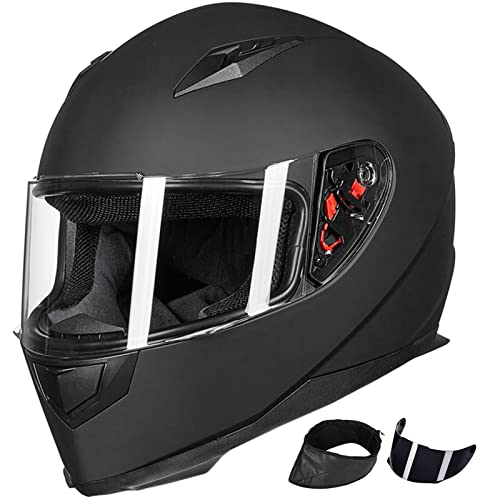
ILM’s JK313 model offers a removable winter neck scarf and two visors (clear and smoked), delivering adaptable visibility across seasons. The streamlined design minimizes wind noise and drag, while the durable ABS shell provides reliable impact resistance. This modular option suits riders who need flexibility for varying climates and riding styles, from daily commutes to longer trips.
ILM Full Face Street Helmet With Winter Scarf
This ILM model emphasizes wind management and comfort with a streamlined aerodynamic profile that reduces wind noise and drag. It includes a winter scarf and dual visors, making it a practical choice for riders who need year-round versatility without sacrificing safety. The helmet uses a lightweight ABS shell and a removable liner for easy maintenance.
Bell Qualifier Full-Face Helmet

The Bell Qualifier combines lightweight construction with a protective shell designed to endure daily riding demands. It ships with a clear shield in many listings, with an optional tinted shield available. NutraFog II shield technology allows for fast, tool-free shield changes, delivering quick adaptation to changing conditions. The helmet balances protection with practical features suitable for riders who value ease of use.
GLX GX11 Compact Full Face Helmet

GLX’s GX11 emphasizes a balance of safety and affordability with a snug, comfortable fit. The three adjustable air intakes and four exhaust outlets support a customizable airflow experience, helping to regulate temperature on longer rides. Its shield system is designed for clear visibility and quick shield changes, contributing to practical, everyday use for riders who want value without sacrificing protection.
Buying Guide: Key Considerations
- Certification and safety: Look for DOT and/or ECE ratings, as applicable by your riding region. These determine minimum impact protection and shell integrity.
- Fit and comfort: Shell shape, cheek pad density, and interior liners affect long-ride comfort. Try different brands to find your preferred fit.
- Ventilation: Adequate vents prevent overheating. Consider climate and typical riding conditions when evaluating airflow.
- Visor system: Dual visors, sun shields, and quick-change shields save time and improve visibility in varying light.
- Weight: Lighter helmets reduce neck fatigue, especially on week-long trips or daily commutes.
- Maintenance: Removable liners and washable cheek pads simplify upkeep and hygiene.
- Modular vs. full-face: Modular helmets offer versatility with flip-up face protection but may be heavier; full-face helmets prioritize maximum rigidity and protection.
- Wind noise: Some models emphasize quieter interiors; consider wind noise if you ride at highway speeds.
- Visor clarity and anti-fog features: Clear visibility improves safety in all weather and lighting conditions.
- Price-to-feature balance: More expensive helmets often deliver better materials and engineering, but many mid-range options provide excellent protection and comfort.
When selecting a full-face helmet, align features with your riding style, climate, and daily routine. The options above span aerodynamics, visibility technologies, modular designs, and all-around protection to help American riders choose confidently.