Choosing the right adhesive for automotive plastics helps ensure durable, lasting repairs that withstand heat, moisture, and road wear. This guide highlights five top options, covering fast-drying cements, two-part epoxies, and specialty plastics glues used by professionals and DIYers. Each selection is noted for compatibility with common automotive plastics, ease of use, and reliable performance in vehicle environments.
Summary of chosen products
| Product | Brand | Key Benefit |
|---|---|---|
| Plastic Bonder Body Panel Adhesive | J-B Weld | Fast-setting, strong bond for panels and gaps |
| Plastic & Emblem Adhesive 08061 | 3M | Clear, durable bond for plastic and emblems |
| Emblem & Trim Adhesive 03601 | 3M | Weather-resistant, fast-setting for trims |
| Super Glue Gel Control | Loctite | No-drip gel with precise application |
| Gorilla 2 Part Epoxy | GORILLA | Clear epoxy with quick set and gap-filling |
J-B Weld Plastic Bonder Body Panel Adhesive

Product overview: J-B Weld Plastic Bonder is a 1:1 mix, two-part urethane adhesive designed for plastics and composites. It sets in about 15 minutes and hardens to a strong bond with a reported tensile strength around 3770 psi. The formula is versatile enough for thermosets, carbon fiber, coated metals, and concrete, making it suitable for automotive body panels, interior trim, and gap filling. The syringe delivery helps control the amount and reduces waste on small fixes. Its durability and compatibility with a wide range of plastics are key advantages for automotive work.
What to consider: When repairing plastic panels or gap fills, consider surface preparation (clean, dry surfaces; roughen glossy plastics for better adhesion). A 1:1 mix is straightforward for DIY use, but working time can vary with temperature. For visible repairs, aesthetics matter; a clear or dark-bond color choice may affect the final appearance. The product’s resistance to heat and weather exposure should align with the vehicle’s operating conditions.
3M Plastic and Emblem Adhesive (08061)
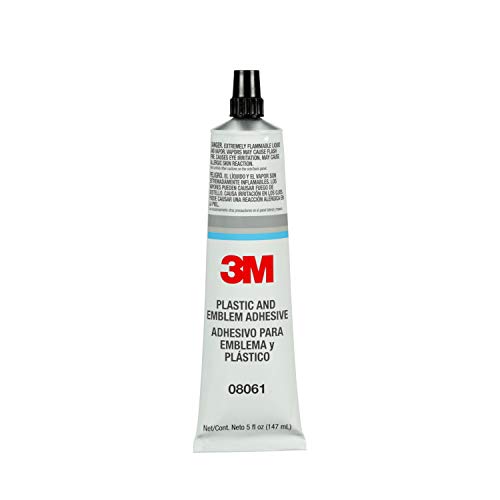
Product overview: This 5 oz tube from 3M is designed for bonding automotive plastics and emblems, delivering a strong initial grip with long-term durability. The adhesive is intended for interior and exterior use, offering a solid, quick-setting bond that remains clear after curing. It’s formulated to resist environmental exposure, including moisture and heat, making it appropriate for badges, trim pieces, and molded accents that face daily car-wash cycles and sun exposure.
What to consider: Consider the color of the cured bond for visible applications; some users prefer clear products to minimize visual impact. Cure time typically involves a fast initial set and full curing over 24 hours, so plan repairs accordingly. Surface preparation remains critical—cleanliness and dryness improve adhesion. Compatibility with both plastic and metal substrates expands its versatility for emblem and trim work.
3M Plastic Emblem & Trim Adhesive (03601)

Product overview: This 1 fl oz tube is a clear, quick-drying adhesive designed specifically for plastic and metal emblems and trim. It provides a strong, long-lasting hold and cures fully within 24 hours. The clear formula minimizes visibility on adhesives, which is advantageous for exposed exterior trim and badges. The product is engineered to withstand weather, heat, and vibration typical of automotive environments.
What to consider: For visible upgrades, the clear dries discreetly, but ensure you have a clean, dry surface for best results. The adhesive’s resistance to automotive fluids, temperature changes, and vibration is essential for parts that experience frequent movement. Cure time means some patience is needed when reattaching parts after removal or replacement. A precise application helps prevent excess glue from smearing onto surrounding finishes.
Loctite Super Glue Gel Control

Product overview: Loctite Gel Control is a cyanoacrylate adhesive designed for precise, controlled application without dripping or running. The gel formula makes it suitable for vertical surfaces common in automotive interiors and exterior trim repairs. The bottle design offers pinpoint accuracy, reducing mess while delivering a strong instant bond on plastics, wood, and metals. The adhesive cures quickly, delivering a strong hold suitable for small repairs and detailing tasks.
What to consider: Gel formulations reduce runoff on inclined or vertical surfaces, a practical feature for automotive work. However, some plastics may require roughening or priming for optimal adhesion. The instant bond can be rigid, so it’s best for small, rigid parts rather than flexible trim. Temperature and humidity can influence cure speed, so plan around climate conditions in the shop or garage.
Gorilla 2 Part Epoxy

Product overview: Gorilla’s two-part epoxy provides a clear, strong bond with gap-filling properties. This epoxy is well-suited for automotive repairs where a robust, durable seal is needed and where gaps must be bridged between surfaces. The mix-and-apply syringe design enables an even distribution of resin and hardener, delivering a high-strength bond in a relatively short time. It’s particularly useful for repairs that involve uneven surfaces or parts that require a more structural fix.
What to consider: Epoxies typically require a thorough surface prep and proper clamping to ensure a tight, gap-free bond. They often offer heat resistance and moisture tolerance, which are valuable in automotive environments. While curing times are shorter than some adhesives, patience is still essential for full strength. Compatibility with plastics and metals should be confirmed for each specific repair scenario.
Buying Guide: Key Purchase Considerations For Automotive Plastic Adhesives
- Material compatibility: Automotive plastics vary (ABS, polycarbonate, PVC, composites). Look for adhesives explicitly listed as compatible with your plastic type to avoid embrittlement or poor bonding.
- Bond type and cure time: For quick fixes, fast-setting cyanoacrylates or 2-part epoxies are useful. For structural panel repairs, choose a high-strength epoxy or urethane with a longer open time if needed.
- Surface preparation: Clean, dry, and lightly roughen surfaces to improve adhesion. Some products require priming or alcohol prep before application.
- Appearance and finish: For visible repairs, clear dries, or color-matched products reduce cosmetic impact. Consider how the bond line will look after curing.
- Environmental resistance: Vehicles face heat, moisture, and vibration. Select adhesives rated for temperature fluctuations, water exposure, and UV stability if exposed to sun.
- Gap filling vs. sheer bonding: If you need to bridge gaps, choose products marketed as gap fillers. For sheer bonds, standard bonding formulas work well.
- Application control: Gel formulas, precision tips, and syringe dispensers help manage small repairs without waste or mess.
- Safety and work conditions: Use in a well-ventilated area. Follow manufacturer safety data and cure times to avoid weak bonds or skin contact.
In automotive plastic repairs, there is rarely a single “best” adhesive. The ideal choice depends on the job—whether you’re reattaching emblems, sealing trims, or fixing body panels. For visible exterior parts, prioritize a clear or color-matched bond and weather resistance. For interior or structural repairs, look for higher strength, longer work times, and proper gap filling capabilities. The five products featured here provide a spectrum of options for common automotive plastic applications, enabling you to select based on bond strength, cure speed, and environmental resilience.