When a head gasket leak threatens your vehicle, a reliable head gasket sealer can be a practical interim or permanent fix. The following selections are popular, widely available, and designed to seal warped, cracked, or blown gaskets without draining your cooling system. This guide highlights five strong contenders, outlining how each works, what engines they suit, and how to use them safely. Use this information to compare sealants and choose a product aligned with your vehicle’s needs and maintenance capabilities.
| Product | Brand |
|---|---|
| Bar’s Leaks HG-1 Head Seal | Bar’s Leaks |
| K-Seal ST3501 Pour and Go | K-Seal |
| K-Seal ST5501 Multi-Purpose | K-Seal |
| BlueDevil 38386 Head Gasket Sealer | BlueDevil Products |
| Bar’s Leaks 1100 Head Gasket Repair | Bar’s Leaks |
Bar’s Leaks HG-1 Head Seal

Bar’s Leaks HG-1 is designed to repair blown head and intake gasket leaks and seal warped heads or blocks. It’s compatible with all coolant types, including 50-50 antifreeze blends, and requires no draining or thermostat removal. The formula aims to be a fast, safe solution for vehicles that can idle without overheating for about 15 minutes. This product is positioned as a broad-use option for coolant-related head gasket issues and can be used with both silicate-based and non-silicate-based antifreeze formulations.
K-Seal ST3501 Pour and Go Head Gasket Sealer
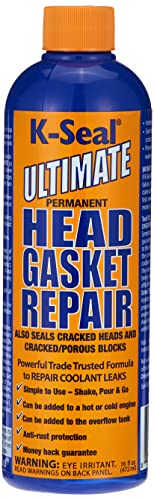
K-Seal ST3501 offers a permanent repair with a formula claiming 33% more sealing power than standard K-Seal. It seals blown head gaskets, cracked heads, and porous engine blocks with ceramic micro-fibres, targeting leaks up to 0.64mm. The product emphasizes ease of use—no draining or flushing required; simply shake, pour, and run the engine as normal. For larger engines, multiple bottles may be recommended. This option suits engines where a durable, one-step seal is desired without invasive service.
K-Seal ST5501 Multi-Purpose One Step

The ST5501 is a versatile, one-step coolant leak repair designed to seal leaks in multiple components—radiator, head gasket, freeze plugs, block, heater matrix, and water pump. It blends with all antifreezes and requires no draining or flushing. The formulation seeks to stop holes and cracks by circulating through the cooling system as the engine runs, offering a quick approach to addressing leaks that affect several cooling-system areas in water-cooled engines.
BlueDevil Head Gasket Sealer 1 Quart

BlueDevil Head Gasket Sealer offers a user-friendly approach to sealing leaks in blown head gaskets and related gasket issues. It is marketed as a permanent solution compatible with gasoline and diesel engines. The product is presented as capable of repairing leaks in heater cores and freeze plugs as well, providing versatility across common head gasket failure scenarios. The emphasis is on a straightforward pour-and-seal process designed for broad engine applicability without special tools.
Bar’s Leaks 1100 Head Gasket Repair
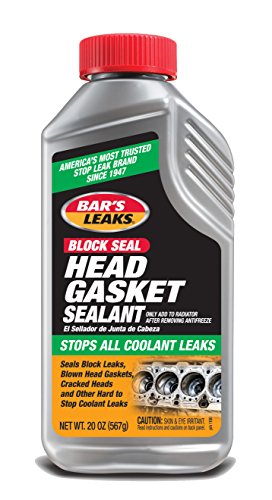
Bar’s Leaks 1100 is designed to stop block leaks and seal cracked cylinder heads and blocks, with a focus on repairing blown head gaskets. The formula aims to provide a robust, all-around sealing capability that addresses a range of head gasket and cooling-system leaks. As with Bar’s Leaks HG-1, it claims compatibility with typical automotive cooling systems and does not require a complete coolant system drain for application.
Buying Guide: Key Purchase Considerations
When selecting a head gasket sealer, several factors influence effectiveness and vehicle safety. First, engine type and severity of the leak matter—some sealers are better for minor seepage, others for more significant cracks or warped heads. Second, coolant compatibility is essential; ensure the product works with your antifreeze type and (if applicable) silicate-based or non-silicate formulations. Third, ease of use is important—look for “pour and go” formulas that require no draining or flushing, reducing the risk of overheating during the repair process. Fourth, permanent vs. temporary relief: some sealers offer a long-lasting fix, while others provide a temporary seal that buys time for a proper repair. Finally, consider engine size and model requirements; certain products are recommended for smaller engines, while heavy-duty variants target trucks or large vehicles. Compare product claims with your owner’s manual recommendations, and consult a professional if the leak is severe, the engine overheats, or there are signs of cylinder damage.
Practical considerations
- Leak location: head gasket leaks, cracked heads, or water-block issues may respond differently to sealer solutions.
- Vehicle age and mileage: older engines may benefit from a robust sealant, but persistent leaks can indicate a failed gasket that requires mechanical repair.
- Operating symptoms: overheating, coolant loss, white exhaust, or oil-coolant mixing can guide which product to choose.
- Aftercare: monitor coolant levels after application and follow any recommended drive-cycle instructions to ensure full sealing.
Usage tips and safety
- Follow the product’s instructions precisely, including dosage and driving recommendations.
- Do not mix multiple sealants unless the manufacturer explicitly allows it, as reactions could occur.
- If overheating occurs after application, stop the engine and seek professional evaluation.
- Dispose of used coolant according to local regulations if it has been drained or contaminated.