The best roof rack system combines compatibility, security, and versatility to handle gear from bikes and boards to cargo boxes and platform solutions. This guide highlights five top options that fit a range of vehicle types and uses, backed by practical features like easy installation, load capacity, and weather-resistant design. Explore the options below to find the right match for your next trip.
| Product | Key Benefit | Ideal Use |
|---|---|---|
| VEVOR Roof Rack Cross Bars | Universal bare roof fit with high load capacity | Canoes, boards, luggage |
| Malone VersaRail Bare Roof Cross Rail System | Tool-free setup with corrosion-resistant coating | All-around rack compatibility |
| Mountainpeak 600LB Roof Platform | Heavy-duty, modular platform with high capacity | Large cargo and modular accessories |
| Yakima JetStream Crossbars (60 Inch) | Aerodynamic, quiet ride with strong support | Crossbar backbone for various racks |
| Yakima 54 Inch Roof Tracks | Customizable, low-profile mounting system | Personalized rack installations |
VEVOR Roof Rack Cross Bars For Bare Roofs

Fitment covers most vehicles with a bare roof, including adjustable hook ranges for wide compatibility. The cross bars use aerodynamic aluminum tubes to reduce wind noise and drag, improving efficiency on longer drives. With a stated load capacity of up to 165 lbs, these bars are suitable for cargo boxes, boards, bikes, and other rooftop gear. The system is designed for a quiet ride, but users should consider windproof covers for oversized items and follow safe speed guidelines.
Malone VersaRail Bare Roof Cross Rail System
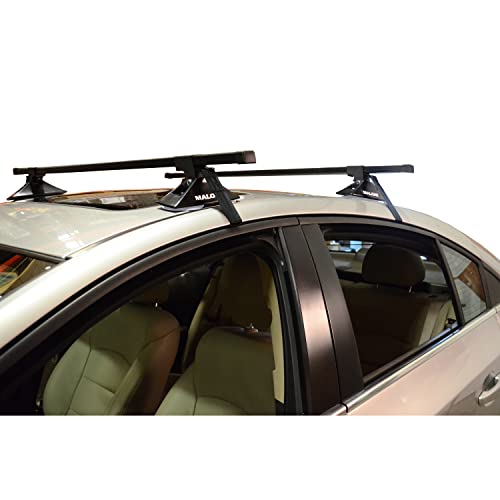
This roof cross rail system emphasizes easy setup without tools, thanks to included wrench and corrosion-resistant coating. The rectangular load bars are designed to fit a wide range of rack accessories, enabling flexible configurations for bikes, kayaks, or cargo boxes. It’s a straightforward option for users seeking a reliable base rack on vehicles without side rails.
Mountainpeak 600LB Capacity Roof Top Platform

This aluminum roof platform provides a large flat surface with modularity for accessories via integrated T-slots. With a platform size of 63″ x 51″ and a nominal weight of 50 pounds, it supports a wide range of cargo configurations and is rated for substantial carrying capacity depending on vehicle fit and roof type. It’s ideal for bulky, modular loads that benefit from a flat staging area.
Yakima JetStream 60 Inch Aluminum Crossbars

JetFlow teardrop design minimizes drag for improved aerodynamics and fuel efficiency. Constructed from seamless extruded aluminum, these crossbars offer strength with light weight. The JetTruss internal support system enhances stiffness, enabling secure transport of gear across a range of adventures. They are designed to work with Yakima’s StreamLine and compatible crossbars for broad compatibility.
Yakima 54 Inch Roof Tracks With CapNuts

Rooftop tracks provide a foundation for a highly customized rack setup. When paired with adjustable bases, they enable a sleek, low-profile appearance and flexible configuration. The system supports a sophisticated look and smooth connectivity for versatile mounting arrangements, making it suitable for drivers seeking a tailored roof rack solution.
Buying Guide: Key Purchase Considerations And Comparisons
- Vehicle compatibility: Determine whether your vehicle has a naked roof, flush rails, or side rails, and confirm weight limits. Some systems are designed specifically for bare roofs, while others require rails or tracks to mount securely.
- Load capacity: Compare maximum load ratings and how weight is distributed across the roof. Heavier platforms and crossbars require robust mounting to ensure safety and performance.
- Shotgun approach vs. modular: Platform-based systems (like the Mountainpeak platform) offer modularity for various accessories, whereas cross bars and rails are more straightforward but still versatile with compatible gear.
- Aerodynamics and noise: Aerodynamic crossbars reduce wind noise and drag, improving fuel efficiency on longer trips. Teardrop-shaped or streamlined designs are generally quieter than square bars.
- Installation and tools: Some options are tool-free or come with heat-to-fit hardware; others require specific wrenches or adapters. Consider if you prefer DIY simplicity or a more configurable setup.
- Accessory ecosystem: Evaluate compatibility with kayaks, bikes, boards, cargo boxes, and other gear. A broad accessory ecosystem reduces the need for multiple separate racks.
- Durability and weather resistance: Aluminum and powder-coated finishes resist corrosion and exposure to sun, salt, and rain. Look for UV-stable materials and protective coatings.
- Security: Lockable crossbars, integrated locking systems, and rugged mounting hardware help deter theft. Verify if locks are included or sold separately.
- Installation footprint: Consider vehicle width and parking clearance. Some setups add width that affects door openings and garage spaces.
- Maintenance: Regularly check clamps, bolts, and feet for tightness. Clean and lubricate moving parts to preserve performance over time.