Best Brake Pads for Bicycles: Top High-Performance Options and Buying Guide
Choosing the best brake pads for your bicycle is essential for safety, reliability, and performance. This guide reviews five of the top-rated brake pads compatible with mountain bikes, cruisers, and e-bikes, focusing on durability, noise reduction, heat dissipation, and braking power. Below is a summary of the selected products to help you find the ideal brake pads for your riding needs.
| Product | Brand | Compatibility | Material Type | Notable Features |
|---|---|---|---|---|
| AGPTEK Bike Brake Pads | AGPTEK | Mountain Bike Disc Brakes (TRP, Tektro, Shimano Deore) | Semi-Metallic (Copper & Kevlar fiber) | High wear resistance, heat dissipation, long service life |
| PACYTION 4 Pairs Bike Brake Pads | PACYTION | Shimano & Tektro MTB Disc Brakes including MT200 series | Mixed Semi-Metallic (Copper fiber & organic resin) | Includes installation tools, wear-resistant, low noise |
| FJCTER 70mm Universal V Brake Pads | FJCTER | V-Brakes for Cruiser, Road, BMX, Hybrid Bikes | Nitrile Rubber | Quiet, reliable braking, tested over 8,000 braking cycles |
| AUGHOA Resin Semi-Metallic MTB Disc Brake Pads | AUGHOA | Compatible with Shimano, Tektro, TRP models | Resin Semi-Metallic | Comes with installation tools, wear-resistant, low noise |
| Hapleby Professional V-Brake Pads | Hapleby | Mountain Bicycle V-Brakes | Nitrile Rubber & Synthetic Fiber | Durable, long-lasting, safety indicator lines |
AGPTEK High-Performance Semi-Metallic Bike Brake Pads

The AGPTEK brake pads utilize a blend of copper fiber and Kevlar fiber, which significantly improves heat dissipation and wear resistance. Designed for mountain bike disc brakes, these pads promise quiet operation and strong stopping power under all weather conditions, including wet terrain. The semi-metallic compound ensures that they sustain a low wear rate, contributing to a service life exceeding 3,500 kilometers. Special stainless steel components like shrapnel and pins enhance rebound and prevent excessive friction for longevity. Heat resistance up to 700 degrees makes them reliable for aggressive downhill rides.
PACYTION 4 Pairs Semi-Metallic Bike Brake Pads with Installation Tools

Offering great value, PACYTION’s brake pads come with essential installation tools including a disc brake gap regulator, hydraulic piston press, and hex wrench, ensuring a hassle-free replacement. The semi-metallic compound combines copper fiber with organic resin to promote long life, wear resistance, and reduced noise. These pads are widely compatible across many Shimano and Tektro models such as MT200, M355, and more. Their material mix protects the disc while maintaining strong braking efficiency for various biking styles, including e-bikes.
FJCTER Quiet & Reliable Universal V Brake Pads 4PCS Set

FJCTER V-brake pads are crafted from high-quality nitrile rubber to deliver smooth, noise-free braking. These pads avoid the harsh squealing sound common in low-grade options and maintain performance in both dry and wet conditions. Longevity is tested with over 8,000 braking cycles, which translates to around 4,000 miles on paved surfaces or 1,000 miles off-road. Ideal for cruisers, road bikes, BMX, and hybrids, they offer consistent stopping power for daily commutes and trail riding.
AUGHOA Resin Semi-Metallic MTB Disc Brake Pads With Tools

This set from AUGHOA offers a comprehensive package with 4 pairs of resin semi-metallic brake pads plus installation tools like a disc brake alignment tool, tire lever, and hex key. The resin semi-metallic construction provides fast heat dissipation, durability, and low noise levels. Compatibility is broad, covering numerous Shimano, Tektro, Deore, and TRP disc brake models. These pads deliver superior braking control suitable for both commuters and mountain bikers seeking safety and reliability.
Hapleby Professional Mountain Bicycle V-Brake Pads
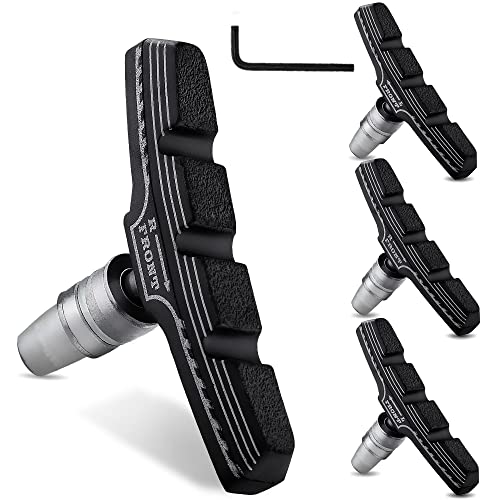
Hapleby’s brake pads feature a mix of synthetic fiber and nitrile rubber for maximum durability and superior braking performance. They are engineered to withstand frequent use, capable of over 8,000 braking actions at typical speeds, translating to thousands of miles on pavement and hills. The pads include safety design indicators in the form of three distinct white wear lines to remind riders when replacement is necessary, prioritizing rider safety and timely maintenance.
Buying Guide: How to Choose the Best Brake Pads for Your Bicycle
When selecting brake pads, consider these critical factors to ensure optimal braking safety, performance, and longevity.
Material Composition
- Semi-Metallic Pads: Usually composed of metal fibers mixed with other materials, they offer excellent heat dissipation, durability, and strong braking power. Ideal for mountain biking and aggressive riding conditions but can be noisier and wear discs faster.
- Resin Pads: Made from organic compounds or resin, these pads are quieter, gentler on rotors, and provide good modulation, suitable for commuting and less extreme riding.
- Nitrile Rubber Pads: Common in V-brakes, these offer quiet braking and consistent performance, especially for road and hybrid bikes.
Compatibility
Ensure the brake pads match your bike’s brake system brand and model. Popular compatibility includes Shimano, Tektro, TRP, Deore, and generic V-brake systems. Misaligned compatibility can result in poor braking performance and safety issues.
Durability and Performance
Look for pads tested for braking cycles or mileage to gauge longevity. Some pads feature reinforced fibers and heat resistant materials to withstand rough terrain and extended use. Consider your riding style and terrain when assessing durability requirements.
Noise Reduction
Brake noise can be a nuisance. Pads made with resin or nitrile rubber compounds tend to be quieter compared to metallic compounds. Evaluate whether noise reduction is a priority for your riding environment.
Included Tools and Accessories
Some brake pad sets come with installation tools such as hex wrenches, piston press tools, and brake gap adjusters. These can save time and money by simplifying the replacement process, especially for riders who prefer DIY maintenance.
Heat Dissipation
Good heat dissipation prevents brake fade during long descents and is vital for riders tackling steep terrain. Semi-metallic and resin metallic blends typically perform well in this regard.
Safety Features
Look for pads with wear indicator lines or design elements that alert you to timely replacement needs to maintain effective braking and prevent accidents.