Answering the demand for clean, quiet propulsion, this guide highlights top electric drive boat motors and a few high-performance gasoline alternatives for comparison. The selections target casual paddlers, anglers, and small-boat enthusiasts who value low maintenance, reduced noise, and easy portability. Each pick is assessed for saltwater and freshwater use, runtime, and control features to help you choose the right motor for your vessel and adventures.
| Product | Best For | Key Benefit |
|---|---|---|
| Newport NT300 Electric Outboard Motor | Saltwater anglers, multi-terrain paddlers | Quiet, efficient thrust with substantial range |
| LIWBYYG 18HP 2 Stroke Outboard | Power-focused boaters | High horsepower and speed |
| Newport Kayak Series 36lb Trolling Motor | Kayak and small craft | Compact shaft, corrosion resistance |
| Newport NV-Series 36lb Trolling Motor | Kayak, canoe, small boat | LED battery indicator, quiet |
| BODIOO 68lb Thrust Trolling Motor | Shallow waters & debris-prone zones | High thrust, flexible depth control |
Newport NT300 Electric Outboard Motor — 3HP 1300W

The Newport NT300 delivers 110 lb of thrust with a 36V system, offering quiet, emission-free propulsion for saltwater or freshwater. Best for anglers and recreational boaters seeking a balance of power and endurance in smaller boats. Features a digital throttle, LCD display, 24.6″ shaft, and a 9.8″ 2-blade propeller. Trim/tilt angles and field-oriented control promote smooth operation in varied conditions. Top speed around 6.5 MPH; up to 66 miles on a single charge. Runtime up to 30 hours depending on hull type and load.
- Best for: Quiet, efficient electric propulsion with reliable range
- Limitations: Runtime depends on boat weight and conditions
LIWBYYG 2 Stroke 18HP Outboard Motor

This 18HP two-stroke outboard offers strong speed with a maximum 5500 RPM and a compact 8-inch, 3-blade prop. Lightweight aluminum construction and a water cooling system support performance in salt or fresh water. Best for boaters prioritizing high horsepower in smaller engines. Limitations include higher fuel usage and maintenance with two-stroke design.
- Best for: Rapid response and high speed on smaller craft
- Limitations: Two-stroke engines require mix and more maintenance
Newport Kayak Series 36lb Thrust Trolling Motor
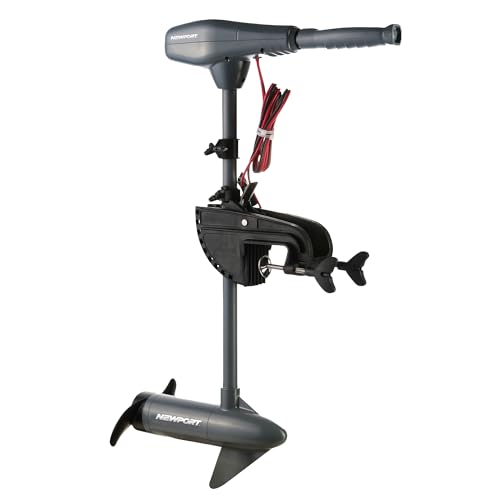
Designed for kayaks and other compact craft, this 24″ shaft trolling motor features eight speeds (five forward, three reverse) and a 6-inch telescoping handle. All-aluminum motor head with corrosion-resistant hardware suits saltwater use, while the compact design supports easy transport. Best for paddlers who need precise control and lightweight propulsion. Caution: 12V system may require frequent battery monitoring.
- Best for: Kayaks and small boats needing maneuverable control
- Limitations: Lower thrust than larger trolling motors
Newport NV-Series 36lb Thrust Trolling Motor

With 12V operation and a 30″ shaft, this saltwater-rated trolling motor suits small boats, kayaks, and canoes. LED battery indicator helps track power, and the compact 30″ shaft supports flexible depth placement. Best for anglers seeking efficiency and simple, on-the-fly adjustment. Choose this if you prioritize battery visibility and saltwater durability.
- Best for: Small craft needing reliable saltwater performance
- Limitations: Peak thrust lower than heavier motors
BODIOO 68lb Thrust Trolling Motor

A high-thrust option with a 6″ adjustable handle and 30″ shaft, this model is suited for larger kayaks or small boats requiring strong propulsion in shallower environments. It includes a 3-blade/9.5″ prop, LED voltage display, and debris-resistant design. Best for heavy gear or thicker vegetation where more power is needed. Limitation: higher power may affect battery life in longer trips.
- Best for: High-thrust needs in shallow or debris-prone waters
- Limitations: Higher power draw can reduce runtime on smaller batteries
Buying Guide
What to consider when choosing an electric drive boat motor
Propulsion needs vary by vessel size, water type, and planned use. Consider thrust, voltage, battery availability, and shaft length to match your craft and depth. For saltwater environments, choose corrosion-resistant hardware and sealed components. If you fish in shallow water or need precise steering, look for adjustable handles and tilt/trim features.
Power and runtime expectations
Higher thrust does not always mean longer runtimes. Evaluate wattage, battery capacity, and efficiency. If you require all-day trips, prioritize motors with efficient power use and those offering detailed battery indicators. For casual weekend trips, a mid-range motor may suffice.
Installation and compatibility
Check shaft length and mounting type to ensure compatibility with your transom or kayak setup. Aluminum housings resist corrosion, and a robust propeller design reduces clogging. Ensure the throttle and controls are intuitive for quick adjustments on the water.
Maintenance and reliability
Electric motors typically require less maintenance than gasoline engines. Look for digital throttles, protected wiring, and field-oriented control for smooth operation. Consider models with visible indicators and simple sparing options to minimize downtime.
Practical buying tips
For beginners, start with a motor designed for your boat size and typical load. For frequent saltwater use, favor models with corrosion-resistant hardware. If you value quiet operation for fishing, prioritize low-noise designs and efficient propellers.
FAQ
- What is the typical range of an electric outboard motor on a small boat? Answer: Range depends on battery capacity, speed, load, and water conditions; some models offer tens of miles per charge under typical use.
- Do electric motors work well in saltwater? Answer: Yes, when built with corrosion-resistant materials and proper seals.
- Are two-stroke electric motors common? Answer: No; two-stroke engines are internal combustion. The LIWBYYG model listed uses a gasoline two-stroke design, not electric.
- Is a higher thrust motor always better? Answer: Not necessarily. It increases power draw and battery use; choose thrust appropriate for your boat weight and activity.
- What shaft length should I choose? Answer: Match shaft length to hull depth and transom height; longer shafts prevent prop strikes and improve efficiency.
- Do electric trolling motors require much maintenance? Answer: Generally, maintenance is minimal compared to gas engines, but periodic checks on battery health and wiring are advised.