Looking to convert a bicycle into an electric bike with a hub motor kit? This guide compares five popular 48V hub motor kits, highlighting who each product is best for, what makes them stand out, and potential limitations. The top picks are organized for road riders, mountain commuters, and DIY enthusiasts who want straightforward installation and reliable performance. Below, you’ll find a quick buying table and clear, product-specific insights to help you choose.
Quick buying table
| Product | |||
|---|---|---|---|
| 26-Inch Electric Bike Conversion Kit (Rear Hub, 48V 1000W) | Balanced daily commuting | High torque and solid wheel construction | Throttle and PAS combo may require basic setup |
| 20-Inch Rear Hub Motor Kit (48V 2000W) | Small-wheeled or fat-tire setups | Very high power and top speed potential | Potential frame fit constraints on non-fat bikes |
| Electric Bike Conversion Kit (48V 2000W with LCD) | Tech-savvy riders who want data display | LCD shows speed, voltage, and faults | Complex installation for first-timers |
| Electric Bike Conversion Kit (48V 1000W, 26″ Wheel) | Budget-friendly 26″ builds | Reliable 1000W performance with throttle | Lower torque vs 2000W options |
| 26 Inch 48V 1000W Rear Wheel Kit | Road-focused, steady performance | Durable materials and controlled speed | Less emphasis on advanced displays |
26-Inch Electric Bike Conversion Kit, 48V 1000W

Best for riders who want a solid, all-around 26″ wheel kit with durable construction. This kit uses a 48V 1000W gearless brushless rear hub motor delivering 45N·m torque and speeds up to 33 mph, offering a balanced blend of power and efficiency. It includes a thumb throttle, pedal assist sensor (PAS), and a waterproof controller bag for straightforward installation.
Who it’s for: Everyday commuters and weekend riders who value reliability and ease of use. This kit is well suited for riders who want a capable e-bike without specialized riding modes. Caution: wiring and brake-lever integration may require careful setup to ensure legal speed limits on public roads.
20-Inch Rear Hub Motor Kit, 48V 2000W

Best for smaller-wheeled or fat-tire builds that need strong power. This 2000W, 48V kit delivers up to 65N·m of torque and can reach about 34 mph. It is designed for rear installation on bikes with 20×4″ tires, offering broad compatibility with many fat-tire frames. It’s a robust option for riders seeking high acceleration and hill-climbing ability.
Who it’s for: Enthusiasts building a high-torque fast ride on fat-tire bikes. Caution: installation geometry (170mm bottom bracket, 42cm hub diameter) may require frame-specific fitting checks before purchase.
Electric Bike Conversion Kit (48V 2000W) with LCD

Best for tech-minded riders who want real-time data and multiple riding modes. This kit provides a 2000W motor with a 550rpm rotation speed and an LCD display that shows power, speed, mileage, fault codes, voltage, and current. It supports five speed gears and a fixed-speed cruise function, with options for pedal-assist and full electric modes.
Who it’s for: Riders who value on-ride analytics and precise control. Caution: LCD tuning and fault diagnostics may require careful setup and occasional maintenance to keep data accurate.
Electric Bike Conversion Kit, 48V 1000W, 26″ Wheel
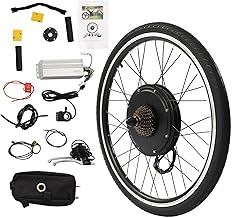
Best for budget-conscious 26″ builds with dependable power. This kit uses a 440rpm motor and 45N·m torque, enabling speeds up to 53 km/h. It employs thickened round spokes to improve wind resistance and includes a power-off brake lever for safer stopping in emergencies.
Who it’s for: Budget-focused riders who still want strong performance at 26″ wheel size. Caution: higher-speed operation may require stronger brakes and frame checks to ensure safety on steep terrain.
26 Inch 48V 1000W Rear Wheel Kit
Best for road-oriented electric upgrades with durable materials. The kit uses aluminum, iron, copper, and other robust components to resist rust, with >80% efficiency and a 120 kg load rating. It includes a simple rear-wheel design aimed at stable, reliable commuting and leisure rides.
Who it’s for: Road riders and casual commuters seeking a durable, straightforward conversion. Caution: precise frame clearance and brake compatibility should be checked before installation.
Buying Guide: Hub Motor Bike Kit Essentials
- Motor power and torque: Higher watts typically mean stronger hill-climbing ability and acceleration. Match power to rider weight and typical terrain.
- Wheel compatibility: Check wheel size, tire width, and rim strength. Some kits are tailored for specific tire dimensions (26″, 20×4″, etc.).
- Controller and wiring: A weatherproof controller bag helps, but ensure wiring connectors are compatible with your bike’s brake levers and shifters if applicable.
- Pedal assist vs. throttle: PAS enables pedal-assist input, while throttles provide full power on demand. Consider riding style and local regulations.
- Display and diagnostics: LCD or integrated displays provide speed, voltage, and fault alerts. Choose if you want on-ride data and easy troubleshooting.
- Frame and brake compatibility: Ensure your frame geometry and brake system can handle the added weight and speed. Stronger brakes may be needed for higher power kits.
- Installation effort: Some kits are plug-and-play; others require more customization or professional installation. Assess your DIY skill level.
- Legal considerations: Be aware of local e-bike power and speed limits to stay compliant with regulations where you ride.
FAQ: Hub Motor Bike Kits
- What is a hub motor bike kit best for?
It’s best for converting a standard bike into an electric bike with rear-wheel drive, offering varying power levels and easy-to-install configurations for daily commuting or fun rides. - Do all 48V hub motors fit every bike?
No. Check wheel size, tire width, bottom bracket compatibility, and brake type to ensure a proper fit for your frame. - Is a higher wattage always better?
Higher wattage provides more power and potential speed, but it also increases weight, stress on the frame, and potential regulatory concerns. Choose based on terrain and rider weight. - What maintenance is required for hub motor kits?
Periodic checks of wiring, connectors, brake integration, and spoke tension are recommended. Keep the motor area clean and dry to extend life. - Can I install these kits myself?
Many kits are designed for DIY installation, but some may require basic mechanical skills and knowledge of electrical wiring. Consider professional help if unsure. - Will these kits affect my bike’s braking performance?
Yes, the added weight and speed can affect braking. Upgrading to stronger brakes or adjusting brake setup is advisable for higher-power kits.