Looking for the right converter for car outlet use? This guide highlights five car power inverters that convert 12V DC to 110V AC, plus USB charging, to power laptops, tablets, cameras, and other devices on the go. These models suit different needs—from compact, light travel options to higher-wattage units for camping or work trips. The top picks are chosen for versatility, safety features, and ease of use for drivers, RVers, and commuters alike.
| Product | Best For | Key Benefit | Ideal Use |
|---|---|---|---|
| FOVAL 150W Car Power Inverter | Light travel, essential devices | Slim, portable, dual USB | Road trips, camping |
| BESTEK 300W Inverter | Heavy-duty needs | Two AC outlets, multiple USB ports | Laptops and larger electronics |
| PiSFAU 150W Inverter | Budget-friendly basics | Smart protection, dual USB | Everyday charging |
| PiSFAU 200W Inverter | More power, more ports | Two AC outlets, four USB ports | Multiple devices |
| vansoet 400W Inverter | Highest versatility | PD Type-C, multiple USB-A ports, dual AC | Work trips, camping |
FOVAL 150W Car Power Inverter

The FOVAL 150W inverter is a compact option designed for basic on-the-go charging and light-duty power needs. It provides 150 watts of continuous 12V DC to 110V AC power and includes 2 USB ports plus an AC outlet. This model is best for travelers who need to charge phones, tablets, and lightweight electronics without adding bulk to the vehicle cabin.
Best for: casual road trips, students, and solo commuters who want a simple, space-saving solution. Why selected: its small footprint and aluminum shell offer portability with adequate power for essential devices. Caution: not suitable for high-wattage appliances like full-size coffee makers or large power tools.
BESTEK Power Inverter DC 12-17V to AC 110V

BESTEK offers a robust 300W continuous power with 700W peak, two AC outlets, and two USB ports. Its aluminum housing keeps it durable for regular road use and travel. This option suits travelers who require charging laptops, tablets, and other USB devices while also running small electronics via AC outlets.
Best for: road trippers, camping, and work travelers who need reliable power for multiple devices. Why selected: higher continuous power and dual AC outlets provide flexibility for simultaneous devices. Caution: ensure total load remains within 300W continuous rating to avoid overheating.
PiSFAU 150W Power Inverter with Dual USB
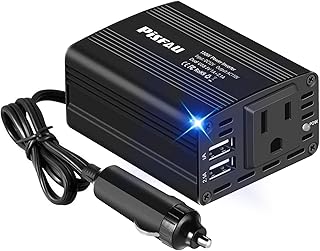
This PiSFAU model delivers 150W continuous power with two USB ports for fast charging and a protective double safeguard mechanism. It’s a straightforward choice for users who want a budget-friendly inverter that can handle essential devices and small peripherals during travel.
Best for: budget-conscious individuals and light-duty charging. Why selected: dual USB ports and built-in protection make it a practical everyday option. Caution: USB ports max out at 3.1A combined, so high-powered laptops should use the AC outlet instead.
PiSFAU 200W Car Power Inverter
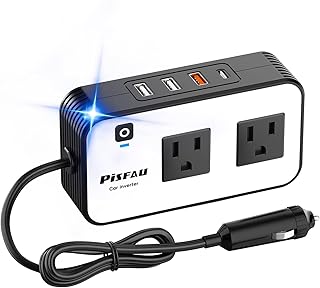
PiSFAU’s 200W model features two AC outlets and four USB ports, offering more outlets and power for multiple devices. It emphasizes quiet operation and efficient heat management, making it suitable for longer trips or workdays on the road. This inverter is a solid middle-ground choice for diverse charging needs.
Best for: users with several devices or small electronics needing concurrent charging. Why selected: additional USB ports and dual outlets improve flexibility. Caution: peak power support is higher than continuous power; plan usage accordingly to avoid tripping the protection.
vansoet 400W Car Power Inverter

The vansoet 400W inverter is the most capable option among these picks, with 400W continuous power, dual AC outlets, a 30W PD Type-C, a 15W Type-C, and two 15W USB-A ports. It supports more demanding devices, including laptops and larger electrical items, and includes a dedicated AC control switch and an intelligent cooling fan for extended use.
Best for: work trips, camping, and households that need powerful, flexible in-vehicle power. Why selected: highest wattage and versatile charging options. Caution: higher power means greater heat and potential noise; adequate ventilation is advised during long sessions.
Buying Guide
- Power needs: Compare continuous wattage (how much power you can draw reliably) and peak wattage (brief bursts). Choose based on the heaviest device you plan to run simultaneously.
- Outlets and ports: Decide how many AC outlets and USB ports you need. If you frequently charge laptops, tablets, and phones at the same time, a model with multiple USB ports and at least one high-wamp Type-C or PD port is advantageous.
- Protection features: Look for automatic shutoff, built-in fuses, over-voltage protection, short-circuit protection, and temperature control to prevent damage to devices and the inverter itself.
- Portability vs. power: Slim, lightweight units are easier to store in a vehicle, but higher-wattage models provide more versatility for camping or work trips. Balance space and need.
- Vehicle compatibility: Most inverters plug into the 12V cigarette lighter (12V DC). Some heavy-duty models need direct battery connections or specialized adapters. Ensure your vehicle supports the chosen device safely.
Frequently Asked Questions
- What wattage inverter do I need for a laptop?
Most laptops run comfortably on 150W to 300W inverters. If you plan to run other devices simultaneously, a higher-wattage model (200W–400W) may be better.
- Can I run a CPAP machine from a car inverter?
Yes, but check the device’s power rating and the inverter’s continuous wattage. Use models designed for medical devices if available and ensure proper ventilation.
- Is pure sine wave power necessary for sensitive electronics?
Pure sine wave inverters are gentler on sensitive electronics. If your devices are power-sensitive, choose a true sine wave option or verify compatibility.
- Will a higher-wattage inverter drain my car battery quickly?
Yes, using an inverter increases current draw. Avoid high loads when the engine is off, and consider connecting to the battery with appropriate safe wiring for extended use.
- What safety features should I look for?
Overload protection, short-circuit protection, temperature-controlled fans, automatic shutoff, and built-in fuses help prevent damage to devices and the vehicle.
- How many devices can I charge at once?
This depends on the inverter’s continuous wattage and outlet count. A model with two AC outlets and multiple USB ports can typically handle several devices at once, within its power limits.