If you want more instant power at all RPM ranges, consider power reeds designed for dirt bikes. These dual-stage, fiberglass reeds improve air flow, velocity, and overall horsepower. They’re best for riders who ride aggressively, trail run, or race in tight courses where crisp throttle response matters. The top reed remains lightweight for better partial-throttle response, while the bottom reed is ported for higher RPM power. Below are five select options most relevant to common dirt bike models and rider needs, with short buying notes and cautions to help you choose.
Summary of top picks:
- Boyesen 674 Power Reed — Versatile for Yamaha PW50 and Tri-Z 60; strong airflow at both low and high RPMs.
- Boyesen 605 Power Reed, Black — Broad model coverage; excellent low-RPM response with strong high-RPM flow.
- Boyesen 630 Power Reed, Black — Great for Kawasaki KX80, Yamaha Blaster, YZ80; balanced dual-stage design.
- Boyesen 610 Power Reed, Black — Broad Suzuki compatibility; dependable low and high RPM performance.
- Boyesen Power Reeds Beta Dirt Bike — Beta-specific option; designed for power delivery on that chassis.
Boyesen 674 Power Reed
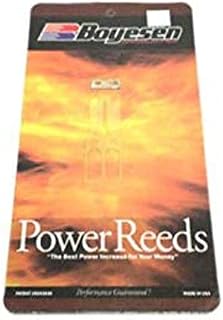
For: Yamaha PW50 all models; Yamaha Tri-Z 60 all models. This model uses a patented dual-stage fiberglass design to improve air flow and air velocity, yielding more power. The top reed is lightweight for crisp throttle response at partial throttle or low RPMs, while the stiffer, bottom reed is ported for maximum flow at higher RPMs. Best for riders needing a balanced upgrade across low and mid-range power, especially on light, entry-level bikes where quick throttle response matters most. Caution: compatibility is targeted; verify model year applicability for specific setups.
This reed set is chosen for riders seeking a straightforward upgrade that broadens power across a range of RPMs without sacrificing low-end response. It’s especially suitable for Yamaha PW50 newcomers who want smoother acceleration and quicker throttle feel on beginner tracks.
Key suitability notes:
- Best for: Beginners to intermediate riders on light bikes who want improved throttle feel.
- Trade-off: Slightly more complex maintenance due to dual-stage design.
Boyesen 605 Power Reed, Black

For: Honda CR80 1986; Kawasaki KDX80 all models; KE175 all models; KX80 through 1985; Yamaha DT100 1978 through 1987; several YZ and MX models across years. The top reed remains lightweight for crisp throttle response at partial throttle, with a stiffer bottom reed ported to maximize flow at higher RPMs. This configuration suits riders who ride mixed terrain or require steady power across mid-range and upper RPMs. Caution: model coverage is broad but verify exact year compatibility for your bike.
This option is chosen for riders who ride a wide range of dirt bike classes and want a reliable mid-to-high RPM power bump without sacrificing low-end response. It is well-suited for older two-stroke bikes that require consistent air flow through a broad RPM window.
Who it’s best for:
- Best for: Riders on older two-stroke models needing dependable acceleration across mid-to-high RPMs.
- Better for: Bikes with varied track surfaces where consistent air flow matters more than extreme top-end power.
Boyesen 630 Power Reed, Black
For: Kawasaki KX80 1986-1987; Yamaha Blaster 1988-2006; Yamaha YZ80 1987-1992. This is another dual-stage design with a lightweight top reed for crisp response and a ported bottom reed for high RPM flow. It’s selected for riders who need a robust upgrade on mid-range bikes that frequently hit higher RPMs on rough tracks. Caution: some older models require careful installation to avoid reed misalignment.
Why choose this: It provides strong mid-range power with reliable high-RPM flow, which helps when sprinting out of corners on small-displacement bikes. The dual-stage approach is particularly helpful on bikes that see a mix of technical sections and fast straights.
Best use cases:
- Best for: Riders with Kawasaki KX80 or Yamaha YZ80 who want improved top-end power without sacrificing low-end throttle feel.
- Better for: Tracks with frequent hill climbs where quick throttle response matters at higher RPMs.
Boyesen 610 Power Reed, Black
For: Suzuki DS80 all models; Suzuki JR80 all models; Suzuki RM50 all models; Suzuki RM60 1981-1983; Suzuki RM80 through 1985. The dual-stage fiberglass design remains consistent here, delivering increased air flow and velocity for more power. The top reed is lightweight for low-RPM throttle crispness; the bottom reed is ported for higher RPMs. This choice is best for riders who favor Suzuki two-stroke platforms and want a balanced upgrade across RPM bands. Caution: verify model year compatibility for your specific Suzuki model.
Practical selection notes:
- Best for: Suzuki two-stroke riders who ride a mix of technical trails and open stretches.
- Trade-off: Some installations may require precise reed cage alignment for optimal seal.
Boyesen Power Reeds Beta Dirt Bike

This Beta-specific option targets Beta dirt bikes, offering Boyesen’s dual-stage design tailored to that chassis. The available features emphasize a power-focused delivery across RPMs without sacrificing throttle feel at lower speeds. Best for Beta riders who want a purposeful upgrade that aligns with the bike’s character. Caution: Beta models can have unique reed cage tolerances; ensure exact model year compatibility before installation.
Why it stands out: It provides a direct performance map for Beta bikes, where riders often seek a solid mid-to-high RPM push with reliable low-end response. This makes it a strong choice for Beta enthusiasts who race or ride aggressively.
Buying Guide: Key Purchase Considerations
What to compare when choosing power reeds:
- Model compatibility: Confirm year and model match to avoid fitment issues. Dual-stage designs work best when the reed cage and timing align with the engine’s intake porting.
- RPM performance: Decide if you need better low-RPM throttle response or stronger high-RPM flow. Dual-stage reeds provide a balance across RPMs but some models emphasize one end of the spectrum.
- Material and design: Fiberglass-reinforced reeds offer durability and smooth operation, but ensure the top reed remains lightweight to maintain crisp throttle response.
- Riding style: Trail riders often benefit from improved low-end throttle, while racers may prioritize high-RPM power at the exit of corners.
- Bike family coverage: Some options cover multiple brands and years; others are more targeted. Choose based on your current bike and potential future upgrades.
- Installation considerations: Some setups require careful alignment and proper reed cage sealing to prevent air leaks and performance loss.
Frequently Asked Questions
- What are power reeds?
Power reeds are dual-stage reed valve assemblies that increase air flow and velocity into the engine, improving throttle response and power across RPMs.
- Do power reeds fit all dirt bikes?
No. Reeds are model- and year-specific. Always verify compatibility with your bike’s make, model, and year before purchasing.
- Will power reeds improve low-end or top-end power more?
Most dual-stage designs improve both, but the top reed is engineered for low-end responsiveness while the bottom reed targets higher RPM power.
- Are fiberglass reeds durable for rough riding?
Fiberglass-reinforced reeds are designed for durability and repeated cycling; proper installation helps maximize longevity.
- Should I install them myself or seek a shop?
Installation can be done by competent hobbyists, but an experienced shop can ensure correct reed cage alignment and sealing to prevent leaks.
- Is a Beta-specific reed necessary if I ride a Beta bike?
Beta-specific reeds are designed to match Beta’s intake timing and porting; they are typically the most reliable option for Beta bikes.