The goal is to help riders find the smallest horn that still delivers a clear, loud signal. This guide highlights compact options that cut through urban noise and traffic. Each pick is suited to riders who want reliable warning capability without bulky hardware. Ideal buyers include daily commuters seeking street-legal loudness, hobbyists upgrading OEM horns, and riders who value quick swaps with minimal installation.
Summary Table of Selected Products
| Product | Best For | Notes |
|---|---|---|
| Motorcycle Horn Speaker, 12V 105dB | Compact, all-weather daily riders | 105 dB, metal construction |
| Waterproof Motorcycle Horn 12V 105 dB | Wide vehicle compatibility, easy install | Disc-shaped, flat design |
| Screaming Banshee Mini Banshee Horn Kit | Compact upgrade for most motorcycles | 126 dB, easy installation |
| FARBIN 12V 150dB Car/Motorcycle Horn | Maximum loudness in a compact kit | 150 dB, chrome-plated design |
| Denali SoundBOMB 120dB Motorcycle Horn | Stylish minimal profile, CANbus | 120 dB, rugged, discreet |
Motorcycle Horn Speaker, 12V 105dB

Best for riders who need a compact, weather-resistant horn with straightforward installation. The 105 dB output is clearly audible in urban environments, and the all-metal construction with baked finish resists rain and rust. The design emphasizes a tight articulation chamber to reduce muffling at speed. This option suits daily commuters and riders upgrading from smaller OEM units.
Who it’s best for: riders prioritizing compact size and weather resistance. Why selected: strong warning capability in a small form factor, durable metal build. Caution: the 105 dB level may be less effective in extremely loud environments or crowded rally events.
Waterproof Motorcycle Horn Universal 12V 105 dB

Best for riders seeking wide vehicle compatibility and easy, space-saving installation. The disc-shaped, flat profile is designed to fit tight spaces, making it suitable for scooters, ATVs, dirt bikes, and compact street bikes. It serves well as a direct replacement with predictable mounting points.
Who it’s best for: those needing versatile compatibility and simple install. Why selected: compact installation and broad vehicle support. Caution: ensure the mounting area supports the disc design to avoid vibration or misalignment.
Screaming Banshee Mini Banshee Horn Kit

Best for riders who want a compact, high-output upgrade. The kit delivers louder output than many OEM units and is designed for easy installation. Its small footprint minimizes impact on aesthetics, making it a practical choice for riders who value performance without a bulky appearance.
Who it’s best for: riders needing a strong upgrade in a compact form. Why selected: significantly louder than typical OEM horns while remaining small. Caution: ensure mounting hardware is secure, as the compact kit can vibrate more noticeably on rough roads.
FARBIN Air Horn for Cars Motorcycle with Cover

Best for riders who want maximum loudness in a compact, weather-resistant unit. The 150 dB output is among the highest in this group, and the chrome-plated finish adds a premium look. This horn is suitable for those who ride in heavy traffic or need to be heard over other noises.
Who it’s best for: riders needing peak loudness with a robust build. Why selected: superior sound pressure level for critical warning situations. Caution: 150 dB is extremely loud; consider local noise regulations and avoid unnecessary use in quiet neighborhoods.
Denali SoundBOMB 120dB Motorcycle Horn
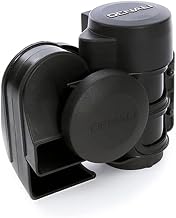
Best for riders who want a stylish, discreet horn with high performance. The 120 dB output is clearly audible without sacrificing aesthetics. The compact, rugged housing and CANbus compatibility make it suitable for modern bikes with integrated electrical systems.
Who it’s best for: riders seeking a balance of form and function. Why selected: reliable 120 dB output with CANbus compatibility and a discreet look. Caution: Ensure your CANbus system is compatible to avoid electrical faults.
Buying Guide: Key Purchase Considerations
How loud should your horn be? Choose a level that meets local noise regulations and is audible over typical traffic in your area. For dense urban commutes, 105–120 dB is often sufficient without drawing attention from excessive noise complaints.
What mounting space is required? Compact designs fit tight spaces but still need solid mounting to avoid vibration. Check diameter, length, and mounting hole locations before purchasing.
Is weather resistance important? Yes. Look for water-resistant or waterproof housings, especially if you ride in rain or on exposed roads. Die-cast metal or coated finishes improve longevity.
Will you replace an OEM horn or upgrade stock wiring? Some options provide direct replacements, while others require a wiring harness or relay. Consider ease of installation and whether your bike’s electrical system needs CANbus compatibility.
How does compatibility affect choice? Ensure the horn fits your vehicle type and has the right electrical connections and mounting points. A widely compatible model reduces the need for adapters or modification.
Durability and maintenance: metal housings with protective coatings resist rust and corrosion. A robust clamp or mounting system helps maintain performance in high-vibration environments.
FAQ
- What is a practical loudness level for street use?
Answer: 105–120 dB is typically effective for urban traffic without being excessively loud for nearby pedestrians. - Do these horns require relays or separate power sources?
Answer: Some kits include relays; others are direct replacements. If your bike’s fuse box is limited, a relay helps prevent electrical issues. - Is CANbus compatibility important?
Answer: Yes for newer bikes; it helps prevent faults and ensures stable operation with modern electrical systems. - Can I install a larger horn on a small bike?
Answer: It depends on space and mounting points. Choose compact models designed for tight spaces to avoid interference with controls or fairings. - Will louder horns violate noise ordinances?
Answer: In many areas, yes. Use reasonable volumes and follow local laws to avoid fines or complaints. - What maintenance is required?
Answer: Inspect wiring connections and mounting bolts regularly; clean and protect metal surfaces from corrosion.