If you’re shopping for a jump starter that delivers max cold-cranking amps (CCA) and reliable performance, this guide highlights top options. These models are suited for DIY enthusiasts, fleet drivers, and anyone who needs a trustworthy booster for gas and diesel engines. Each entry explains who it’s best for and why it stands out, with practical cautions when needed. A quick summary table follows to compare key points at a glance.
| Product | Peak Amps | Best For |
|---|---|---|
| Clore Automotive Jump-N-Carry JNC660 | 1700 | Everyday car owners needing compact power |
| Schumacher DSR Pro Series | 2000 | Heavy-use scenarios like fleets or multiple vehicles |
| acetek 1600/3200 Peak | 3200 | Trucks, tractors and heavy-duty equipment |
| 2000 Peak Amp Car Jump Starter | 2000 | Versatile, portable booster with lighting |
| Clore Truck PAC ES6000 | 3000 | Truck and commercial applications |
Clore Automotive Jump-N-Carry JNC660 1700 Peak Amp

Best for: Everyday motorists who want a reliable booster with straightforward use. The JNC660 uses a 22Ah Clore Proformer Battery and heavy-duty #2 AWG cables to deliver strong starts for typical cars and light trucks.
Why chosen: Its balance of power, simplicity, and a built-in voltmeter helps monitor charge status on the go. It’s compact enough for a garage or trunk, providing dependable assistance during routine battery failures.
Caution: The unit’s core power is optimized for smaller engines; extremely cold starts or large diesel engines may require higher peak amps or alternative methods.
Schumacher DSR Pro Series Jump Starter & Power Station
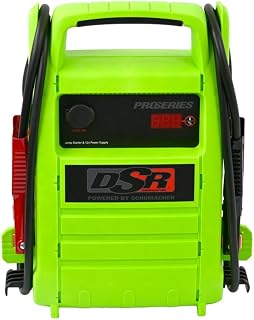
Best for: Users needing a dual role device—a strong jump booster and a portable power station for tools and devices. The DSR168G delivers 2000 peak amps and 325 CCA, plus a 12V DC outlet.
Why chosen: It serves as both a jump starter and a power source, offering flexibility for roadside repairs and on-site charging. The higher peak amperage makes it better for larger engines or occasional heavy-use needs.
Caution: Heavier than compact units; consider storage space and weight when adding to a vehicle or worksite kit.
acetek 1600/3200 Peak Jump Starter

Best for: Heavy-duty work vehicles and equipment where both 12V and higher peak capacities are needed. It supports trucks, tractors, and excavators with substantial battery demands.
Why chosen: Dual-peak capability (1600/3200) offers versatility for different starting scenarios. It provides robust power while retaining portability for field use.
Caution: Ensure compatibility with engine size and vehicle electrical systems before using on diesel-powered units or large machines.
2000 Peak Amp Jump Starter with LED Light

Best for: Vehicle owners who want an all-in-one booster with illumination for night starts. This model combines 2000 peak amps with practical lighting and USB/DC ports.
Why chosen: The LED light adds visibility for nighttime emergencies, which improves overall safety during roadside starts. It’s a solid choice for portable, 24/7 readiness.
Caution: LED features and ports add to weight and cost; prioritize if you rarely need lighting or USB outputs.
Clore Automotive Truck PAC ES6000 3000 Peak Amp

Best for: Commercial fleets and heavy-duty trucks that require high-starting power and durable construction. The ES6000 offers a strong 3000 peak amps for demanding starts.
Why chosen: It is designed for tougher engines and frequent use, making it a strong choice for professional environments that rely on dependable performance every day.
Caution: Higher power comes with larger size and weight; ensure proper vehicle fit and storage space before purchase.
Buying Guide: Key Purchase Considerations
- Peak amps vs. cold-cranking amps (CCA): Peak amps indicate brief power for a start, while CCA reflects performance in cold conditions. For cold starts, check both metrics and engine size compatibility.
- Engine size compatibility: Match the jump starter’s peak amps to your vehicle’s engine size (gasoline vs. diesel). Diesel engines typically need higher power ratings.
- Portability and weight: Portable jump starters are convenient for personal use, but heavier, higher-power units suit fleet management or work sites.
- Additional features: Built-in air compressors, USB ports, DC outlets, and emergency lighting add value for roadside and worksite use. Consider which extras you will actually use.
- Durability and battery technology: Look for rugged clamps, solid cables, and a battery chemistry that supports repeated starts. Prolonged storage should not degrade performance.
- Warranty and service: A strong warranty and accessible support can be important for business users and long-term ownership.
Frequently Asked Questions
- What is the best jump starter for diesel engines?
– Jump starters with higher peak amps and robust CCA ratings are typically better for diesel engines. Seek models rated for diesel starting in their specs. - How many peak amps do I need for a pickup truck?
– Most pickups respond well to 1500–2000 peak amps, depending on engine size and climate. Check your vehicle’s requirements. - Can a jump starter power other devices?
– Yes, many models include 12V DC outputs, USB ports, or 110V AC adapters. Verify port availability and amperage ratings. - Is a built-in LED light important?
– It’s useful for roadside starts at night or in low visibility, but not essential if you rarely operate in the dark. - Should I choose a compact unit or a high-power option for a truck?
– For trucks and heavy equipment, a higher-power model may provide faster starts and more reliability, at the cost of portability. - How should I store a jump starter long-term?
– Store in a cool, dry place and periodically recharge to maintain battery health and readiness.