The best 1/4 inch air brake line fittings are push-to-connect, corrosion-resistant, and DOT-approved options designed for reliable connections in trucking, trailer, and industrial air systems. This guide highlights five top 1/4″ fittings, each suited for different needs—from quick-connect ease to durable brass construction. Ideal buyers include professional mechanics, fleet operators, DIY trailer builders, and anyone seeking leak-proof, maintenance-friendly fittings. Below is a quick comparison table to help you decide at a glance.
| Product | Best For | Why It Stands Out |
|---|---|---|
| 1/4″ Air Brake Line Fitting, DOT Brass Push to Connect Fitting | General compatibility, fleet use | Solid DOT-approved brass, push-to-connect for quick installation |
| 1/4″ Air Line Tubing Kit, 32.8FT | Complete hose run with accessories | Includes cutter and teflon tape for easy setup |
| 1/4″ Tube x 1/8″ NPT Male Straight & Elbow Kit | Versatile fittings for custom plumbing | Mix of straight and elbow options, DOT approved |
| 1/4″ Straight Brass Union, DOT Approved | Leak-proof line joining | Corrosion-resistant, quick connect, five-pack |
| CheeMuii 6PCS 1/4″ Brass DOT Air Line Fittings | Budget-friendly brass fittings | 100% brass, push-to-connect for simple installs |
1/4″ Air Brake Line Fitting, DOT Brass Push to Connect Fitting

What it is: A DOT-approved brass push-to-connect fitting designed for 1/4″ air brake lines. Best for standard fleet maintenance and projects needing quick, tool-free connections. Who should buy: Fleet technicians and trailer operators seeking reliable, easy installs without special tools. Why chosen: Combines durability with fast installation and a proven seal. Caution: May require proper tube end preparation to ensure optimal grip.
1/4″ Air Line Tubing Kit, 32.8FT SAE J844 PA Nylon Air Hose

What it is: A complete 32.8-foot nylon air hose kit with cutter and Teflon tape, plus push-to-connect fittings. Best for: Builders and installers who need a full hose run with included tools. Why chosen: Long hose length reduces joints and potential leaks along the run. Caution: Nylon hose may be less heat resistant in high-temperature environments.
1/4″ Tube x 1/8″ NPT Male Straight & Elbow Brass Fittings Kit
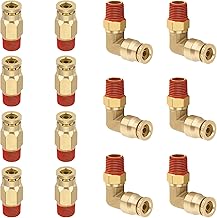
What it is: A 14-piece kit including straight and elbow fittings in brass with NPT threads. Best for: Projects requiring customizable routing with secure 1/4″ to 1/8″ connections. Why chosen: DOT-approved mix broadens usage for trucks, trailers, and air brake systems. Caution: Check thread compatibility to match your hose and ports.
1/4″ Straight Brass Union, DOT Approved

What it is: A five-pack of DOT-approved brass straight unions. Best for: Systems needing reliable, leak-proof inline connections with minimal fittings. Why chosen: Quick connect capability and corrosion resistance. Caution: Five-pack may be more than needed for small projects; plan your layout to avoid unused pieces.
CheeMuii 6PCS 1/4″ Brass DOT Air Line Fittings

What it is: A six-piece set of 1/4″ brass DOT push-to-connect fittings. Best for: Budget-conscious buyers needing multiple fittings for a project or repair. Why chosen: 100% brass construction offers good corrosion resistance and durability. Caution: Verify exact fitting shapes to ensure compatibility with existing hoses and ports.
Buying Guide
Key considerations help ensure you pick fittings that fit your system and last. The following questions and notes address practical buying scenarios.
What material should I choose?
Brass fittings are common for 1/4″ air lines due to durability and corrosion resistance. Nickel-plated variants may offer extra wear resistance in rugged conditions. For budget-focused projects, copper alternatives exist but may not perform as well over time.
Do I need straight, elbow, or union fittings?
Straight fittings are best for simple runs. Elbow fittings help navigate corners without bending hoses too tightly. Unions secure quick joins and disconnections, reducing leak risk at junctions. A mix is often ideal for complex layouts.
Is push-to-connect the right system?
Push-to-connect fittings enable tool-free installation and quick repairs. They are well-suited for frequent maintenance and fleet vehicles. Ensure hose ends are cut cleanly and square to maintain a tight seal.
What about compatibility and standards?
Look for DOT approval or equivalent standards to ensure safety compliance in trucking and trailer systems. Confirm thread types (e.g., NPT) and hose inner diameters match your setup for a secure fit.
How many fittings do I need?
Plan for a few extra fittings to accommodate future repairs or rerouting. A common approach is to purchase a core set plus a few extra unions or elbows to handle unforeseen needs.
What are common installation cautions?
Avoid over-tightening, which can damage fittings or hose ends. Use proper hose cutters to create clean, square cuts. Check for leaks after installation with a safe pressure test, following standard procedures for your system.
Frequently Asked Questions
- Are 1/4″ air brake line fittings universal? They are designed for standard 1/4″ lines but verify the exact hose and thread specifications for your vehicle or system.
- How do I prevent leaks at fittings? Use clean, square-cut hose ends, proper cutting tools, and compatible sealants or Teflon tape when applicable. Tighten to manufacturer guidelines.
- What is DOT approval and why does it matter? DOT-approved fittings meet safety standards for transport applications, providing reliability in critical systems.
- Can I mix fittings from different brands? It is possible if dimensions and standards match, but mixing arbitrary fittings can risk leaks or incompatibility. Prefer same-type sets when possible.
- Is a long hose run better than many joints? Yes, longer hoses with fewer joints reduce potential leak points and simplify maintenance, but consider routing and temperature exposure.
- What maintenance is recommended? Inspect fittings regularly for corrosion, cracks, or wear. Replace damaged components promptly to maintain system integrity.