Choosing the right 5.3 cam swap kit helps maximize power, reliability, and drivability for your LS-powered truck. This guide highlights top kits commonly used for 4.8/5.3/6.0 LS engines, focusing on street-friendly performance, install components, and durability. It’s ideal for enthusiasts seeking a balanced upgrade, a practical install, and a clear comparison between popular options.
The following table summarizes five suitable cam kit options for 5.3 LS trucks, including what each kit targets, and who benefits most from them. Use this as a quick reference to pair your needs with the best kit.
| Product | Best For | What It Includes |
|---|---|---|
| Texas Speed TSP Chopacabra Cam Kit | Budget-conscious daily driver with solid power gains | Cam, springs, seals, pushrods |
| BTR Stage 4 V3 LS Truck Cam Kit | Performance-focused street/torque | Cam kit, lifters, trays, gaskets |
| Sloppy Mechanics Stage 2 Camshaft Kit (1840-P) | Strong mid-range torque | Cam, springs, gaskets, seals, lifters, trays |
| Sloppy Mechanics Stage 2 (Cam, .600″ Springs) | High-performance springs with solid reliability | Cam, springs, hat seals, gaskets |
| Sloppy Mechanics Stage 1 Camshaft Kit (1838-P) | Intro-level kit with reliable upgrade | Cam, PAC 1219 springs, seals, pushrods |
Texas Speed Chopacabra Cam Kit With Springs

This Chopacabra kit from Texas Speed targets LS trucks in the 4.8/5.3/6.0/6.2 range. It includes a camshaft, springs, seals, and pushrods designed to provide a balanced upgrade for improved mid-range torque and overall driveability. Best for daily drivers that want solid performance without excessive camshaft characteristics. A potential limitation is the calibration required for peak efficiency, depending on vehicle setup and supporting parts.
BTR Stage 4 V3 LS Truck Cam Kit

The BTR Stage 4 V3 kit is designed for Gen III/IV LS trucks with 4.8L and 5.3L displacement. It pairs a performance cam with a complete install package, including lifters, trays, gaskets, and other essentials. This option is best for builders seeking a more aggressive cam profile with robust supporting hardware. The caution is that higher valve train stresses may require upgraded springs or hardware in some assemblies.
Sloppy Mechanics Stage 2 Camshaft Kit (1840-P)
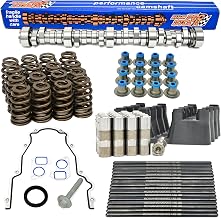
This Stage 2 kit from Sloppy Mechanics emphasizes torque and mid-range response, suitable for 4.8/5.3/6.0 engines. It includes the cam, PAC springs, seals, gaskets, pushrods, and Delphi lifters with trays. It’s a solid choice for drivers who want noticeable gains without excessive idle or street jitters. Better for a step-up over stock without moving into extreme cam profiles. A limitation is that aggressive cams can require tuning for peak efficiency in some setups.
Sloppy Mechanics Stage 2 Camshaft Kit with Springs

This Stage 2 kit for 4.8/5.3/5.7/6.0/6.2 LS engines includes cams, .600″ springs, hat seals, and a complete gaskets/pushrods package. It’s best for mid-to-high torque gains with strong street manners. Use this if you want a reliable upgrade that supports higher spring pressures and solid durability. Avoid this if you are targeting very high-rpm race behavior without additional supporting upgrades.
Buying Guide: Key Considerations For 5.3 Cam Swap Kits
Purpose and power targets vary across cam kits. When choosing, consider your daily drive needs, fuel quality, and the level of engine hardware you’re prepared to upgrade alongside the cam. The following questions help align a kit with your goals.
- What is my engine build and displacement? Some kits are tailored for 4.8/5.3/6.0 families, with varying compatibility for valve train geometry.
- Do I plan to tune or reflash the ECU? Cam swaps typically require calibration to optimize timing, fueling, and idle stability.
- What is my idle quality and street manners tolerance? Larger cams can reduce idle quality and increase roughness at low RPM.
- Are supporting parts upgraded? Springs, lifters, pushrods, and gaskets influence durability and performance, especially with aggressive cams.
- How much drivability do I want? Some kits emphasize torque, others target high-end horsepower; balance with the rest of the drivetrain.
Frequently Asked Questions
- What makes a cam kit “Stage” different? The stage designation typically indicates aggressiveness and intended RPM range, with higher stages offering more cam duration and lift for increased power but often sacrificing idle quality and street manners.
- Is professional tuning required after a cam swap? Yes, most modern LS engines benefit from a tune or ECU reflash to optimize timing and fueling for the new cam profile.
- Will I need additional parts beyond the kit? Many kits include lifters, gaskets, and pushrods, but you may need ignition, fuel, and exhaust adjustments, plus possible valve spring upgrades for some cams.
- Can a cam swap improve fuel economy? Upgrades can improve efficiency under certain conditions, but overall mpg can decrease if the engine operates more aggressively or at higher RPMs frequently.
- Which kit is best for daily driving? Kits emphasizing mid-range torque with stable idle are generally better for daily drivers, providing improved response without sacrificing reliability.
- How do I avoid incompatibility issues? Confirm your engine family, generation, and supporting hardware compatibility with the specific kit model before purchase.